BAKU, Azerbaijan, June 3. The United Nations
Food and Agriculture Organization (FAO) has launched a regional
initiative aimed at enhancing the management of water and land
resources across Central Asia, during the Eco Expo Central Asia
2026 exhibition in Samarkand, Trend reports via the Uzbek Committee on Ecology and
Climate Change.
The initiative is being implemented by FAO with the support of
Uzbekistan’s National Committee on Ecology and Climate Change and
is funded by the Global Environment Facility (GEF).
The program, entitled Central Asia Water-Land Nexus (CAWLN) for
Ecosystem Restoration, Improved Natural Resource Management and
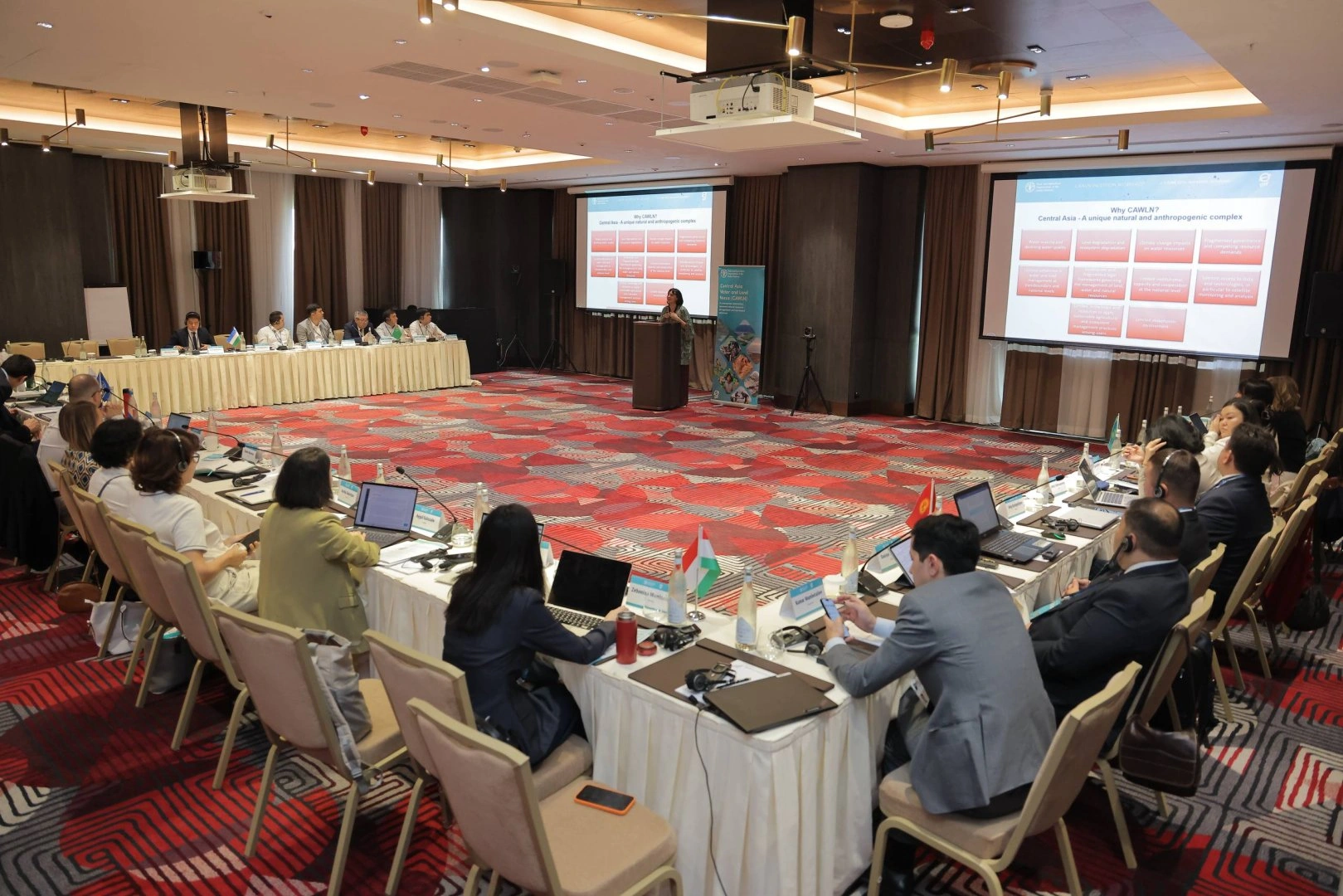
Resilience Enhancement, was introduced during a two-day
workshop.
CAWLN is designed to advance the sustainable management of water
and land resources through an integrated Water-Land Nexus approach,
which acknowledges the interdependent relationship between water
utilization, land management, agricultural production, and food
security.
The workshop convened representatives from FAO, government
agencies across Central Asia, regional partners, project
coordinators, and international experts involved in the program’s
implementation.
In his opening remarks, Deputy Minister of Ecology Zhusipbek
Kazbekov underscored the importance of strengthening regional
cooperation on sustainable water and land management, promoting the
adoption of water-saving technologies, and formulating coordinated
strategies to enhance the climate resilience of Central Asia’s
agri-food systems.
During the event, participants reviewed the program’s structural
framework, implementation mechanisms, monitoring and reporting
procedures, and identified priority areas for collaboration in
ecosystem restoration, sustainable natural resource management, and
climate adaptation.
Discussions focused on some of the region’s most pressing
environmental challenges, including water scarcity, land
degradation, soil salinization, climate change impacts, and
increasing pressure on agricultural production systems.
Speakers noted that Central Asia is among the world’s most
irrigation-dependent regions, making efficient water management a
critical priority. Participants highlighted the need for modern
irrigation technologies, upgrades to water infrastructure, and
stronger governance mechanisms to ensure the sustainable use of
natural resources.
The workshop also examined policy and regulatory reforms,
interagency coordination, advanced monitoring systems, and the
wider adoption of best practices for resource conservation.
Special attention was given to land management issues, including
efforts to combat soil degradation and salinization, restore
agricultural productivity, and promote climate-smart farming
techniques.
During technical sessions, participants presented national and
regional subprojects under the CAWLN framework, reviewed first-year
implementation plans and budgets, and discussed mechanisms for
cooperation among Central Asian countries and international
development partners.
At the exhibition, it was noted that the launch workshop served
as an important platform for coordinating regional efforts aimed at
promoting sustainable resource management and supporting long-term
development objectives in the water, land, and agricultural sectors
across Central Asia.