BAKU, Azerbaijan, May 22. The use of strategic
environmental assessment in urban planning for ecosystem
restoration in the Karabakh and East Zangezur regions as part of
the “Great Return” program, as well as in the revitalization of
territories and cities affected by the conflict, has played a
significant role in taking environmental, social, and economic
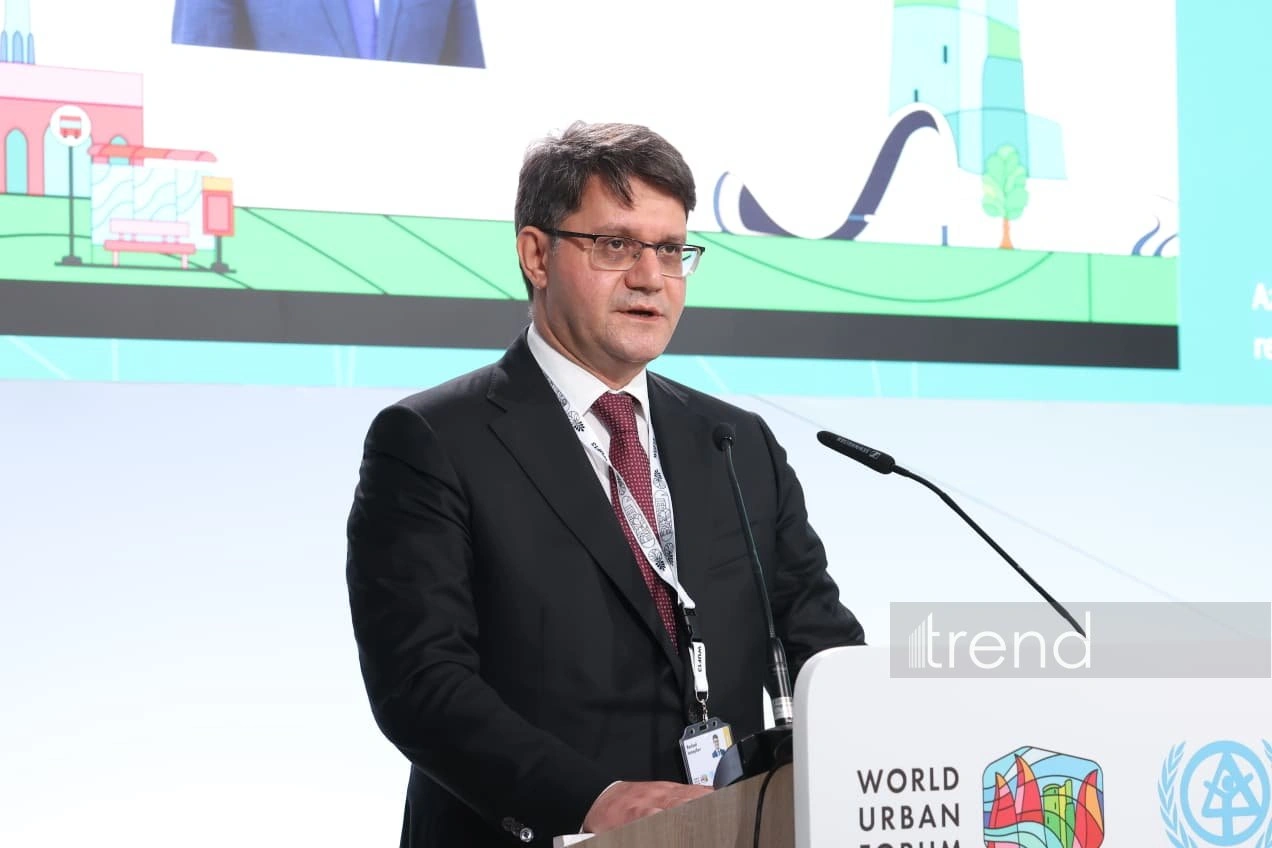
factors into account, Minister of Ecology and Natural Resources
Rashad Ismayilov said, Trend reports.
Ismayilov made the statement at the event ““Strategic
Environmental Assessment as a tool for achieving climate targets in
urban planning” as part of the 13th World Urban Forum (WUF13) in
Baku.
The minister emphasized that interest in the application of
strategic environmental assessment is growing worldwide today,
including in Eastern Europe and the South Caucasus. Azerbaijan has
extensive experience in this area, particularly in the field of
urban planning.
Ismayilov noted that the United Nations Economic Commission for
Europe plays an important role in promoting this instrument
globally, and that successful joint efforts are underway with our
country in this regard. “Azerbaijan has made a significant
contribution to cooperation in the field of environmental
protection at the international and regional levels. Our country
cooperates with all major UN agencies working in the field of
environmental protection, in both bilateral and multilateral
formats. Currently, Azerbaijan has acceded to more than 20
international conventions and protocols on environmental
protection.”
Meanwhile, today Baku is hosting the final day of WUF13.
On the first day of the forum, a ministerial meeting on the New
Urban Agenda, a ministerial roundtable, women’s and civil society
assemblies, business sessions, and discussions on urban well-being
took place. The forum also featured a flag-raising ceremony for the
UN and Azerbaijan.
The second day of the forum was marked by the first-ever
Leaders’ Summit. On this day, high-level discussions were held on
the global housing crisis, urbanization policy, and urban
sustainability. Also, as part of WUF13, the Mexico City pavilion
was inaugurated, presented as a key platform for expanding
cooperation with the Latin American region and preparing for
WUF14.
The third day of WUF13 was also marked by an extensive program
of events. Discussions on this day covered topics such as the
global housing crisis, the creation of safe and inclusive cities,
climate resilience, artificial intelligence and urban governance,
“green” urbanization, social equality, and sustainable
transportation.
One of the highlights of the third day was the signing of a
sister-city agreement between the Azerbaijani city of Shusha and
the Turkish city of Trabzon.
The fourth day of WUF13 featured an extensive program of events
dedicated to the themes of urbanization, climate change, inclusive
urban development, housing policy, and sustainable management.
On the fifth day of the forum, discussions continued on the
global housing crisis, the creation of safe and inclusive cities,
climate resilience, the use of artificial intelligence in urban
management, “green” urbanization, and social equality.
One of the key events of the Cities Forum of the United Nations
Special Program for the Economies of Central Asia (SPECA), held on
the fourth day, was the announcement of Almaty’s official accession
to the “Declaration of Intent on the Establishment of the SPECA
Forum on Smart Cities Resilient to Climate Change.”
Also, for the first time in WUF history, the “WUF13 NGO Forum:
Global Partnership and Decision-Making” was held at the initiative
of Azerbaijan.
The WUF13 Forum, dedicated to the theme “"Housing the world:
Safe and resilient cities and communities", brought together
governments, international organizations, experts, and civil
society representatives to strengthen global cooperation in the
field of sustainable urban development. More than 40,000 people
from 182 countries registered to participate in the forum.