BAKU, Azerbaijan, May 22. The implementation of
projects in Karabakh and East Zangazur is positioning the region as
one of Azerbaijan’s main centers for “green energy,” Vahid Hajiyev,
Special Representative of the President of the Republic of
Azerbaijan for the Jabrayil, Gubadli, and Zangilan regions said,
Trend reports.
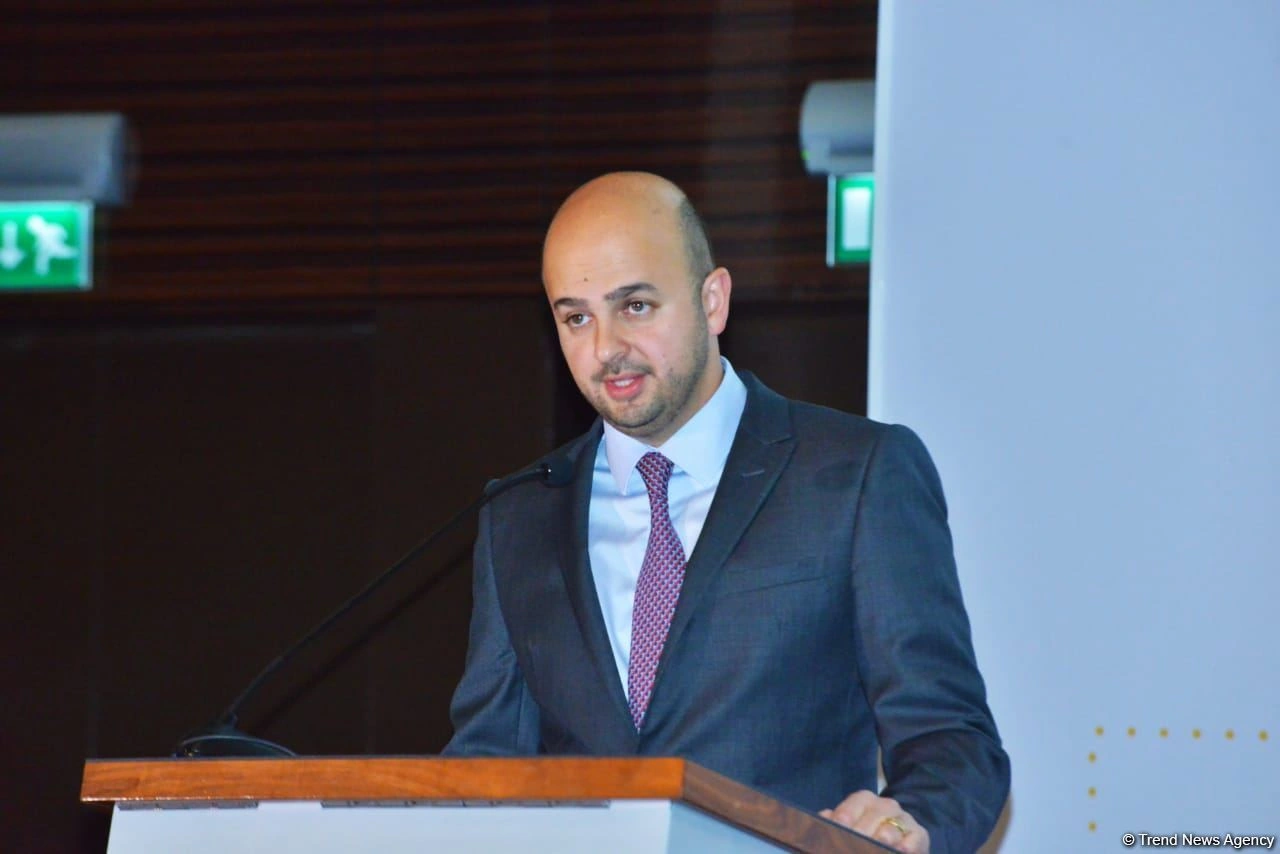
Hajiyev made the remark at the event "From Urbicide to Revival:
Sustainable Reconstruction, Resettlement, and Development in
Azerbaijan’s Liberated Territories" held within the framework of
WUF13.
According to him, the territories liberated from occupation by
President Ilham Aliyev have been declared a “green energy” zone,
and special attention is being paid to the development of
alternative energy sources in the region.
“We are prioritizing two main areas—solar and hydropower. Four
hydropower plants with a total capacity of about 45 megawatts are
already operating in the Zangilan region. Foreign investors are
also showing great interest in ‘green energy’ projects.
Foreign companies are investing in the construction of a
240-megawatt solar power plant in Karabakh. In addition, other
companies are implementing projects with a total capacity of 100
megawatts,” the special representative emphasized.
According to him, the energy produced in the region will not
only meet local demand but also create export opportunities.
“The energy infrastructure currently under construction is
capable of meeting the energy needs of Karabakh as a whole and
creates opportunities to export surplus energy to foreign markets,”
Hajiyev added.
Meanwhile, today Baku is hosting the final day of WUF13.
On the first day of the forum, a ministerial meeting on the New
Urban Agenda, a ministerial roundtable, women’s and civil society
assemblies, business sessions, and discussions on urban well-being
took place. The forum also featured a flag-raising ceremony for the
UN and Azerbaijan.
The second day of the forum was marked by the first-ever
Leaders’ Summit. On this day, high-level discussions were held on
the global housing crisis, urbanization policy, and urban
sustainability. Also, as part of WUF13, the Mexico City pavilion
was inaugurated, presented as a key platform for expanding
cooperation with the Latin American region and preparing for
WUF14.
The third day of WUF13 was also marked by an extensive program
of events. Discussions on this day covered topics such as the
global housing crisis, the creation of safe and inclusive cities,
climate resilience, artificial intelligence and urban governance,
“green” urbanization, social equality, and sustainable
transportation.
One of the highlights of the third day was the signing of a
sister-city agreement between the Azerbaijani city of Shusha and
the Turkish city of Trabzon.
The fourth day of WUF13 featured an extensive program of events
dedicated to the themes of urbanization, climate change, inclusive
urban development, housing policy, and sustainable management.
On the fifth day of the forum, discussions continued on the
global housing crisis, the creation of safe and inclusive cities,
climate resilience, the use of artificial intelligence in urban
management, “green” urbanization, and social equality.
One of the key events of the Cities Forum of the United Nations
Special Program for the Economies of Central Asia (SPECA), held on
the fourth day, was the announcement of Almaty’s official accession
to the “Declaration of Intent on the Establishment of the SPECA
Forum on Smart Cities Resilient to Climate Change.”
Also, for the first time in WUF history, the “WUF13 NGO Forum:
Global Partnership and Decision-Making” was held at the initiative
of Azerbaijan.
The WUF13 Forum, dedicated to the theme “"Housing the world:
Safe and resilient cities and communities", brought together
governments, international organizations, experts, and civil
society representatives to strengthen global cooperation in the
field of sustainable urban development. More than 40,000 people
from 182 countries registered to participate in the forum.