BAKU, Azerbaijan, May 21. Systematically
resolving the global affordable housing deficit requires looking
beyond traditional financial underwriting instruments to actively
expand broader access pathways, including the strategic scaling of
the rental housing sector and the comprehensive master-planning of
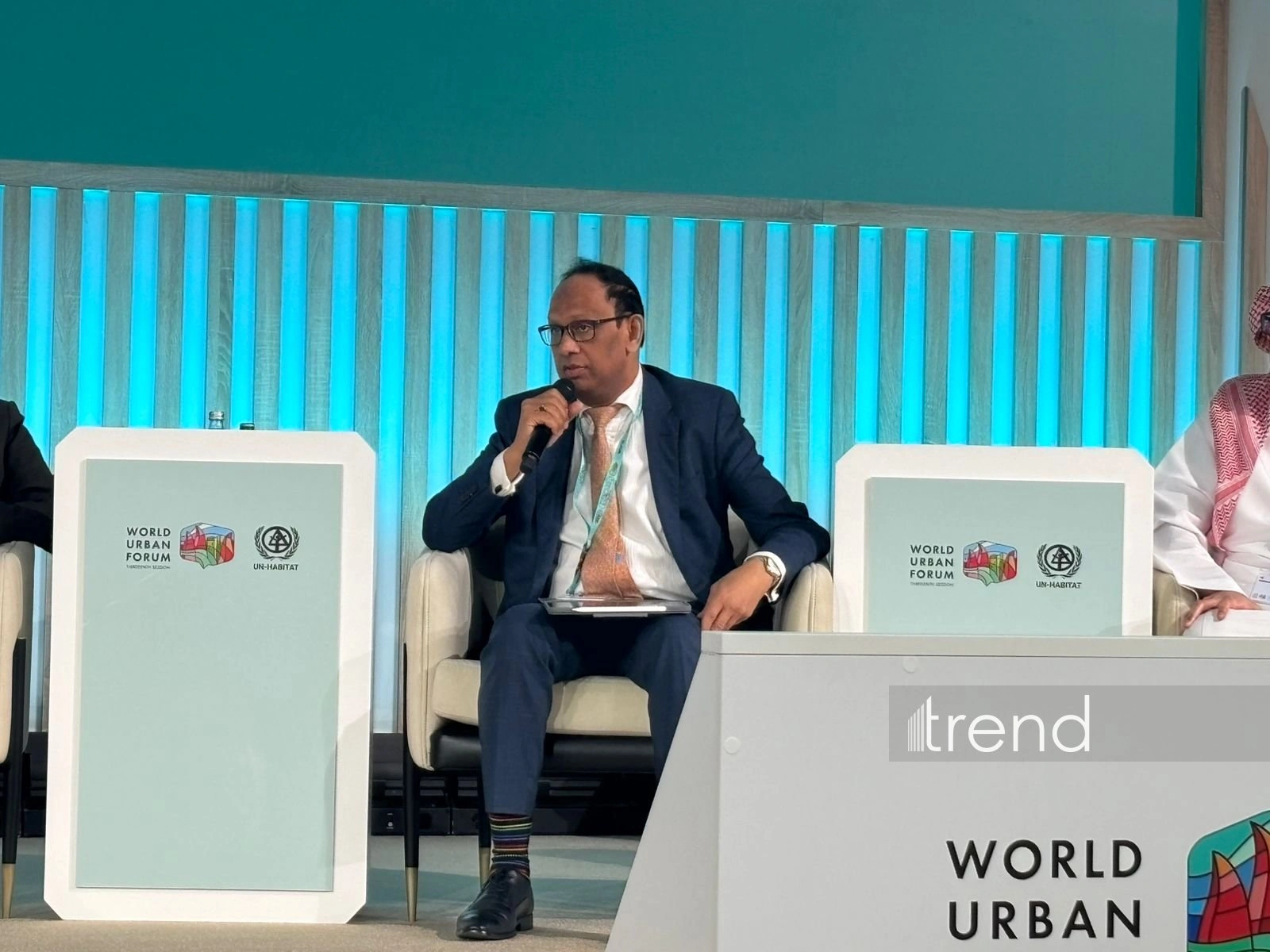
municipal infrastructure grids, Srinivas Sampath, Director for
Water and Urban Development at the Asian Development Bank (ADB),
said, Trend
reports.
He made the remark during a session titled "A New Deal for
Housing Finance" held within the framework of the 13th session of
the World Urban Forum (WUF13) in Baku.
According to him, the architecture of any effective housing
policy hinges strictly upon the specific socioeconomic demographics
of the target population, particularly when engineering solutions
for highly vulnerable segments. He noted that low-income
populations require structured state support that extends far
beyond simple cash transfers; instead, it demands the holistic
design of residential settlements that seamlessly integrate spatial
urban planning, mass transit transportation networks, and
foundational social infrastructure.
Sampath highlighted historical precedents within Public-Private
Partnership (PPP) frameworks, pointing out that shifting an
excessive operational or financial burden onto private developers
routinely drove aggregate project expenditures several times higher
than initial government projections. This mismatch, he explained,
underscores the non-negotiable necessity of direct state capital
expenditure injection into primary baseline infrastructure to
systematically de-risk developments and maximize project viability.
He noted that even when land parcels enter the market fully
equipped with utility infrastructure lines, their final baseline
costs frequently remain completely out of reach for a substantial
portion of the population.
The ADB director concurrently directed sharp focus toward the
critical necessity of developing rental housing as an independent,
fully formalized segment of the residential market. According to
him, institutionalized rental structures operate as a vital
baseline solution for internal migrants and urban workers who lack
the necessary capital accumulation to secure property titles or
navigate traditional mortgage underwriting channels. He reported
that across multiple sovereign states within the Asian
region—including India, the Philippines, Indonesia, and Vietnam—the
deliberate expansion of rental housing frameworks has solidified
into a primary anchor of national housing policy.
Moreover, Sampath stated that the ADB, in direct alignment with
the World Bank, is actively implementing joint initiatives to
capitalize specialized rental housing funds. He cited ongoing
operations across the Indian state of Tamil Nadu as a prime
example, where these synchronized funds back targeted residential
projects engineered specifically for industrial laborers, migrant
workforces, and other vulnerable urban populations.
"Deploying these structural financial mechanisms allows
governments to substantially expand the net volume of affordable
options while progressively optimizing the overarching supply
matrix of municipal real estate markets," Sam
"The international community must execute a decisive shift away
from a narrow, isolated focus on homeownership financing, pivoting
instead toward a comprehensive model engineered to maximize
baseline housing accessibility across both metropolitan grids and
rural districts", the ADB director concluded.
Today marks the fifth day of WUF13 in Baku.
The first day included a ministerial meeting dedicated to the
New Urban Agenda, a ministerial roundtable, assemblies for women
and civil society, business sessions, and discussions on urban
prosperity. An official ceremony marking the raising of the UN and
Azerbaijani flags also took place.
The second day stood out for the inaugural Leaders' Summit,
featuring high-level discussions on the global housing crisis,
urbanization policy, and urban resilience. Concurrently, the
opening of the Mexico City pavilion took place, serving as a
significant platform for expanding cooperation with the Latin
American region and preparing for WUF14.
The third day of WUF13 featured a comprehensive program of
events covering the global housing crisis, the formation of safe
and inclusive cities, climate resilience, artificial intelligence
and urban governance, green urbanization, social equity, and
sustainable transport.
One of the highlights of the third day was the signing of a
sister-city memorandum between the Azerbaijani city of Shusha and
the Turkish city of Trabzon.
The fourth day of WUF13 featured a broad program of events
dedicated to urbanization, climate change, inclusive urban
development, housing policy, and sustainable governance.
One of the important events of the UN Special Program for the
Economies of Central Asia (SPECA) Cities Forum, held on the fourth
day, was the announcement of Almaty’s official accession to the
“Declaration of Intent on the Establishment of the SPECA Smart
Climate-Resilient Cities Forum.”
Also, for the first time in WUF history and at Azerbaijan’s
initiative, the “WUF13 NGO Forum: Global Partnership and
Decision-Making” was held.
WUF13, which has attracted more than 40,000 registered
participants from 182 countries, will continue until May 22. Held
under the theme “Housing the world: Safe and resilient cities and
communities,” the forum brings together governments, international
organizations, experts, and representatives of civil society to
strengthen global cooperation in the field of sustainable urban
development.