BAKU, Azerbaijan, May 21. India is actively
implementing one of the largest social housing construction
programs globally, a massive undertaking that has already yielded
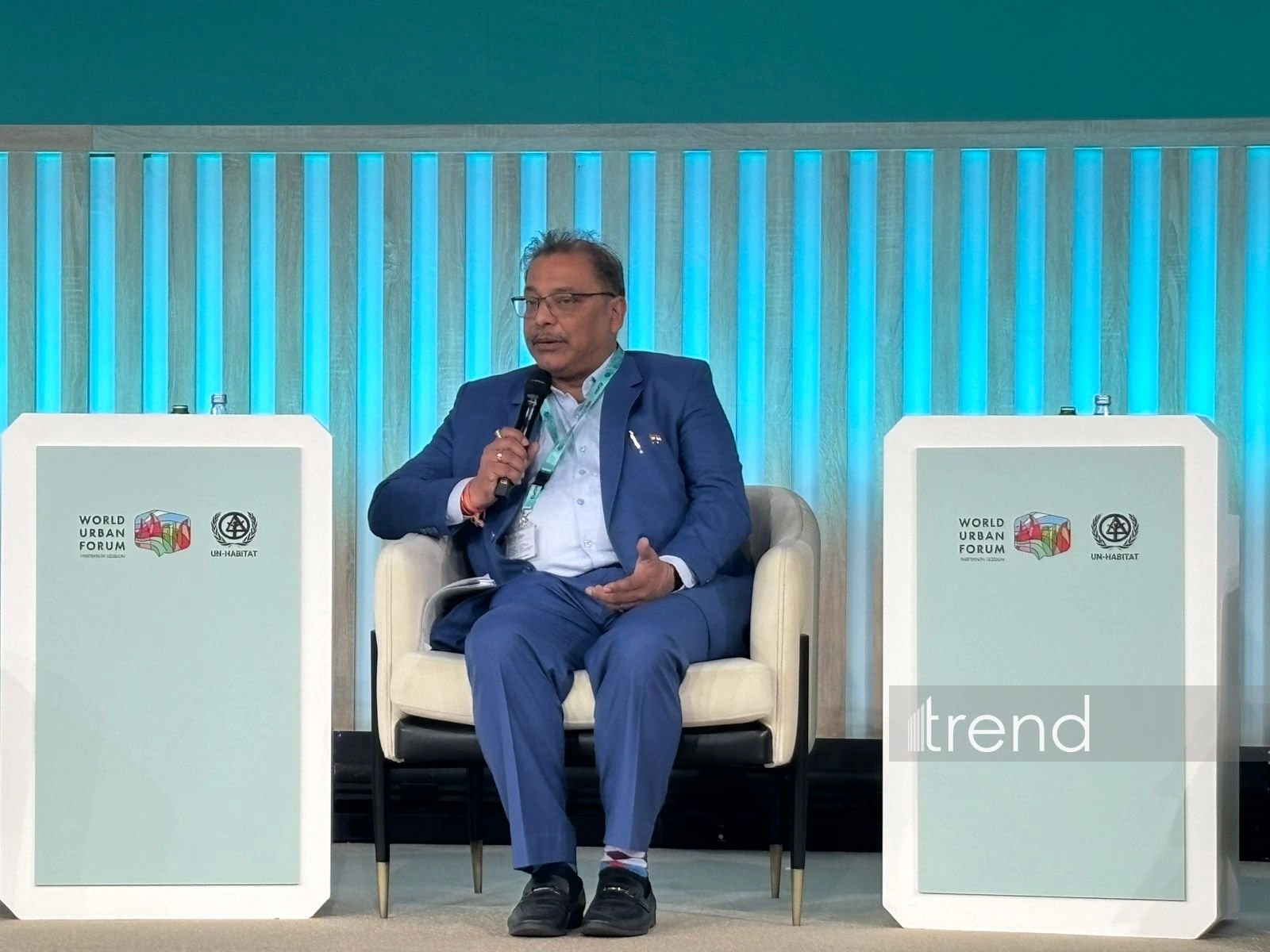
tens of millions of homes for its population, Sanjay Shukla,
Managing Director of the National Housing Bank of India, said,
Trend reports.
He made the remark during a session titled "A New Deal for
Housing Finance" held within the framework of the 13th session of
the World Urban Forum (WUF13) in Baku.
According to him, India, ranking as one of the largest nations
globally in terms of both geographic territory and population
metrics—manages these large-scale housing pipelines by carefully
factoring in extensive regional diversity.
He noted that under the flagship state-backed program, Pradhan
Mantri Awas Yojana (PMAY), a staggering 29.5 million homes
underwent construction between 2014 and 2019. Building upon this
momentum, the upcoming five-year cycle targets the construction of
approximately 30 million additional housing units. Within this
newly allocated volume, 20 million homes are earmarked specifically
for urban populations, while 10 million units will deploy across
rural districts.
Shukla reported that the program strategically leverages a
capital reallocation mechanism embedded within the broader banking
sector, utilizing mandatory priority sector lending requirements.
According to the managing director, unused lending quotas from
commercial banks undergo direct diversion into the affordable
housing sector at a highly subsidized rate of approximately 4%. He
emphasized that this financial model has successfully multiplied
the volume of available affordable financing, providing robust
support to primary mortgage and credit institutions.
"India currently hosts approximately 94 housing finance
companies operating directly within the residential lending market,
specifically targeting low-income urban populations. Remarkably,
the delinquency rate for these mortgage loans remains strictly
below 1%. The broader Indian housing finance matrix seamlessly
integrates direct state subsidies, commercial bank lending pools,
and flexible co-participation models linking public authorities and
citizens across various land allocation and construction schemes,"
Shukla stated.
This highly integrated, multifaceted structural model provides
the necessary fiscal foundation to successfully scale and sustain
such immense housing infrastructure programs over long-term
timelines, the banking chief concluded.
Today marks the fifth day of WUF13 in Baku.
The first day included a ministerial meeting dedicated to the
New Urban Agenda, a ministerial roundtable, assemblies for women
and civil society, business sessions, and discussions on urban
prosperity. An official ceremony marking the raising of the UN and
Azerbaijani flags also took place.
The second day stood out for the inaugural Leaders' Summit,
featuring high-level discussions on the global housing crisis,
urbanization policy, and urban resilience. Concurrently, the
opening of the Mexico City pavilion took place, serving as a
significant platform for expanding cooperation with the Latin
American region and preparing for WUF14.
The third day of WUF13 featured a comprehensive program of
events covering the global housing crisis, the formation of safe
and inclusive cities, climate resilience, artificial intelligence
and urban governance, green urbanization, social equity, and
sustainable transport.
One of the highlights of the third day was the signing of a
sister-city memorandum between the Azerbaijani city of Shusha and
the Turkish city of Trabzon.
The fourth day of WUF13 featured a broad program of events
dedicated to urbanization, climate change, inclusive urban
development, housing policy, and sustainable governance.
One of the important events of the UN Special Program for the
Economies of Central Asia (SPECA) Cities Forum, held on the fourth
day, was the announcement of Almaty’s official accession to the
“Declaration of Intent on the Establishment of the SPECA Smart
Climate-Resilient Cities Forum.”
Also, for the first time in WUF history and at Azerbaijan’s
initiative, the “WUF13 NGO Forum: Global Partnership and
Decision-Making” was held.
WUF13, which has attracted more than 40,000 registered
participants from 182 countries, will continue until May 22. Held
under the theme “Housing the world: Safe and resilient cities and
communities,” the forum brings together governments, international
organizations, experts, and representatives of civil society to
strengthen global cooperation in the field of sustainable urban
development.