BAKU, Azerbaijan, May 21. Public sovereign
funding alone remains entirely insufficient to overcome the global
housing crisis, rendering it imperative for nations to actively
incentivize and channel private capital into the affordable housing
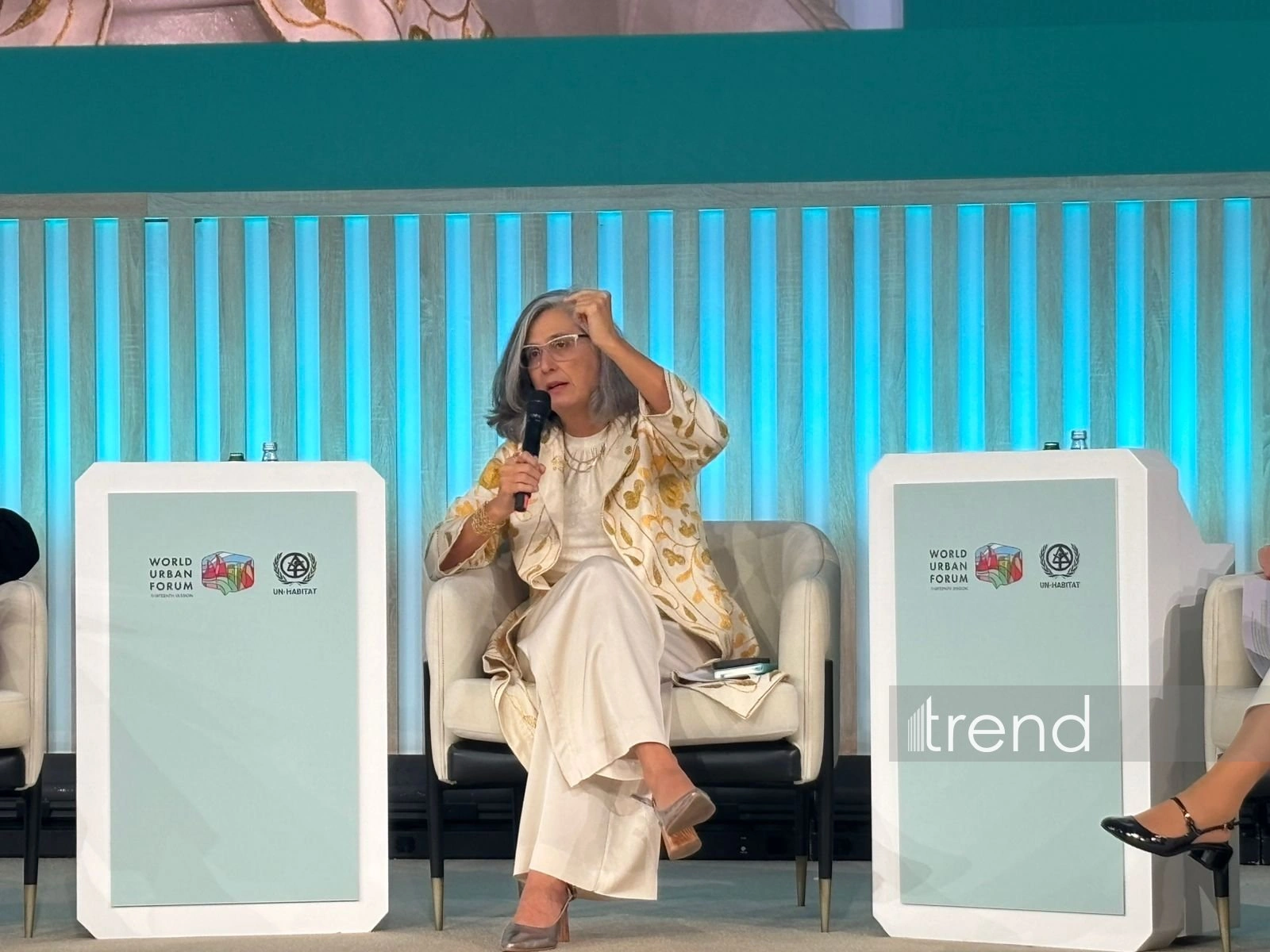
sector, Anaclaudia Rossbach, Executive Director of the United
Nations Human Settlements Program (UN-Habitat), said, Trend reports.
She made the remarks during a session titled "A New Deal for
Housing Finance" held within the framework of the 13th session of
the World Urban Forum (WUF13) in Baku.
According to her, public expenditure allocated toward the
housing sector across numerous countries—particularly within
developing economies—stagnates at approximately 1% of GDP or less,
creating a severe mismatch with the actual scale of the ongoing
crisis. "This fiscal baseline remains completely inadequate to
systematically resolve the housing crisis," Rossbach
emphasized.
She underscored the critical necessity of engineering favorable
structural conditions to attract private investments into municipal
real estate grids. "We must formulate concrete pathways to mobilize
private capital and systematically pull private sector financing
pipelines into the housing ecosystem," the UN-Habitat Executive
Director stated.
To achieve this, Rossbach noted that governments must deploy
clear and predictable regulatory mechanisms, robust incentive
frameworks, and targeted risk-mitigation toolkits for businesses
operating within the affordable housing segment. She concurrently
reiterated the vital importance of expanding domestic financial
architecture.
"We cannot rely solely on international loans or multilateral
development assistance. International cooperation can effectively
function as seed capital, provide technical assistance, and support
institutional policy design; however, the long-term resilience of a
housing finance system relies fundamentally on domestic resources,"
she pointed out.
The head of UN-Habitat noted that the core sustainability of any
housing infrastructure network hinges directly upon national fiscal
budgets, localized capital markets, and the mobilization of
domestic savings loops. Underpinning all of these factors, she
added, remains the presence of strong, transparent public
institutions capable of managing these resources efficiently.
"This is not merely a question of liquid capital, but rather how
these funds undergo management, what specific rules govern the
marketplace, and how to build an ecosystem resilient over the long
term," Rossbach concluded, adding that this institutional capacity
building stands as one of the primary hurdles currently confronting
many sovereign states.
Today marks the fifth day of WUF13 in Baku.
The first day included a ministerial meeting dedicated to the
New Urban Agenda, a ministerial roundtable, assemblies for women
and civil society, business sessions, and discussions on urban
prosperity. An official ceremony marking the raising of the UN and
Azerbaijani flags also took place.
The second day stood out for the inaugural Leaders' Summit,
featuring high-level discussions on the global housing crisis,
urbanization policy, and urban resilience. Concurrently, the
opening of the Mexico City pavilion took place, serving as a
significant platform for expanding cooperation with the Latin
American region and preparing for WUF14.
The third day of WUF13 featured a comprehensive program of
events covering the global housing crisis, the formation of safe
and inclusive cities, climate resilience, artificial intelligence
and urban governance, green urbanization, social equity, and
sustainable transport.
One of the highlights of the third day was the signing of a
sister-city memorandum between the Azerbaijani city of Shusha and
the Turkish city of Trabzon.
The fourth day of WUF13 featured a broad program of events
dedicated to urbanization, climate change, inclusive urban
development, housing policy, and sustainable governance.
One of the important events of the UN Special Program for the
Economies of Central Asia (SPECA) Cities Forum, held on the fourth
day, was the announcement of Almaty’s official accession to the
“Declaration of Intent on the Establishment of the SPECA Smart
Climate-Resilient Cities Forum.”
Also, for the first time in WUF history and at Azerbaijan’s
initiative, the “WUF13 NGO Forum: Global Partnership and
Decision-Making” was held.
WUF13, which has attracted more than 40,000 registered
participants from 182 countries, will continue until May 22. Held
under the theme “Housing the world: Safe and resilient cities and
communities,” the forum brings together governments, international
organizations, experts, and representatives of civil society to
strengthen global cooperation in the field of sustainable urban
development.