BAKU, Azerbaijan, May 21. The issue of housing
is of critical importance in the post-crisis recovery process from
both a social and economic perspective, but achieving successful
results in this area requires taking into account the specific
conditions of each country and region, Founding Director of the
Center for Conflict and Humanitarian Studies and Professor at the
Doha Institute for Advanced Studies in Doha, Qatar, Professor
Sultan Barakat said, Trend reports.
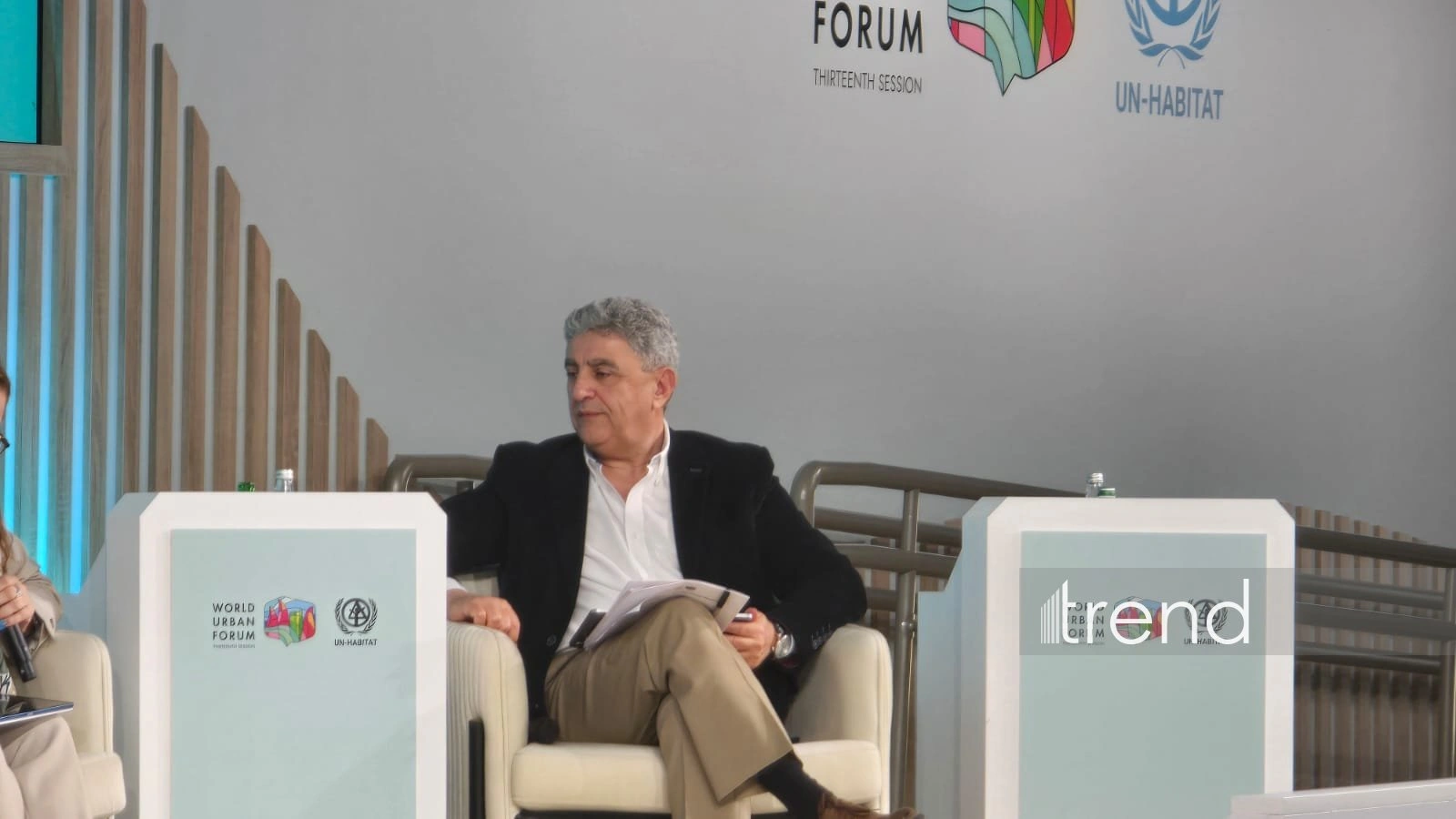
Addressing the event on “Housing at the Centre of Crisis
Recovery and Reconstruction,” held as part of WUF13, Barakat noted
that housing policy should be shaped in accordance with specific
conditions, rather than based on global and general approaches.
“We all understand that housing is at the heart of the recovery
process. It is also one of the main components of the economy of a
country undergoing a period of recovery. The social value of
housing is also undeniable. However, the main question is how to
realize it. To do this, we must adopt an approach tailored to each
specific context and move away from general and stereotypical
approaches to the housing problem,” he emphasized.
According to the professor, if a country has reached a political
agreement, has a peace accord in place, has achieved a certain
degree of stability, and the government supports the permanent
resettlement of the population in specific areas, the
reconstruction process is easier to carry out.
“In such circumstances, the issue boils down more to choosing
the right strategies and technical approaches. However, in disputed
territories or in conflict situations accompanied by objectives
such as ethnic cleansing or the seizure of foreign lands, the
situation becomes more complex,” he noted.
“The humanitarian approach makes it possible to save lives and
avoid responsibility for political consequences. However, in some
cases, it also carries the risk of indirectly legitimizing certain
injustices or political consequences that do not fully comply with
international law,” he said.
In his view, one of the main drawbacks of this approach is the
weakening of people’s initiative and decision-making capacity.
“Two key factors are necessary for the implementation of housing
provision: the will and initiative of people to act in concert with
their governments, municipalities, and other partners, as well as
the availability of the necessary resources,” the professor
emphasized.
S. Barakat noted that the current humanitarian system is more
focused on saving people’s lives but pays less attention to
maintaining their motivation, organizational capacity, and
confidence in the future.
“The initial technical work should be carried out precisely
here. From the very first day of forced displacement, the main
focus should be on how we will rebuild everything in the future.
Because that is the main issue that concerns people,” he said.
According to the professor, families of internally displaced
persons begin to think about the future and reconstruction as soon
as they achieve stability.
“We must not allow a gap to develop between the moment people
begin to think about recovery and our planning processes. Even
modest measures in the early stages should strengthen people’s
capacity for self-organization, sustain their motivation, and
prevent their marginalization. This will significantly contribute
to their progress,” Barakat added.
Today marks the fifth day of WUF13 in Baku.
The first day included a ministerial meeting dedicated to the
New Urban Agenda, a ministerial roundtable, assemblies for women
and civil society, business sessions, and discussions on urban
prosperity. An official ceremony marking the raising of the UN and
Azerbaijani flags also took place.
The second day stood out for the inaugural Leaders' Summit,
featuring high-level discussions on the global housing crisis,
urbanization policy, and urban resilience. Concurrently, the
opening of the Mexico City pavilion took place, serving as a
significant platform for expanding cooperation with the Latin
American region and preparing for WUF14.
The third day of WUF13 featured a comprehensive program of
events covering the global housing crisis, the formation of safe
and inclusive cities, climate resilience, artificial intelligence
and urban governance, green urbanization, social equity, and
sustainable transport.
One of the highlights of the third day was the signing of a
sister-city memorandum between the Azerbaijani city of Shusha and
the Turkish city of Trabzon.
The fourth day of WUF13 featured a broad program of events
dedicated to urbanization, climate change, inclusive urban
development, housing policy, and sustainable governance.
One of the important events of the UN Special Program for the
Economies of Central Asia (SPECA) Cities Forum, held on the fourth
day, was the announcement of Almaty’s official accession to the
“Declaration of Intent on the Establishment of the SPECA Smart
Climate-Resilient Cities Forum.”
Also, for the first time in WUF history and at Azerbaijan’s
initiative, the “WUF13 NGO Forum: Global Partnership and
Decision-Making” was held.
WUF13, which has attracted more than 40,000 registered
participants from 182 countries, will continue until May 22. Held
under the theme “Housing the world: Safe and resilient cities and
communities,” the forum brings together governments, international
organizations, experts, and representatives of civil society to
strengthen global cooperation in the field of sustainable urban
development.