BAKU, Azerbaijan, May 21. Housing construction
should not be viewed in isolation, but rather as part of the
creation of a comprehensive living environment that includes
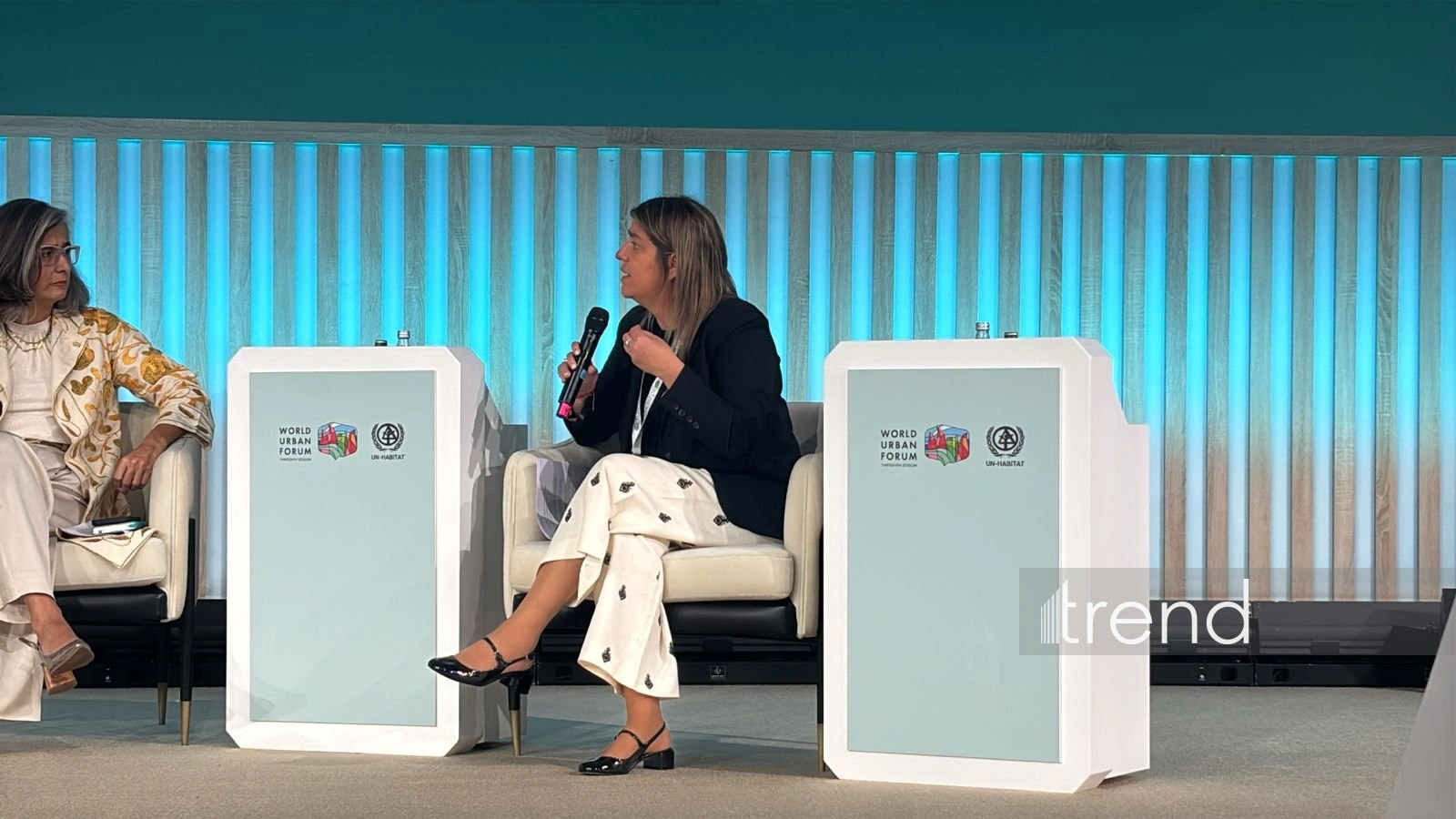
infrastructure, planning, and community participation, Tamara
Paseyro, Uruguay’s Minister of Housing and Territorial Planning,
said, Trend
reports.
Addressing the session “A New Deal for Housing Finance,” held as
part of the World Urban Forum (WUF13) in Baku, Paseyro noted that
housing construction and the creation of a comfortable urban
environment are interconnected processes.
“Housing construction also means creating a living environment.
These are not two separate things, nor are they processes that
follow one after the other,” the minister said. She noted that the
absence of effective policies in the areas of land planning and
housing allocation can lead to segregation and social
isolation.
“If we do not properly address issues of land, its location, and
planning, we may formally reduce the housing shortage but fail to
solve the problem in practice. This leads to segregation,
exclusion, and fragmentation,” Tamara Paseyro emphasized.
The minister stated that Uruguay is building its housing policy
around three key pillars: the efficient use of land resources and
their allocation, public-private financing, and the state’s
institutional capacity.
“When these three components are aligned, we can achieve
affordable housing,” she said.
According to the minister, housing policy in Uruguay is viewed
as a tool for social cohesion and the empowerment of citizens. “It
is a right that opens the door to other rights,” she noted.
She also emphasized the importance of local community
participation in the implementation of development projects. The
minister explained that in Uruguay, as part of neighborhood
improvement programs, special committees are formed that include
technical experts, construction companies, and community
representatives.
“There are practical issues related to sewage, lighting, and
road infrastructure, but there are other aspects that are important
to discuss with residents,” she noted.
Today marks the fifth day of WUF13 in Baku.
The first day included a ministerial meeting dedicated to the
New Urban Agenda, a ministerial roundtable, assemblies for women
and civil society, business sessions, and discussions on urban
prosperity. An official ceremony marking the raising of the UN and
Azerbaijani flags also took place.
The second day stood out for the inaugural Leaders' Summit,
featuring high-level discussions on the global housing crisis,
urbanization policy, and urban resilience. Concurrently, the
opening of the Mexico City pavilion took place, serving as a
significant platform for expanding cooperation with the Latin
American region and preparing for WUF14.
The third day of WUF13 featured a comprehensive program of
events covering the global housing crisis, the formation of safe
and inclusive cities, climate resilience, artificial intelligence
and urban governance, green urbanization, social equity, and
sustainable transport.
One of the highlights of the third day was the signing of a
sister-city memorandum between the Azerbaijani city of Shusha and
the Turkish city of Trabzon.
The fourth day of WUF13 featured a broad program of events
dedicated to urbanization, climate change, inclusive urban
development, housing policy, and sustainable governance.
One of the important events of the UN Special Program for the
Economies of Central Asia (SPECA) Cities Forum, held on the fourth
day, was the announcement of Almaty’s official accession to the
“Declaration of Intent on the Establishment of the SPECA Smart
Climate-Resilient Cities Forum.”
Also, for the first time in WUF history and at Azerbaijan’s
initiative, the “WUF13 NGO Forum: Global Partnership and
Decision-Making” was held.
WUF13, which has attracted more than 40,000 registered
participants from 182 countries, will continue until May 22. Held
under the theme “Housing the world: Safe and resilient cities and
communities,” the forum brings together governments, international
organizations, experts, and representatives of civil society to
strengthen global cooperation in the field of sustainable urban
development.