BAKU, Azerbaijan, May 20. Air pollution
decrease in cities is possible, and there are already concrete
successful examples around the world in this direction,
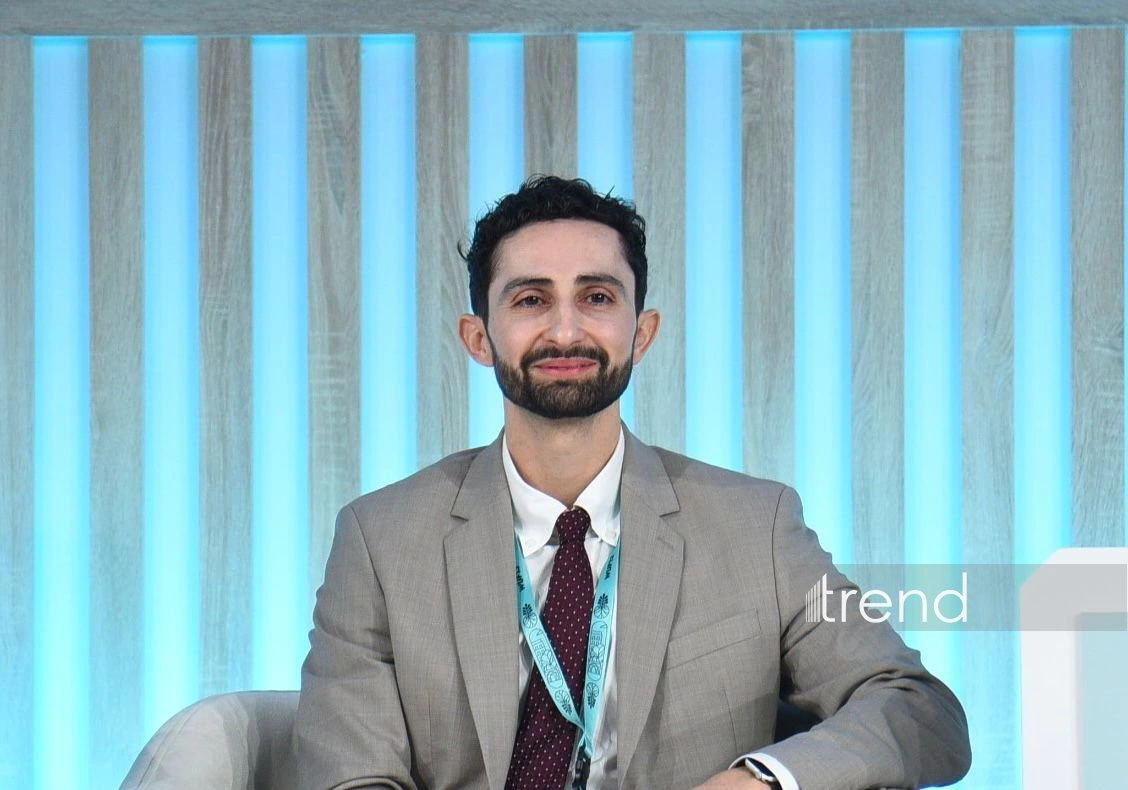
Partnerships and Engagement Manager for Clean Air Fund's Breathe
Cities Initiative, Manuel Trujillo, said at an event "Breathing
Life into the New Urban Agenda: Integrating Air Quality and Green
Infrastructure for Resilient Cities" within the framework of the
13th session of the World Urban Forum (WUF13) in Baku, Trend reports.
"These cities are not only located in Europe, but also in Asia.
In fact, 9 out of 19 cities are from Central and East Asia. Beijing
is one of the cities that has made the most progress in the last 15
years," he pointed out.
Trujillo emphasized that reducing air pollution isn't limited to
developed cities and that this process is possible on a global
scale.
"We believe that reducing air pollution is possible in any city,
regardless of its level of development," he noted.
He added that the Breathe Cities initiative is working on four
main areas: data collection and accessibility, community
engagement, technical support, and experience sharing.
According to him, the most important issue in the first phase is
to measure air pollution and make the invisible problem
visible.
"We need accurate data at the local level. Just an average for
the city is not enough, but also the most polluted and sensitive
areas need to be identified," the expert explained.
He also noted that it's possible to establish a large monitoring
network in cities through inexpensive sensors and share the data
with the public.
"This data should be open so that communities and civil society
can also use it and demand policies," he stressed.
Trujillo added that the role of young people in this process is
particularly important, and that the city of Johannesburg has
implemented a successful model in this direction.
He also highlighted that the initiative provides technical
support to city governments and ensures the dissemination of
successful experiences from different cities.
"London was the first pilot city of this program and served as a
model for other cities," he concluded.
Today marks the fourth day of WUF13 in Baku.
The first day included a ministerial meeting dedicated to the
New Urban Agenda, a ministerial roundtable, assemblies for women
and civil society, business sessions, and discussions on urban
prosperity. An official ceremony marking the raising of the UN and
Azerbaijani flags also took place.
The second day stood out for the inaugural Leaders' Summit,
featuring high-level discussions on the global housing crisis,
urbanization policy, and urban resilience. Concurrently, the
opening of the Mexico City pavilion took place, serving as a
significant platform for expanding cooperation with the Latin
American region and preparing for WUF14.
The third day of WUF13 featured a comprehensive program of
events covering the global housing crisis, the formation of safe
and inclusive cities, climate resilience, artificial intelligence
and urban governance, green urbanization, social equity, and
sustainable transport.
WUF13, which has attracted more than 40,000 registered
participants from 182 countries, will continue until May 22. Held
under the theme “Housing the world: Safe and resilient cities and
communities,” the forum brings together governments, international
organizations, experts, and representatives of civil society to
strengthen global cooperation in the field of sustainable urban
development.