BAKU, Azerbaijan, May 20. The challenges and
existing gaps requiring resolution in the field of urban
transformation remain numerous, demanding a highly systematic
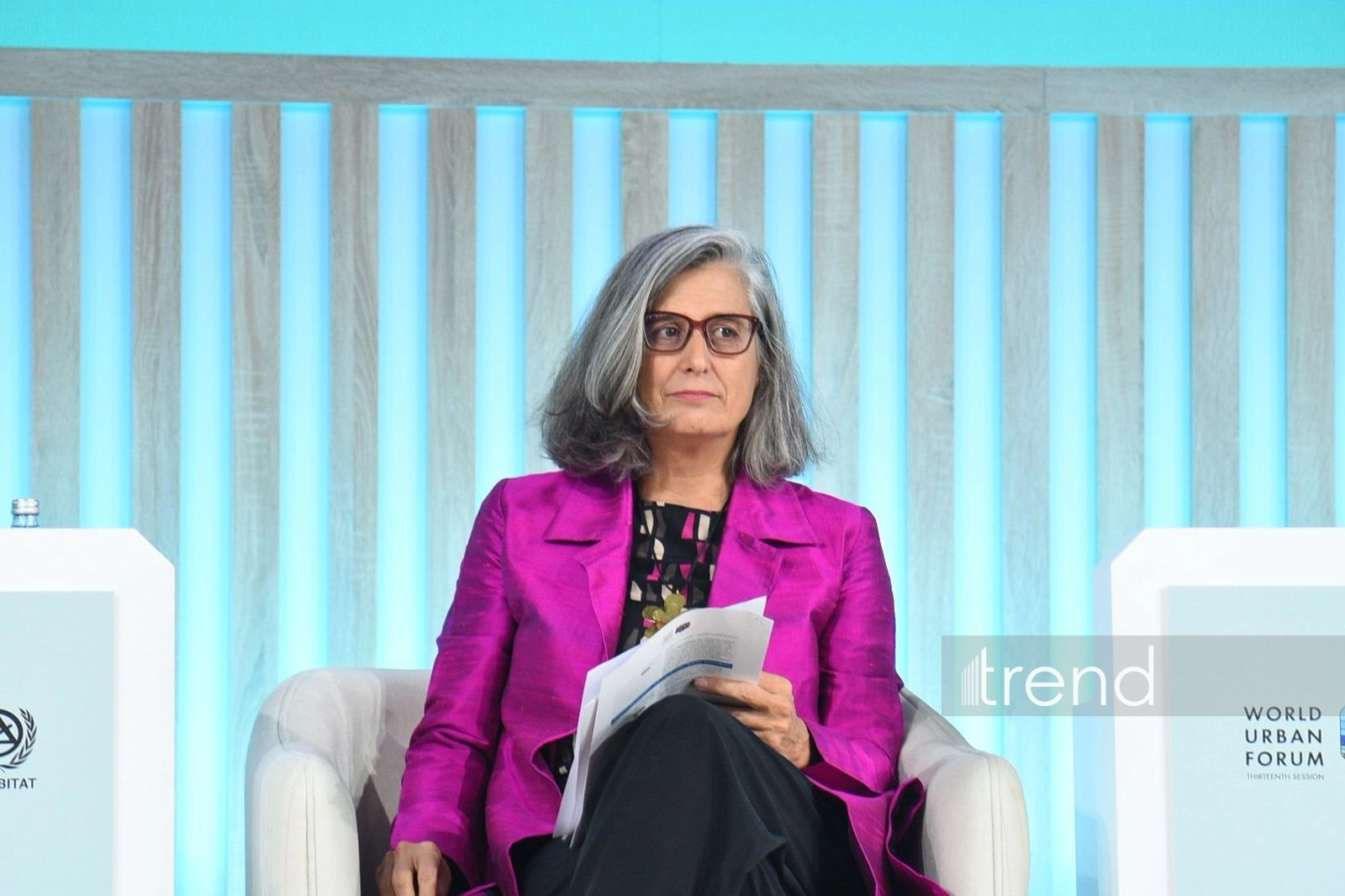
approach to these issues, Anaclaudia Rossbach, Executive Director
of the United Nations Human Settlements Programme (UN-Habitat),
said, Trend
reports.
The UN official made the remarks during an event titled
"Rethinking Cultural Heritage and Inclusive Urban Regeneration"
held within the framework of the 13th session of the World Urban
Forum (WUF13) in Baku.
According to her, overcoming these challenges must stand as a
top priority for urban planning policy.
"When discussing the cities of the future, focusing solely on
the future does not suffice; we must simultaneously look carefully
at the experiences of the past and the lessons of historical urban
development," Rossbach noted. "This is because a sustainable urban
model takes shape from balanced development that accounts for both
modern methodologies and the historical context."
She emphasized that the United Nations must act as a single
family in resolving these issues, strengthening coordination among
member states and supporting the promotion of inclusive, equitable,
and sustainable approaches throughout the urban transformation
process.
"We view the issue of cultural heritage and its preservation as
a separate development track. Protecting cultural heritage means
not only preserving the past but also shaping the identity of
future cities. Cultural development remains impossible without this
component; concurrently, sustainable development cannot fully
materialize without the preservation of cultural heritage," the
UN-Habitat chief concluded.
Today marks the fourth day of WUF13 in Baku.
The first day included a ministerial meeting dedicated to the
New Urban Agenda, a ministerial roundtable, assemblies for women
and civil society, business sessions, and discussions on urban
prosperity. An official ceremony marking the raising of the UN and
Azerbaijani flags also took place.
The second day stood out for the inaugural Leaders' Summit,
featuring high-level discussions on the global housing crisis,
urbanization policy, and urban resilience. Concurrently, the
opening of the Mexico City pavilion took place, serving as a
significant platform for expanding cooperation with the Latin
American region and preparing for WUF14.
The third day of WUF13 featured a comprehensive program of
events covering the global housing crisis, the formation of safe
and inclusive cities, climate resilience, artificial intelligence
and urban governance, green urbanization, social equity, and
sustainable transport.
WUF13, which has attracted more than 40,000 registered
participants from 182 countries, will continue until May 22. Held
under the theme “Housing the world: Safe and resilient cities and
communities,” the forum brings together governments, international
organizations, experts, and representatives of civil society to
strengthen global cooperation in the field of sustainable urban
development.