BAKU, Azerbaijan, May 20. The Sea Breeze
project, implemented on the coast of the Caspian Sea, is being
formed as a large-scale urban development model based on the "city
within a city" concept, which currently has over 50,000 residents
and is designed for settlement of half a million people in the
future in the master plan, Sales Director at Sea Breeze,
Ena-Kamelia Melikova,said, Trend reports.
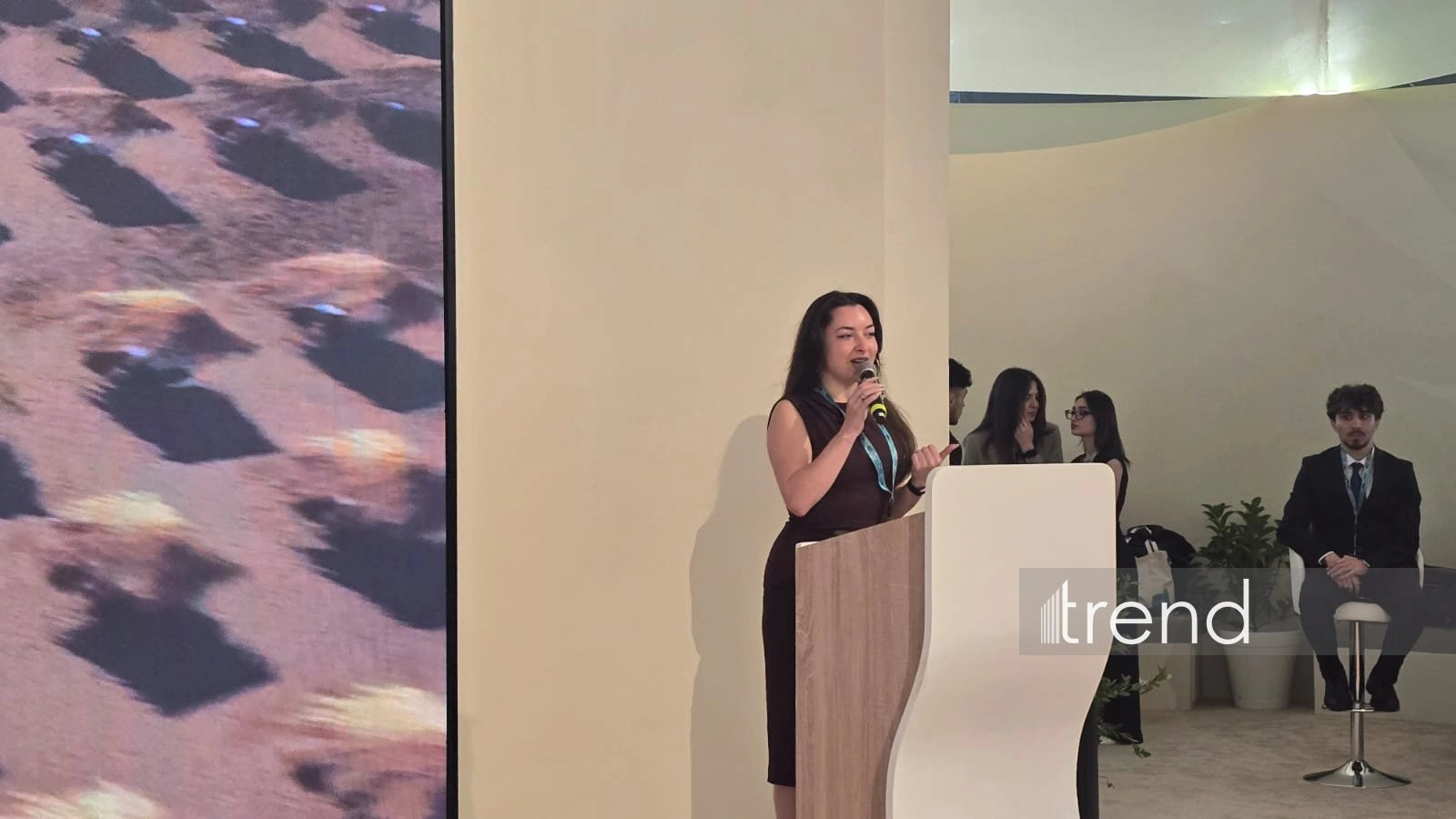
She made the remark at an event entitled "Delivering Smart and
Sustainable Urban Projects in Azerbaijan within the framework of
the 13th session of the World Forum of Cities (WUF13) in Baku.
"This is not just a concept or a model, but a city that has been
implemented in reality. Currently, development work has been
carried out on an area of more than 4 million square meters,
and the project has been actively expanded for 5-6 years," she
explained.
According to her, Sea Breeze began with an initial stage of 7
kilometers along the Caspian coast and will cover a total of 22-23
kilometers of coastline.
The project plans to cover more than 30 million square meters of
construction area, including residential buildings, hotels,
commercial facilities, and various infrastructure.
The representative emphasized that the project initially started
with a small hotel and restaurant complex called "Shorehouse", and
then moved to the development stage with the "Lighthouse"
project.
"After 2018, we introduced the management model of apart-hotels
and residential buildings. This system creates great convenience
for investors, as property management, leasing, and sale are
carried out professionally," she said.
According to the Sea Breeze official, artificial peninsulas and
large-scale zones are being created within Sea Breeze.
"Marriott, Hilton, and other international hotel brands will
operate on the 50-hectare artificial peninsula called 'Half Moon',"
she noted.
The project also includes the construction of the tallest
building in Azerbaijan, the Cipriani Tower, with a height of 323
meters.
She also said that the architectural solutions of the project
are being developed in cooperation with international
companies.
"We are working with Scott Brownrigg, Shaun Killa, and other
well-known architectural bureaus," she emphasized.
According to Melikova, a casino infrastructure is also planned
for Sea Breeze.
"This will be the largest casino in Europe and the fifth largest
in the world, and the first such project in the region. At the same
time, a new artificial island called 'Fire Island' of 200 hectares
is also planned. Residential, commercial and hotel infrastructure
will be created on this area and will be part of a complex urban
concept," she noted.
The Sea Breeze official said that special attention is paid to
greenery and landscaping.
"We invested $ 30 million in landscaping last year, and in 2026
this figure is planned to exceed $ 50 million. More than 11 million
plants have already been planted," she emphasized.
She added that digital 3D modeling and simulation systems are
used to manage the project.
"We also manage Sea Breeze as a digital model based on Unreal
Engine. This allows us to visualize the entire project in real
time," she noted.
The representative also pointed out that the project is
expanding internationally.
"We are implementing the Sea Breeze Uzbekistan projects in
Uzbekistan and the Sea Breeze Montenegro projects in Montenegro,"
she clarified.
According to her, these projects, implemented in Azerbaijan and
abroad, are developing as a new example of the "city inside the
city" model and combine the residential, business, tourism and
service sectors.
Today marks the fourth day of WUF13 in Baku.
The first day included a ministerial meeting dedicated to the
New Urban Agenda, a ministerial roundtable, assemblies for women
and civil society, business sessions, and discussions on urban
prosperity. An official ceremony marking the raising of the UN and
Azerbaijani flags also took place.
The second day stood out for the inaugural Leaders' Summit,
featuring high-level discussions on the global housing crisis,
urbanization policy, and urban resilience. Concurrently, the
opening of the Mexico City pavilion took place, serving as a
significant platform for expanding cooperation with the Latin
American region and preparing for WUF14.
The third day of WUF13 featured a comprehensive program of
events covering the global housing crisis, the formation of safe
and inclusive cities, climate resilience, artificial intelligence
and urban governance, green urbanization, social equity, and
sustainable transport.
WUF13, which has attracted more than 40,000 registered
participants from 182 countries, will continue until May 22. Held
under the theme “Housing the world: Safe and resilient cities and
communities,” the forum brings together governments, international
organizations, experts, and representatives of civil society to
strengthen global cooperation in the field of sustainable urban
development.