BAKU, Azerbaijan, May 20. Panama is seeking to
strengthen its relations with Azerbaijan and learn from the
country’s experience in urban planning, reconstruction, and the
reintegration of internally displaced persons, Panamanian Minister
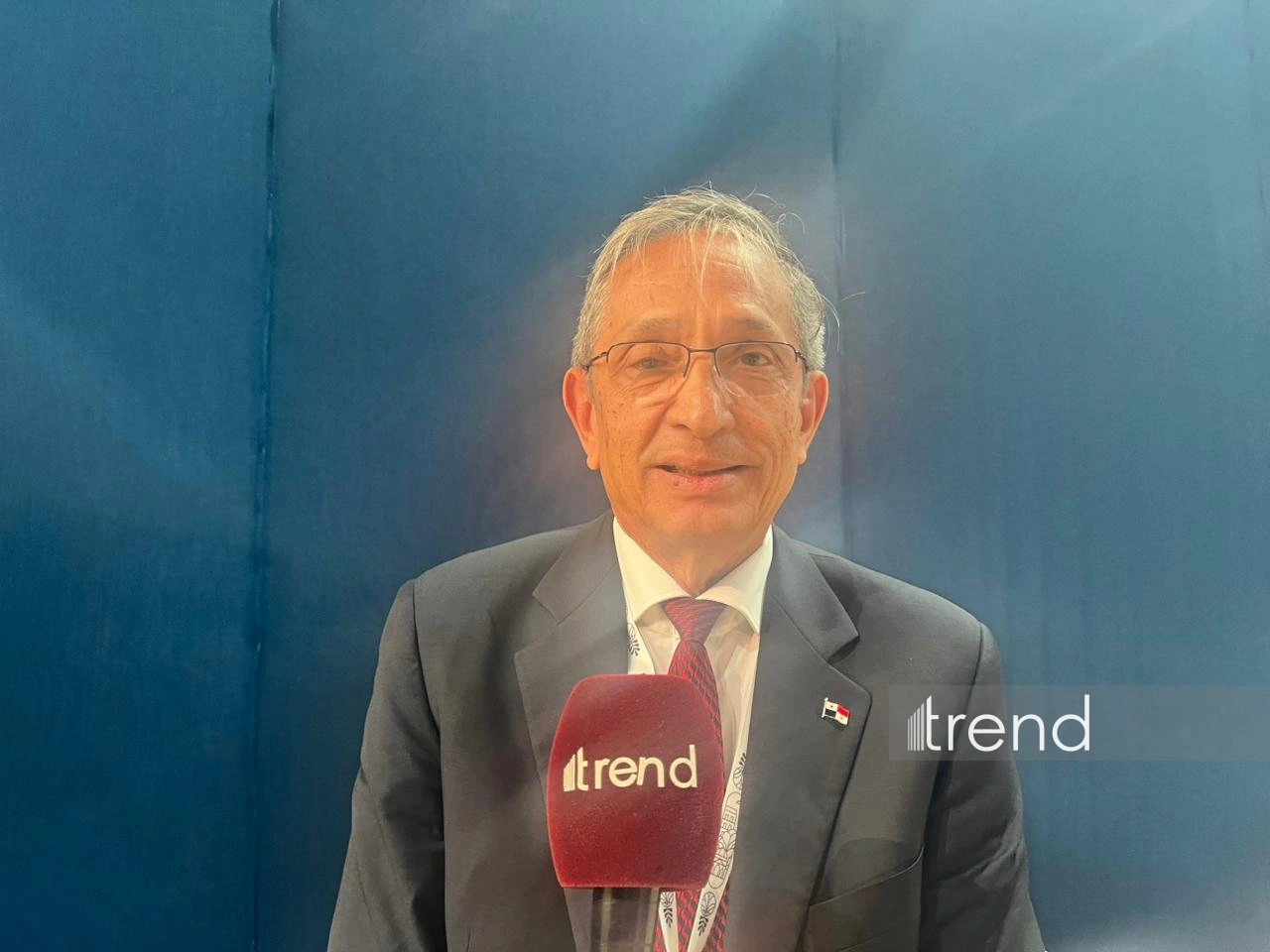
of Housing and Territorial Planning Jaime Giovanelli, told Trend on the sidelines of
the 13th session of the World Urban Forum (WUF13) in Baku.
He said relations between Panama and Azerbaijan are currently at
a high level, with both sides aiming to further expand
cooperation.
“Our relations are very strong. We want to further strengthen
these relations and we have a lot to learn,” he said.
Giovanelli noted that the Panamanian delegation visited Baku
specifically to study international experience and observe urban
reconstruction processes firsthand.
“We came here to see the experiences, to learn how problems are
solved and how cities are rebuilt,” he said.
He also highlighted remarks by Azerbaijani President Ilham
Aliyev on the return of internally displaced persons and the
reconstruction of liberated territories, saying these issues were
of particular interest.
“It was very interesting for me that President Ilham Aliyev
spoke about restoring housing solutions for internally displaced
persons, their return to their native places, and people
contributing to the revival of their cities,” Giovanelli said.
The minister added that Azerbaijan’s experience in this field
serves as an important model for Panama to study and potentially
adapt.
In the mean time, today marks the fourth day of WUF13 in
Baku.
The first day included a ministerial meeting dedicated to the
New Urban Agenda, a ministerial roundtable, assemblies for women
and civil society, business sessions, and discussions on urban
prosperity. An official ceremony marking the raising of the UN and
Azerbaijani flags also took place.
The second day stood out for the inaugural Leaders' Summit,
featuring high-level discussions on the global housing crisis,
urbanization policy, and urban resilience. Concurrently, the
opening of the Mexico City pavilion took place, serving as a
significant platform for expanding cooperation with the Latin
American region and preparing for WUF14.
The third day of WUF13 featured a comprehensive program of
events covering the global housing crisis, the formation of safe
and inclusive cities, climate resilience, artificial intelligence
and urban governance, green urbanization, social equity, and
sustainable transport.
WUF13, which has attracted more than 40,000 registered
participants from 182 countries, will continue until May 22. Held
under the theme “Housing the world: Safe and resilient cities and
communities,” the forum brings together governments, international
organizations, experts, and representatives of civil society to
strengthen global cooperation in the field of sustainable urban
development.