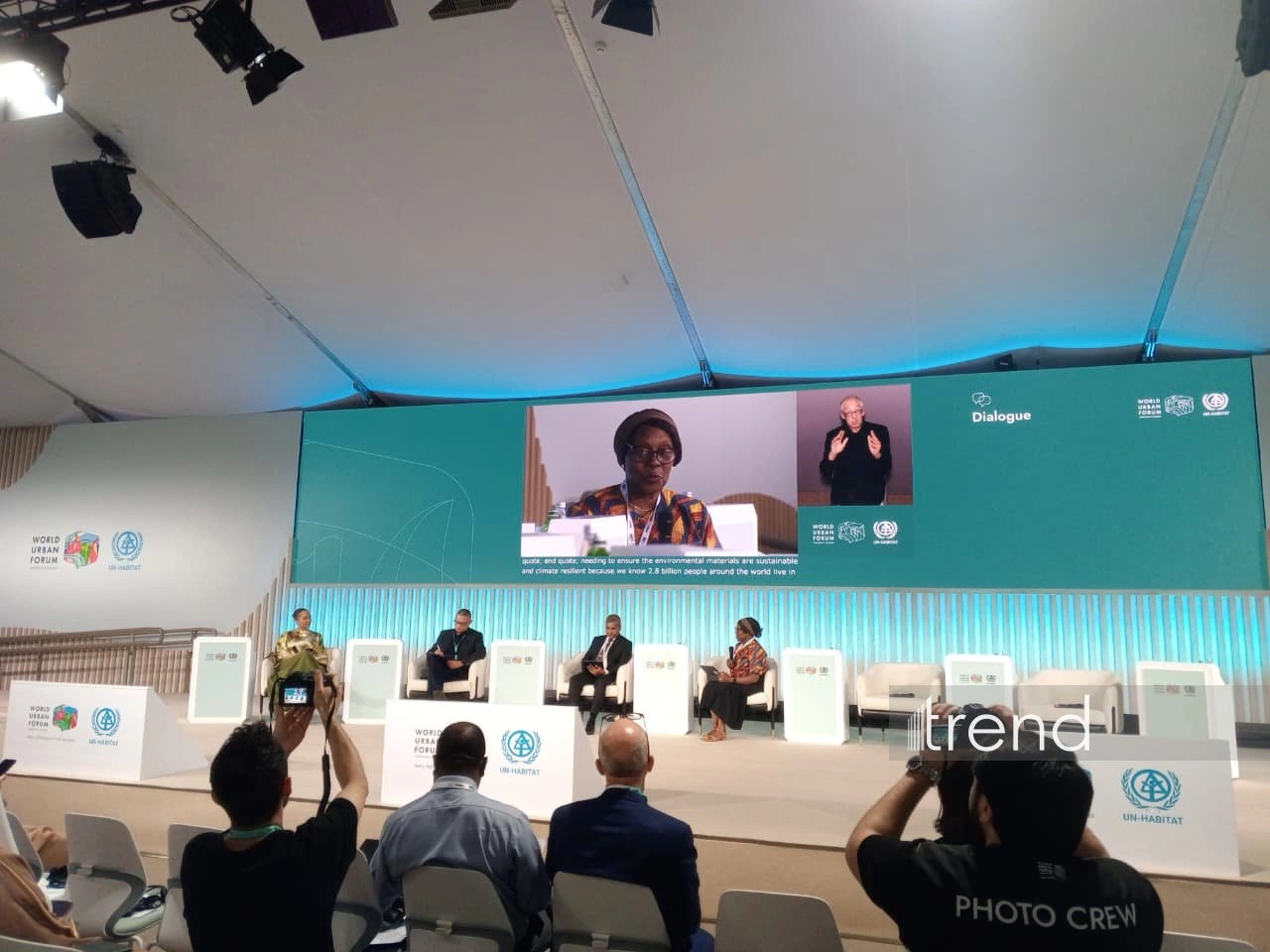
BAKU, Azerbaijan, May 20. Solutions in the
housing sector must simultaneously ensure climate resilience,
energy efficiency, and social affordability, otherwise they
entrench long-term inequality, Elizabeth Maruma Mrema, UN Assistant
Secretary-General and Deputy Executive Director of the United
Nations Environment Programme (UNEP), said, Trend reports.
The official made the remarks during a panel session titled "The
Climate-Housing Nexus" held within the framework of the 13th
session of the World Urban Forum (WUF13) in Baku.
"We must understand how important a home is for every person,
regardless of social status. This means, first of all, that we need
to ensure that housing in every community is decent,
climate-resilient, energy-efficient, and environmentally
sustainable," she noted.
According to her, ensuring housing affordability for all
segments of the population remains a critical issue.
"When we speak about housing, especially in a social context, we
are talking about who can and who cannot afford to secure it. Our
main priority is to guarantee housing affordability for the entire
community," she added.
She also emphasized the importance of using eco-friendly
building materials and adopting a systemic approach to sustainable
construction.
"We know that billions of people around the world live in homes,
and a significant portion of them reside in informal settlements,"
Mrema said, pointing out the necessity to overhaul incentives in
the construction sector and eliminate market imbalances that affect
the quality and sustainability of housing.
Today marks the fourth day of WUF13 in Baku.
The first day included a ministerial meeting dedicated to the
New Urban Agenda, a ministerial roundtable, assemblies for women
and civil society, business sessions, and discussions on urban
prosperity. An official ceremony marking the raising of the UN and
Azerbaijani flags also took place.
The second day stood out for the inaugural Leaders' Summit,
featuring high-level discussions on the global housing crisis,
urbanization policy, and urban resilience. Concurrently, the
opening of the Mexico City pavilion took place, serving as a
significant platform for expanding cooperation with the Latin
American region and preparing for WUF14.
The third day of WUF13 featured a comprehensive program of
events covering the global housing crisis, the formation of safe
and inclusive cities, climate resilience, artificial intelligence
and urban governance, green urbanization, social equity, and
sustainable transport.
WUF13, which has attracted more than 40,000 registered
participants from 182 countries, will continue until May 22. Held
under the theme “Housing the world: Safe and resilient cities and
communities,” the forum brings together governments, international
organizations, experts, and representatives of civil society to
strengthen global cooperation in the field of sustainable urban
development.