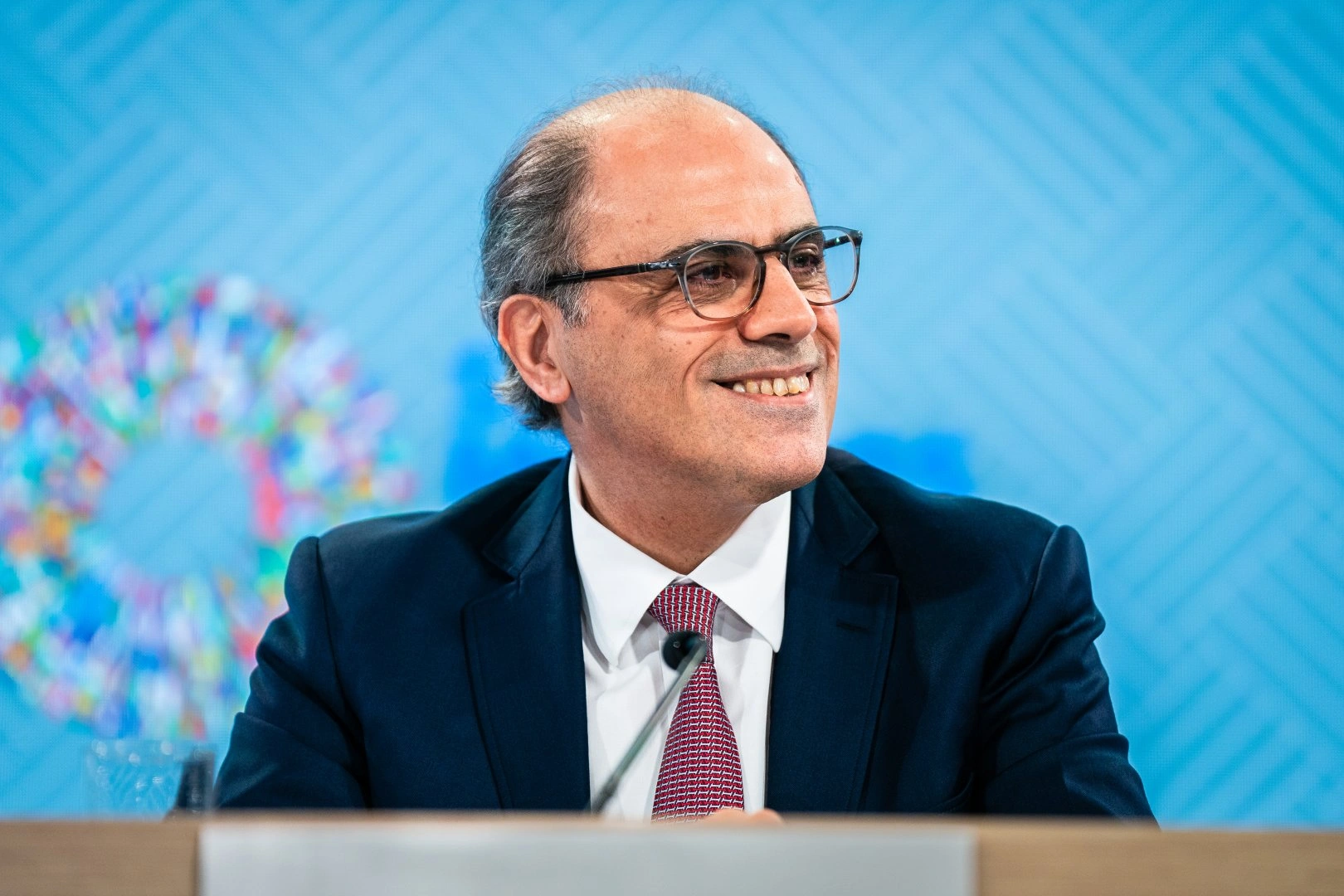
BAKU, Azerbaijan, May 5. Azerbaijan needs to
use benefits from energy windfalls amid the geopolitical situation
in the Middle East to build buffers, Jihad Azour, Director of the
Middle East and Central Asia Department at the International
Monetary Fund (IMF) said in an exclusive interview with Trend News Agency.
“The difference between Azerbaijan and other countries in
Central Asia and the Caucasus is that Azerbaijan is an
oil-exporting, oil and gas-producing country. Therefore, the
increase in prices of oil and gas are a positive development for
Azerbaijan, which may not be the case for other countries in the
region. Therefore, this is one positive development that benefits,
in the short term, the economy of Azerbaijan. Of course, what is
important when you have this kind of unexpected windfalls is to
remain vigilant, not to consider this as a permanent increase in
revenues, and therefore treat this as a way for Azerbaijan to build
buffers,” he said.
Azour recalled that Azerbaijan is a country that is adjacent to
where the conflict is taking place, and therefore, needs to be
attentive.
“Again, it's very important also here to remain very much
attentive to the risks and take precautionary measures for that in
order to limit the risk premium that could arise because of the
proximity to the zone of conflict. I think this is something that
always helps countries which have this kind of benefits in
adversity. It is important to view it as a way to build resilience.
Again, building resilience requires vigilance on the one hand and
the wise use of resources on the other,” he added.
Azour pointed out that amid the high level of uncertainty in the
world, it is very important to use this moment to build buffers:
“Buffers are very important, because they provide you with the
capacity to respond to a crisis.”
“The second important element is that Azerbaijan is also
embarking on large investment projects in terms of reconstruction,
strengthening institutions, assessing the quality of expenditure
management, investment management. Those are important factors,
given the size of those spendings and the expectations of the
population. Therefore, strengthening the capacity of finance to
manage investment, manage complex public spending is important,” he
noted.
Third, Azour believes that at the central bank level, it is
important to improve monetary policy mechanisms and transmission,
especially in a context where inflation may pose risks.
“This requires institutions with right policies, including
strengthening the central bank’s institutional framework,
increasing its capability, improving communication of monetary
policy decisions, and increasing the central bank’s capacity to
control the financial system. Last but not least, in order to
embrace the opportunities that regional integration could create,
you need to do structural reforms. The IMF is an advisor, is a
partner to Azerbaijan in order to help accelerate those structural
reforms,” he added.
He pointed out that there is a need for a clear communication of
the monetary policy decisions, strengthening the quality of
statistics.
“As for the supervision of the financial sector, make sure that
the central bank and various agencies are well equipped in order to
keep the financial sector stable. Those are pretty much the reforms
that countries need. Of course, in a world where we have high level
of volatility, it's really important to be conservative when it
comes to the medium-term planning or the medium-term projections on
economic issues. First of all, the level of uncertainty is
extremely high. We are now two months since the outbreak of the
war, and this war had a major economic impact on the region, mainly
on the Gulf region and beyond. Internationally, with increasing oil
and gas prices, as well as derivatives of oil and gas, chemical
products constitute a new challenge for price stability.
This, of course, increases the level of pressure that we see
currently. With the high level of uncertainty, it's very important
for countries to remain vigilant. Those who are outside the zone of
conflict need to use this as a windfall, not as a structural source
of revenue. And this is why it's very important to manage wisely,
build buffers and to be very vigilant. There's a great opportunity
here to increase the level of connectivity, and this is something
that we have worked on between Central Asia and the Caucasus,
Middle East, especially with the Gulf. There are opportunities for
investments, trade, and for strengthening connectivity in order to
bypass risks,” he added.
Azour also touched upon the growing importance of the Middle
Corridor amid the growing geopolitical uncertainties.
“Geopolitical risks with the recent developments are calling for
more agility in finding other channels for trade in the world.
Therefore, this is an opportunity to offer to the world a channel
that would not replace the others, but a complementary channel to
increase the fluidity of movement of goods between different
geographies. Also, the improvement of the geopolitical front makes
this opportunity more realistic. Of course, this would require to
build an alternative that is not only based on infrastructure, but
also to strengthen key elements in terms of coordination between
institutions, between customs authorities, simplifying customs
procedures, allowing the private sector to operate with a global
approach, improve the flexibility in managing transshipment and all
kinds of logistics facilities that reduce the cost and the duration
and increase the predictability of trade. Therefore, those are
important reforms to give this opportunity the full impact,” he
added.
The second priority, according to Azour, is to deepen the
financial market through greater coordination and by standardizing
financial sector operations: “This would help build a more
developed market, increase its size, and allow smoother capital
flows. Those are important elements that make opportunities like
the Middle Corridor more competitive, turning it into an
alternative trade route for goods, people, and services.”
Further, he spoke about the regional situation in the South
Caucasus and Central Asia, noting the importance of not being
complacent.
“Countries in the region have been enjoying recently a good
level of growth and performance. The first advice is not to be
complacent, because we are living in a shock-prone world.
Therefore, it's very important to preserve the buffers as strong as
possible. Also, we live in a world where we see higher volatility
in oil and gas prices, and therefore always plan accordingly to
avoid the super prices. Developing medium-term fiscal frameworks,
strengthening fiscal institutions, providing predictability to
investors, to the market, to the citizen is being important on the
fiscal side. Especially for a country that is increasing capital
spending, building a transparent framework of investment management
and so on, is an important element in strengthening confidence and
reducing risks, especially when you resort to public-private
partnerships.
Therefore, institutional reforms matter, and medium-term
planning is also very important. On the fiscal side, diversifying
revenues outside energy is also very important. On the expenditure
side, the focus should shift more toward strengthening automatic
stabilizers—fiscal measures that ease economic pressure—and
improving the targeting of transfers and spending to better address
the needs of vulnerable groups. This is what on the fiscal side is
needed. In addition to that, given the high level of uncertainty,
at the monetary side, it is important to have clarity of objectives
that should revolve on inflation management, reducing the risk of
inflation, especially in a world where prices could be driven up
because of the oil shock,” Azour explained.
Azour went on to add that technical assistance is one of IMF’s
main vectors of support to countries in the region, which may not
need financing, but are in the midst of reform and reform
management.
“To this end, the IMF has established the center in the region
to be closer to countries, has also scaled up the technical
assistance in order to cater for the region’s transformation.
Over the last three years, this region has been enjoying a
fairly good level of growth, good economic performance, was mildly
affected by the shocks that occurred around it. There is an
opportunity now, with the improvement of the geopolitical and
geoeconomic situation in the region, to play a bigger role as a
connector through the Middle Corridor and also to be more
integrated.
For that, the governments need to do reforms, both at the level
of central bank and fiscal level, as well as on the statistics.
This is where the IMF is very much engaged. The Fund is also
focused on another important dimension of being the center that
brings all the authorities of the region together. We have annually
a certain number of regional dialogues that happen at our center
and are coordinated by the Fund in order to bring more alignment
between authorities and to strengthen the level of cooperation
between countries in the region,” he concluded.