BAKU, Azerbaijan, April 27. The Trans Adriatic
Pipeline (TAP) consortium has started the implementation phase of
the Fier gas exit point project in Albania, the TAP AG consortium
told Trend.
"TAP can confirm that it has commenced the implementation phase
of the Fier gas exit point project, using the existing exit point
installed during the TAP construction phase at the ACS03 Gas
Compressor Station near Fier," said the consortium.
TAP AG noted that the project scope includes the construction of
a gas metering and pressure‑reduction facility adjacent to ACS03,
designed to supply gas to a future downstream gas pipeline.
"The Engineering, Procurement and Construction (EPC) contract
was awarded to the contractor in 2025. Engineering and procurement
activities are currently ongoing, with construction works on site
expected to start in mid‑2026. The planned completion date for the
project is Q4 2027," said the consortium.
According to TAP AG, the Fier exit point represents a
multimillion‑euro investment by TAP and will be handed over to the
Albanian government upon completion.
"It is a key enabler for Albania’s gasification efforts,
supporting the gradual development of the country’s gas
infrastructure and access to natural gas. The project will allow
Albania to connect to regional gas flows and strengthen gas
connectivity in Southeast Europe. TAP remains fully committed to
supporting Albania’s gasification and economic growth, backing the
country’s transition towards a secure and sustainable energy
future. As Albania’s gasification progresses, TAP’s role in the
region will be further enhanced," said the consortium.
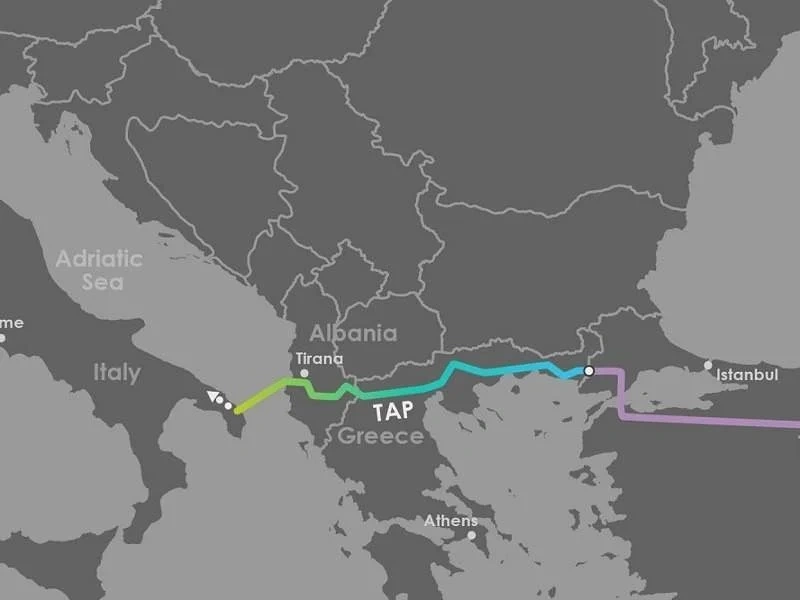
TAP forms the European segment of the Southern Gas Corridor,
transporting natural gas from Azerbaijan’s Shah Deniz field in the
Caspian Sea to European markets. Spanning approximately 878
kilometres, the pipeline connects with TANAP at the Greek–Türkiye
border, crosses Greece and Albania, traverses the Adriatic Sea, and
makes landfall in southern Italy.
With an initial transport capacity of around 10 billion cubic
metres (bcm) per year, TAP has been designed with potential for
expansion up to 20 bcm, subject to market demand and regulatory
approval.