Spanish Prime Minister Pedro Sánchez said the country was beginning to see “light at the end of the tunnel” in its fight against widespread wildfires, while warning that the situation remained difficult and criticising climate denial as a factor making Spain more vulnerable to extreme weather events.
Speaking at his traditional pre-summer press conference, Sánchez noted that climate denialism was "the worst possible fuel for tackling the climate emergency; it makes us much more vulnerable," Caliber.Az reports, citing Euronews.
He also argued that reaching a cross-party agreement on climate policy was "an imperative, not an option".
The prime minister urged people to remain extremely cautious as Spain faces rising temperatures and another heatwave forecast by the State Meteorological Agency (Aemet). The expected conditions are likely to complicate firefighting operations and raise the risk of new outbreaks across large parts of the country.
Although some of the largest fires have shown signs of improvement, Sánchez stressed that it was not yet time to reduce vigilance.
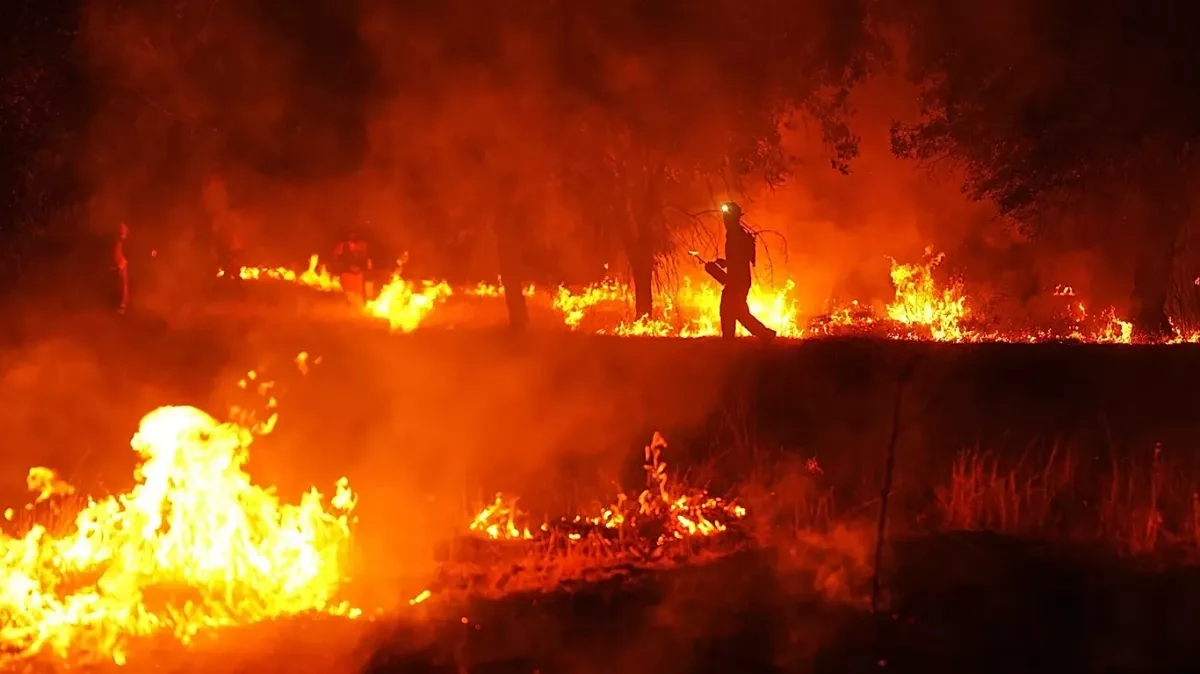
Firefighters are continuing operations in Ávila and in the areas surrounding San Martín de Valdeiglesias and Villa del Prado in the Madrid region. The blazes are being treated as one major wildfire after separate fire fronts merged, continuing to severely affect nearby communities.
Government figures show that nearly 100,000 people have been impacted across Castile and León, the Community of Madrid and Castile-La Mancha. More than 63,000 residents have been evacuated, while around 35,000 others remain confined to their homes.
Interior Minister Fernando Grande-Marlaska, speaking to TVE, made it clear that the efforts of recent days had delivered "reasonably positive" results.
In his words, nighttime operations had proven effective and that authorities were now focused on maintaining the progress achieved on the ground. Grande-Marlaska added that sufficient resources had been deployed, but emphasised the need to strengthen wildfire prevention measures and upgrade Spain’s fleet of firefighting aircraft.
The Interior Ministry announced that evacuation orders were lifted at 17:00 (15:00 GMT) on Tuesday in 13 municipalities affected by wildfires.
It remained unclear how many people were covered by the decision or whether all residents would immediately be able to return home. Nevertheless, authorities described the move as another indication of progress in containing the fires.
Despite improvements overnight, emergency services remain on the highest level of alert. A new heat dome is expected to bring extreme temperatures, dry conditions and stable atmospheric patterns that could revive dormant fire hotspots and make firefighting more difficult in affected areas including Ávila, Madrid, Toledo and Castellón.
Investigators believe the fires began after unauthorised use of heavy machinery in a forested area near Burgohondo. Since then, flames have swept through large sections of the Alberche Valley, the Sierra de Gredos, Tierra de Pinares, the Tiétar Valley and areas surrounding the El Burguillo reservoir.
By Bakhtiyar Abbasov