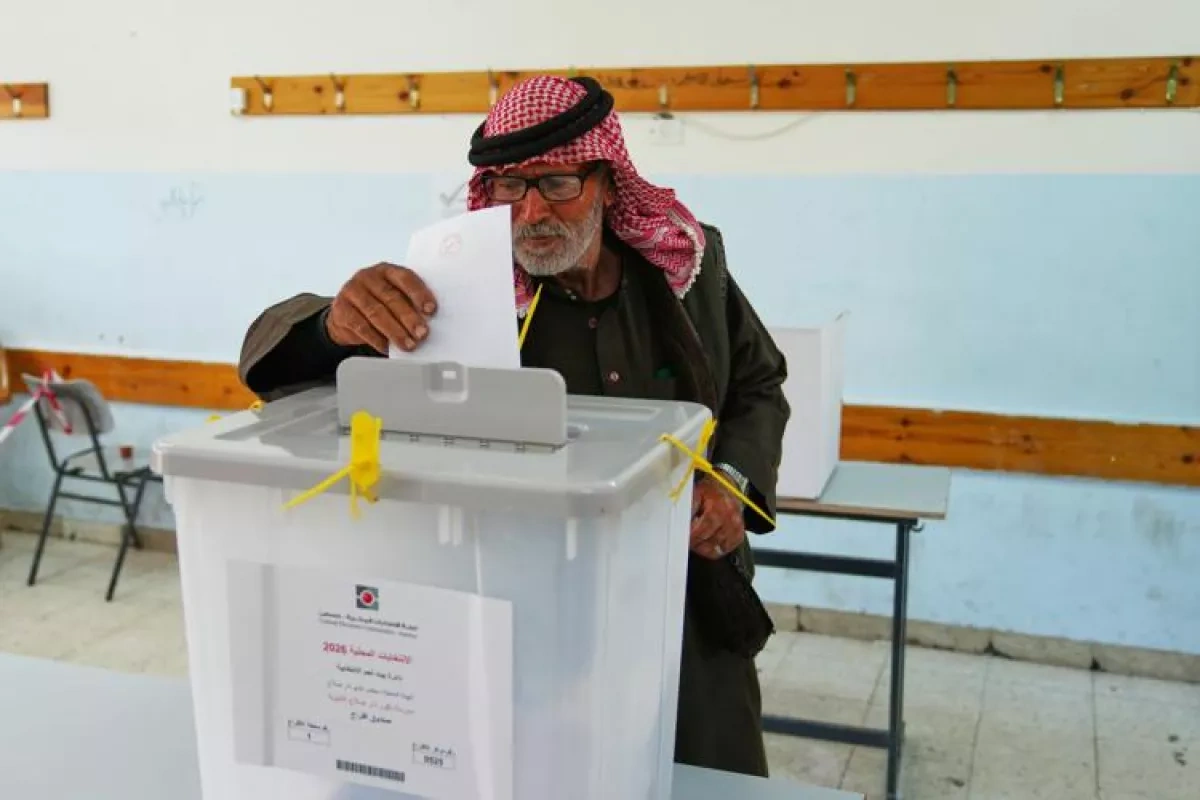
Palestinians in parts of Gaza and the West Bank headed to the polls this weekend in the first elections held in more than two decades.
The municipal vote in central Gaza’s Deir al-Balah was largely symbolic, described by officials as a “pilot” exercise. It forms part of the Palestinian Authority’s broader effort to politically reconnect Gaza and the West Bank, according to the Associated Press.
Palestinian President Mahmoud Abbas—who remains unpopular in the West Bank and is not involved in US-led postwar plans for Gaza—has long sought to establish an independent state encompassing both territories.
Hamas did not field candidates in Deir al-Balah, the only location in Gaza where voting took place. The city has suffered airstrike damage but has avoided a full-scale Israeli ground invasion during more than two years of war.
Observers told Anadolu Agency that the vote could mark an initial step toward rebuilding local institutions and improving administrative coordination between Gaza and the West Bank, despite the political split that has persisted since 2007.
In Deir al-Balah, turnout reached around 25%, which Jamil al-Khaldi, the Gaza regional director of the Central Elections Commission, described as “lower than expected.”
In the West Bank, roughly one million eligible voters were called to elect municipal councils in nearly 200 towns. The Central Elections Commission reported a final turnout of 53.44%, with 512,510 ballots cast.
Most electoral lists are affiliated with Abbas’s secular-nationalist Fatah movement or are running as independents. There are no lists linked to Hamas, which continues to control large parts of Gaza despite being significantly weakened by the war that followed the October 7, 2023 attacks on Israel.
The elections come against the backdrop of a long-standing Palestinian political divide that dates back to 2007, underlining their importance for local governance in the absence of legislative and presidential elections.
Analysts had predicted relatively low turnout, citing a range of challenges complicating the voting process. Besides ongoing hostilities, damaged infrastructure and poor road conditions make travel difficult, while the presence of numerous Israeli-administered checkpoints further slows movement.
Ahead of the vote, the United Nations Office for the Coordination of Humanitarian Affairs released a report, citing that by the end of 2025 it had documented 925 checkpoints, barriers and roadblocks restricting the movement of some 3.4 million Palestinians, including those in East Jerusalem.
By Nazrin Sadigova