BAKU, Azerbaijan, April 26. Trend News Agency
presents an overview of the main developments in Azerbaijan’s oil
and energy sector over the past week.
Oil sector
This week, a shipment of diesel fuel was shipped from Azerbaijan
to Armenia. A freight train consisting of 16 wagons carrying 974
tons of diesel fuel departed from the Bilajari station of
Azerbaijan Railways CJSC, heading towards Boyuk Kasik station.
On April 21, SOCAR announced the start date for seismic surveys
on the Mediterranean shelf.
A consortium comprising SOCAR, bp, and Israel's NewMed Energy is
expected to begin 3D seismic surveys in Zone 1, located on the
Israeli Mediterranean shelf, in September 2026.
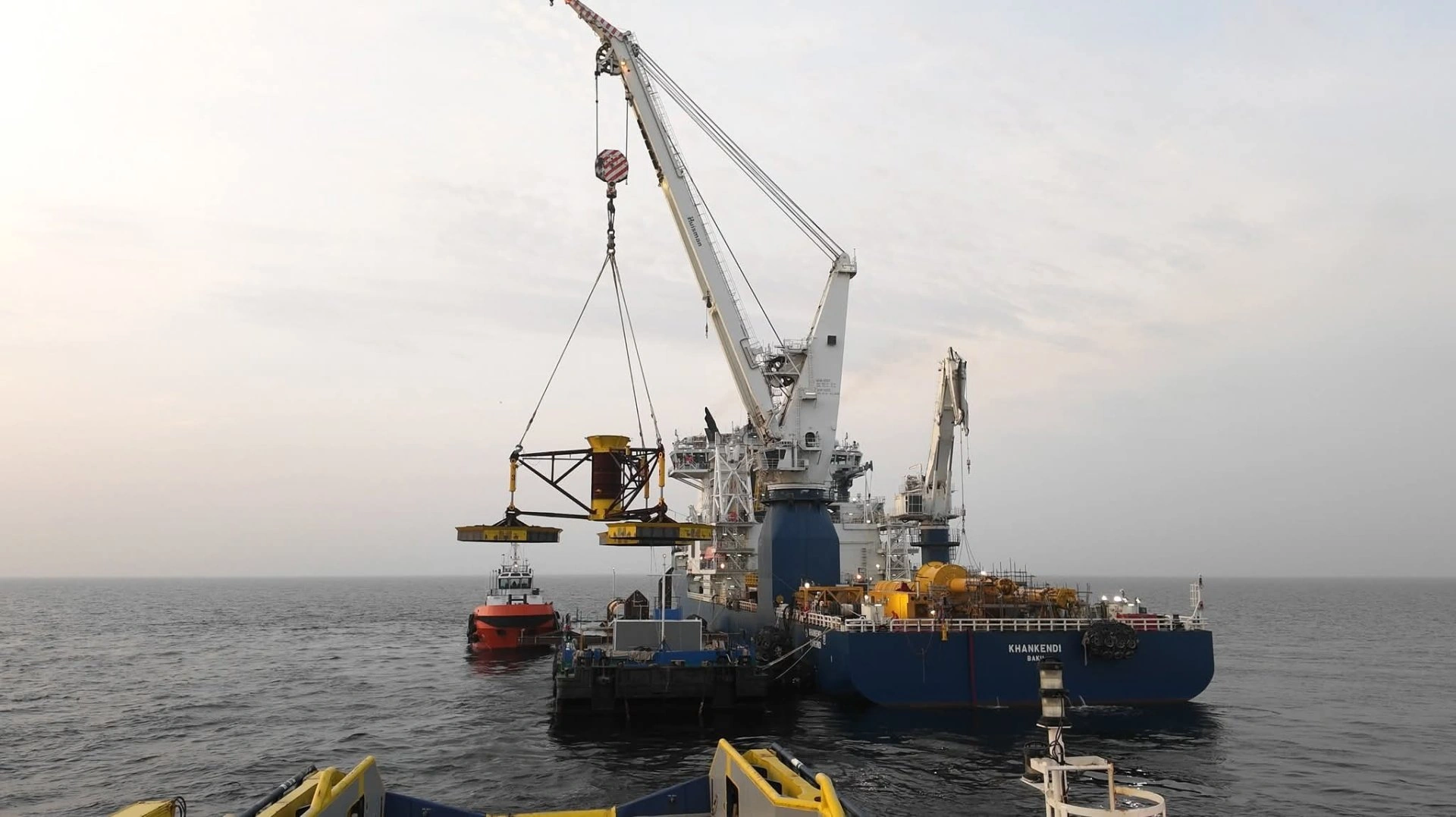
SOCAR Petroleum CJSC announced the commencement of ship-to-ship
fuel supply operations in the Caspian Sea. This step marks a new
stage in the company's development and further strengthens
Azerbaijan's position in maritime logistics and fuel supply. The
first such operation was successfully carried out in accordance
with international standards.
On April 23, the Second Caspian and Central Asian Oil Logistics
and Trade Forum opened in Baku. The forum's agenda covered key
areas, including transport and infrastructure, financial aspects
and transactions, and trading strategies in a changing global
environment.
The forum aimed to develop professional dialogue, exchange
experiences, and establish business contacts in regional oil
trading and logistics.
This week, average prices for Azeri Light CIF, Urals, Dated
Brent, and Azeri Light FOB Ceyhan crude oil decreased.
The average price of Azeri Light CIF crude oil, produced at the
Azeri-Chirag-Gunashli field in Azerbaijan, fell by $3.39, or 2.9%,
compared to the previous week, reaching $112.1.
The average price of Azeri Light crude oil FOB Ceyhan, Türkiye,
was $109.01 per barrel, down $2.42, or 2.2%, from the previous
week.
The average price of Urals crude oil decreased by $0.19, or
0.2%, compared to the previous week, to $84.5 per barrel.
The average price of Dated Brent crude oil was $109.69, down
$8.22, or 7%, from the previous week.
Gas sector
According to the Azerbaijani Ministry of Energy, 91.5 million
tons of oil and 19.6 billion cubic meters of gas have been produced
since the commissioning of the Deepwater Gunashli platform.
Furthermore, this week, Serbian Minister of Mining and Energy
Dubravka Djedović Handanović announced that Serbia is discussing
flexible gas supplies with Azerbaijan in the amount of up to 0.9
billion cubic meters per year, with the potential to increase to
1.4 billion cubic meters annually after the completion of the
gas-fired power plant in Niš in 2030.
Green economy
On April 20, the Azerbaijani Ministry of Energy announced the
share of renewable energy in Azerbaijan's daily electricity
generation, reaching 34.1%.
The investors in the Shafag solar energy project—bp, SOCAR
Green, the Azerbaijan Business Development Fund, and MVM—announced
the project's transition to the next stage, beginning the
installation of solar panels at the construction site in the
Jabrayil district. The installation of the first solar module was
completed earlier this month, and construction continues on
schedule.
Nadir Imanov, bp's Vice President for Finance for the
Azerbaijan-Georgia-Türkiye region, noted that the commencement of
this phase marks a significant milestone in the project's
implementation. He said that, together with his partners, the focus
is on ensuring the safe and efficient execution of the work. He
emphasized that the project will contribute to the development of
the renewable energy sector and the decarbonization of operations
in the region, supporting Azerbaijan's energy transition.