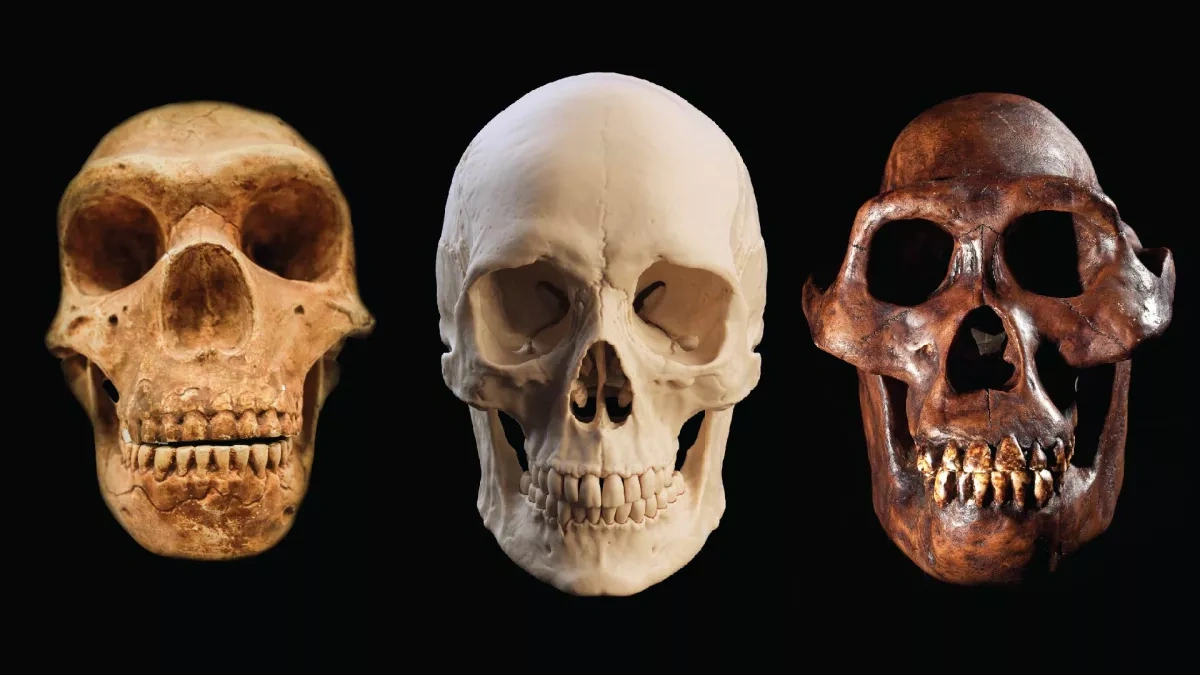
Rarely-conducted research on the remains of a Neanderthal child appears to show that infants have developed more rapidly than modern human babies, potentially as an evolutionary adaptation to colder and more demanding environments.
The findings are based on the remains of a young Neanderthal discovered in Amud Cave in the 1990s in Israel. The study suggests that Neanderthals and Homo sapiens followed distinct developmental article by LiveScience elaborates.
"The results of this study suggest that the growth trajectory of young Neandertal infants may have differed from that of H. sapiens," researchers wrote in the paper, published April 15 in the journal Current Biology.
The study indicates that Neanderthal babies experienced accelerated physical development in their earliest years, before their growth patterns aligned more closely with those of modern humans later in childhood.
"This suggests an evolutionary strategy emphasizing accelerated development in the early years of life, likely advantageous in the harsh environments Neandertals inhabited," the researchers wrote.
The conclusions are drawn from the partial skeleton of a child known as Amud 7, which was reconstructed from more than 100 bone fragments, including parts of the limbs, chest and skull. Despite the child’s young age, the remains already showed characteristic Neanderthal features.
Determining the child’s exact age at death has proven challenging, in part because well-preserved Neanderthal infant skeletons are extremely rare.
Neanderthals are our closest extinct human relatives and were the first early human fossils to be formally identified, following their discovery in Germany in 1856. They lived roughly between 400,000 and 40,000 years ago, inhabiting regions across Europe as well as parts of southwest and central Asia.
Evidence from both fossil records and genetic studies indicates that Neanderthals and early modern humans diverged from a common ancestor at least 500,000 years ago. For a period, the two groups coexisted, and genetic data shows that many people today still carry about 2% Neanderthal DNA.
In contrast to early humans in tropical Africa, where plant-based food sources were available year-round, Neanderthals faced far more seasonal constraints. During colder months, the availability of edible plants dropped sharply, pushing them to rely more heavily on alternative food sources such as meat. Archaeological evidence suggests that Neanderthals were highly adapted, seasonal hunters, targeting animals that were accessible at different times of the year.
Different growth patterns in early childhood
Scientists typically estimate the age of ancient children by examining tooth development and bone growth. While modern human growth patterns are well documented, Amud 7 revealed a mismatch between the two.
The child’s lower front teeth suggested an age of about six months. However, the bones more closely resembled those of a 14-month-old modern human infant, pointing to a faster pace of early physical development.
The study found that while Neanderthal newborns were broadly similar to modern human infants in tooth formation and limb length, they had noticeably larger skulls.
Between roughly one and six years of age, Neanderthals’ bodies grew significantly faster than their teeth, unlike modern humans, whose physical and dental development tends to progress in tandem.
By later childhood, however, Neanderthal growth patterns appeared to even out and become more comparable to those of modern humans.
By Nazrin Sadigova