ASTANA, Kazakhstan, April 16. Kazakhstan has
proposed organizing a conference on sustainable economic growth in
partnership with the World Bank, Trend reports via the press service of the Kazakh
government.
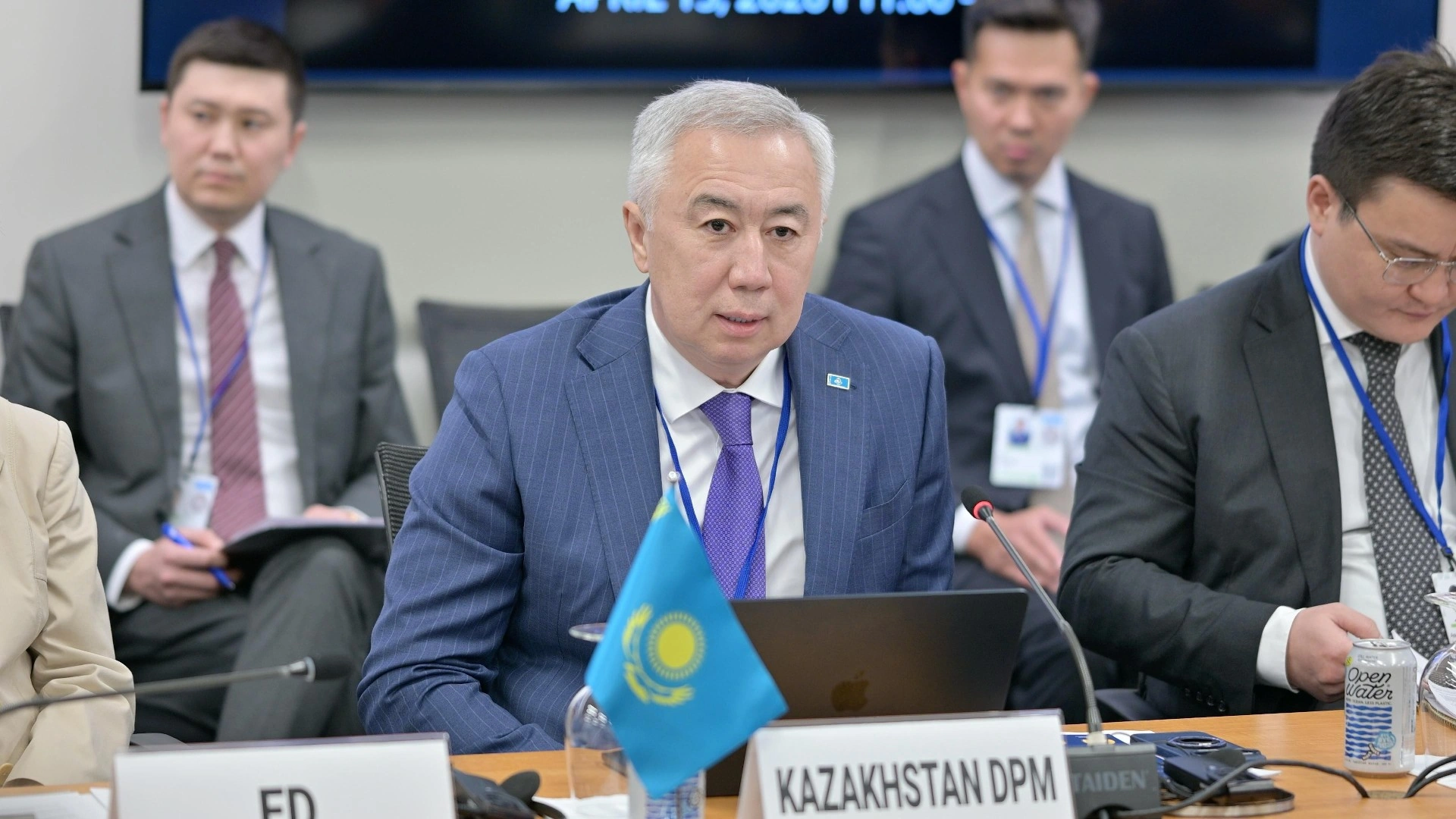
The initiative was presented by Deputy Prime Minister and
Minister of National Economy Serik Zhumangarin during the
roundtable, held at the World Bank headquarters in Washington.
According to the Deputy Prime Minister, Kazakhstan is
consistently implementing reforms across key sectors, creating
conditions for sustainable and high-quality economic growth.
During the roundtable, Advisor to the President and Chairman of
the Agency for Strategic Planning and Reforms Asset Irgaliyev
outlined the country’s main development priorities, stressing that
ongoing reforms are aimed at forming a coherent and long-term
economic policy.
Furthermore, it was noted that the national economy continues to
show stable dynamics. In recent years, annual GDP growth has
consistently exceeded 5%, reaching 6.5% in 2025. Goods production
increased by 8.7%, while the services sector grew by 5.2%.
Investment remains a key driver of growth. In 2025, fixed
capital investment rose by 13% to $43.6 billion (22.7 trillion
tenge). Gross foreign direct investment inflow reached $20.5
billion (+14.4%).
Growth momentum is continuing into 2026. Despite a temporary
decline in oil production due to an incident at Tengizchevroil and
restrictions on the Caspian Pipeline Consortium, the economy
continued to expand. In the first quarter, GDP grew by 3%, driven
by manufacturing (8.5%), transport (12.8%), and construction
(14.8%).
Macroeconomic stability remains strong. International reserves
increased by 23.8% since the beginning of 2025, reaching $129.5
billion, including $62.9 billion in National Fund assets.
Kazakhstan also maintains a low level of public debt. For more
than ten years, the debt-to-GDP ratio has remained stable at around
25%. As of January 1, 2026, public debt stood at about $73 billion,
or 22.8% of GDP.