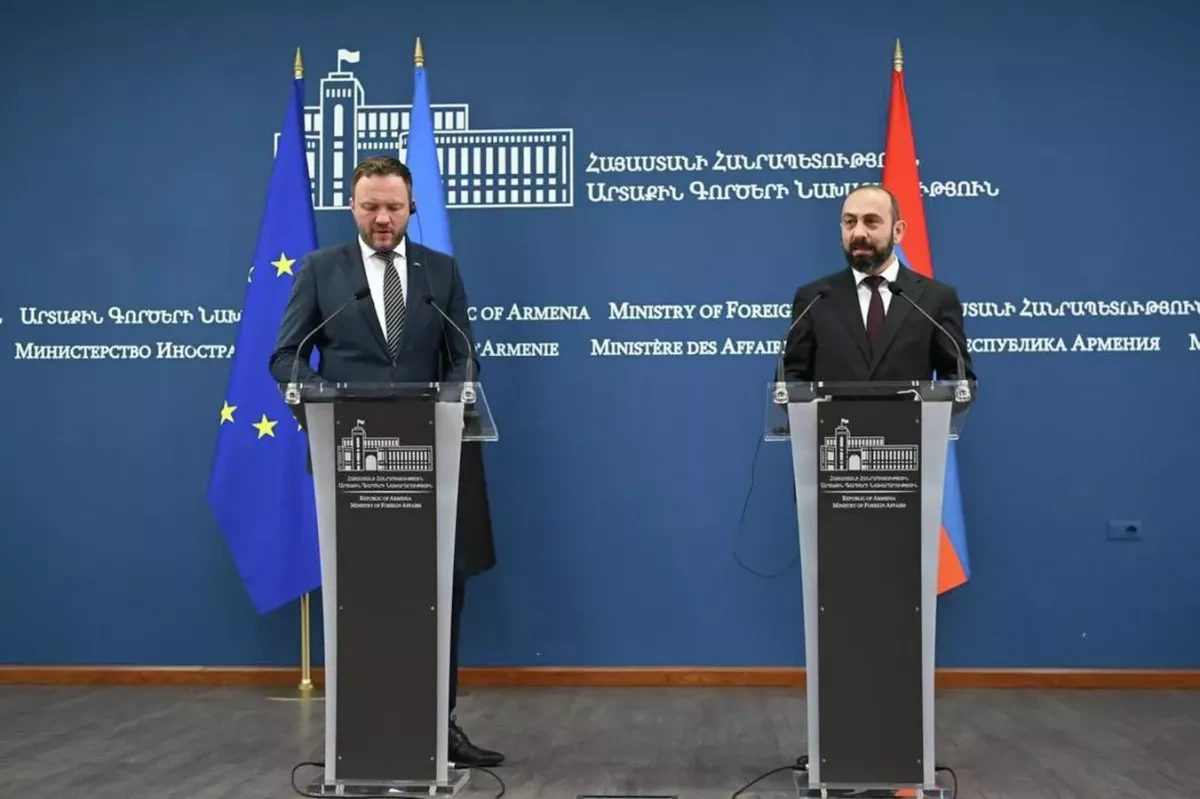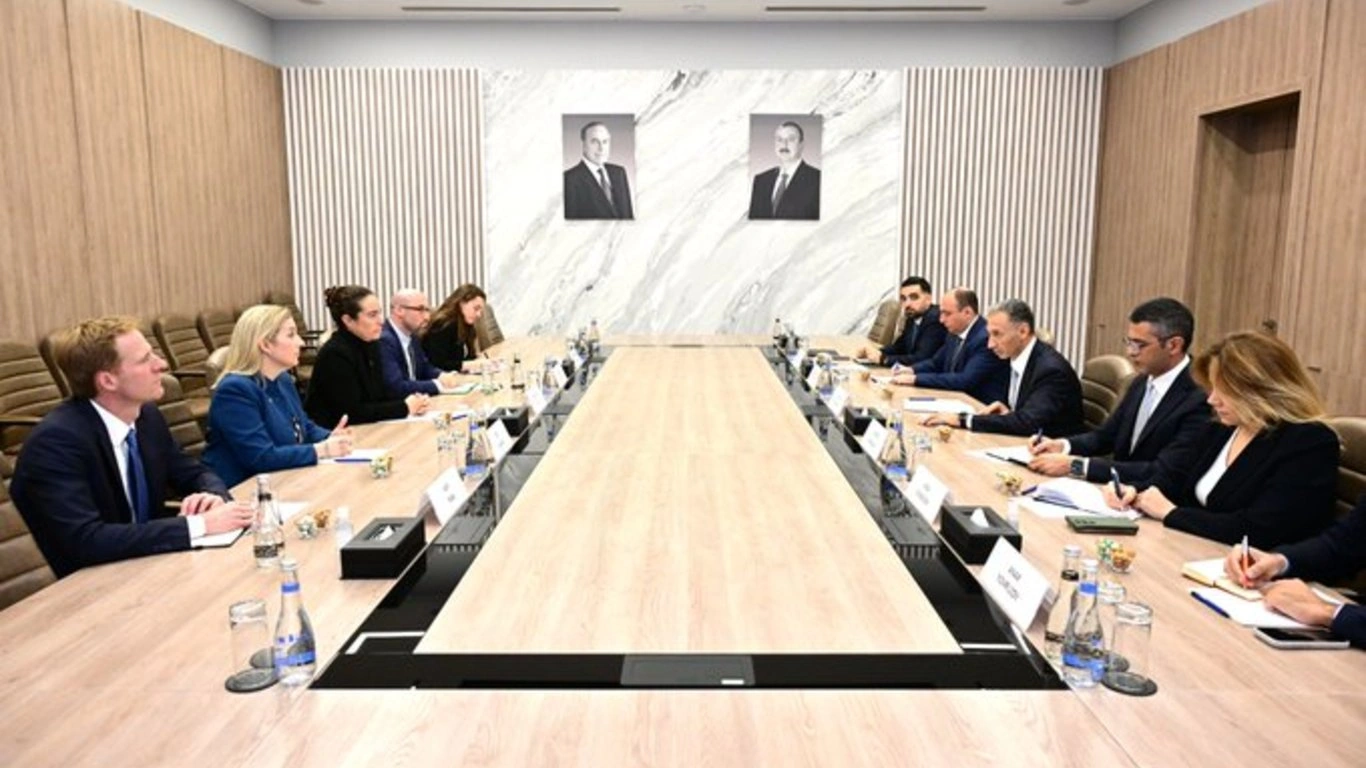
Armenian Foreign Minister Ararat Mirzoyan, speaking on April 10 at a joint press conference with his Estonian counterpart Margus Tsahkna in Yerevan, once again voiced the idea of the swift release of Armenian citizens held in Azerbaijan.
According to him, “peace has been established and is bearing fruit, trade between the two countries is developing, cargo is passing through Azerbaijani territory, however the issue of detained persons remains the most sensitive for Armenian society.” Mirzoyan also stressed that dialogue with Baku is ongoing and that the issue of “Armenian prisoners” is constantly raised in meetings with international partners.
All of this was presented in the usual tone: they, allegedly, are for peace, but it will remain incomplete until the “detained persons” return home.
The Armenian minister’s wording sounds not merely surprising, but cynical. The term “prisoners” is used instead of the definition “convicted individuals,” while the phrase “detained persons” replaces “individuals serving sentences pursuant to court rulings.” This kind of terminological acrobatics is an old tactic, and Yerevan handles it quite skillfully. However, behind this stylistic façade lies a fundamental problem.
Armenia is, in effect, demanding that Azerbaijan annul legally binding court verdicts and release individuals convicted of serious crimes — aggressive war, genocide, terrorism, and mass killings of civilians. Mirzoyan frames this in the language of humanitarian diplomacy, but the substance does not change.
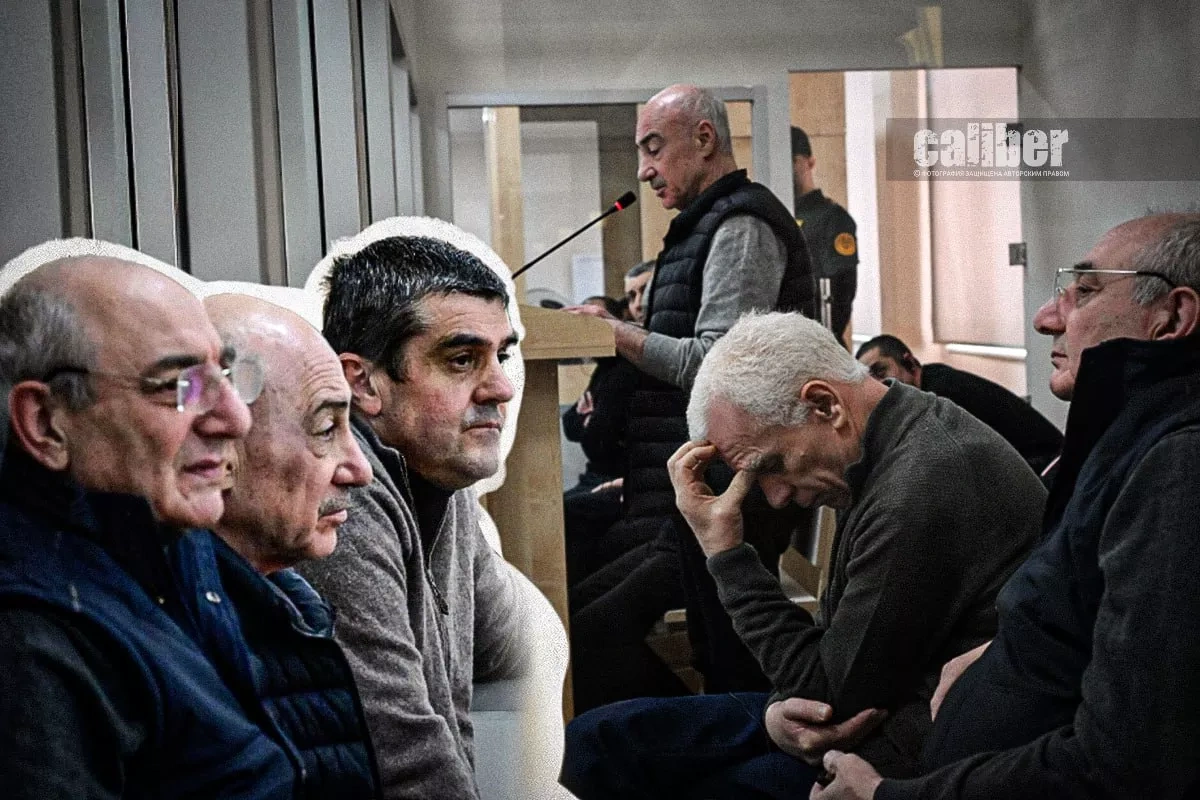
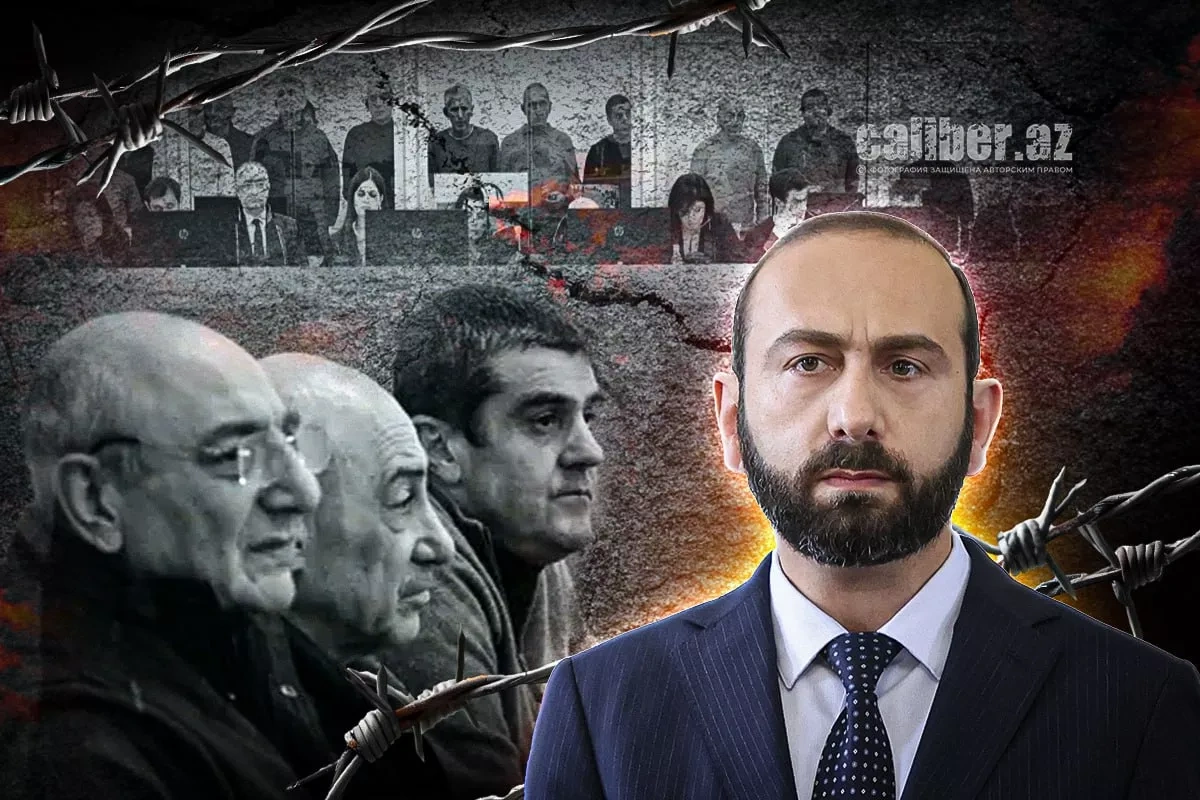
On February 5, 2026, a Baku court issued verdicts against former leaders of the separatist regime that had illegally operated in the formerly occupied territories of Azerbaijan.
Former “president” Arayik Harutyunyan, former “defence minister” Levon Mnatsakanyan, his deputy David Manukyan, ex-“foreign minister” David Babayan, and ex-“parliament speaker” David Ishkhanyan were sentenced to life imprisonment. Former “presidents” Arkadi Ghukasyan and Bako Sahakyan received 20-year prison terms (under the law, life imprisonment could not be applied due to their age).
On February 17, Ruben Vardanyan — an Armenian citizen — was sentenced to 20 years in prison on charges including crimes against peace and humanity, war crimes, terrorism, financing of terrorism, and other serious offences. The remaining defendants — former servicemen and officials of the proxy entity — received sentences ranging from 15 to 19 years.
All of them were found guilty of preparing and waging aggressive war, genocide, violations of the laws and customs of war, terrorism, financing of terrorism, violent seizure and retention of power.
The trial, which began in January 2025, included numerous hearings, witness and victim testimonies, examination of material evidence and video footage. The defendants were provided with interpreters and legal counsel.
And it is precisely these individuals whom Mirzoyan is demanding to be “released as soon as possible.” People behind whose names stand concrete crimes — destroyed Azerbaijani cities, looted mosques and cemeteries, ecocide, and the shattered lives of hundreds of thousands of Azerbaijanis driven from their homes.
People whose subordinate, former “defence minister” Mnatsakanyan, explicitly admitted in court that the army of the puppet regime was the largest military formation of the Armed Forces of Armenia, that appointments were approved in Yerevan, and that the supply of weapons and personnel was carried out through Armenian state structures. In other words, before the court stood not merely functionaries of a self-proclaimed entity, but executors of the policy of the Armenian state — a policy that led to three decades of occupation and ethnic cleansing.
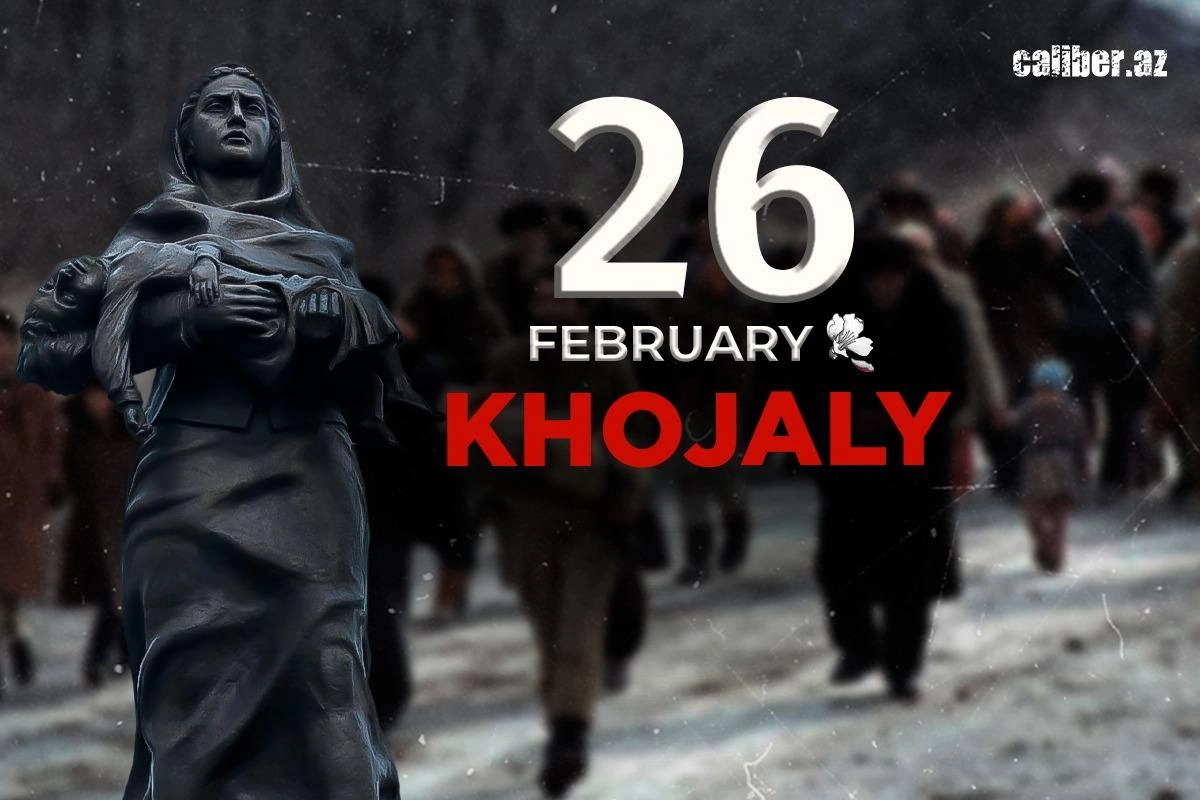
At this point, a question arises that, for some reason, is considered inconvenient: what exactly is the Armenian side proposing? To release the convicted — and then what? To conclude that the Khojaly genocide, in which 613 civilians were killed — women, children, the elderly — simply happened on its own, without perpetrators and without consequences?
The absurdity of Mirzoyan’s position becomes even more evident when its logic is applied to other historical and contemporary contexts.
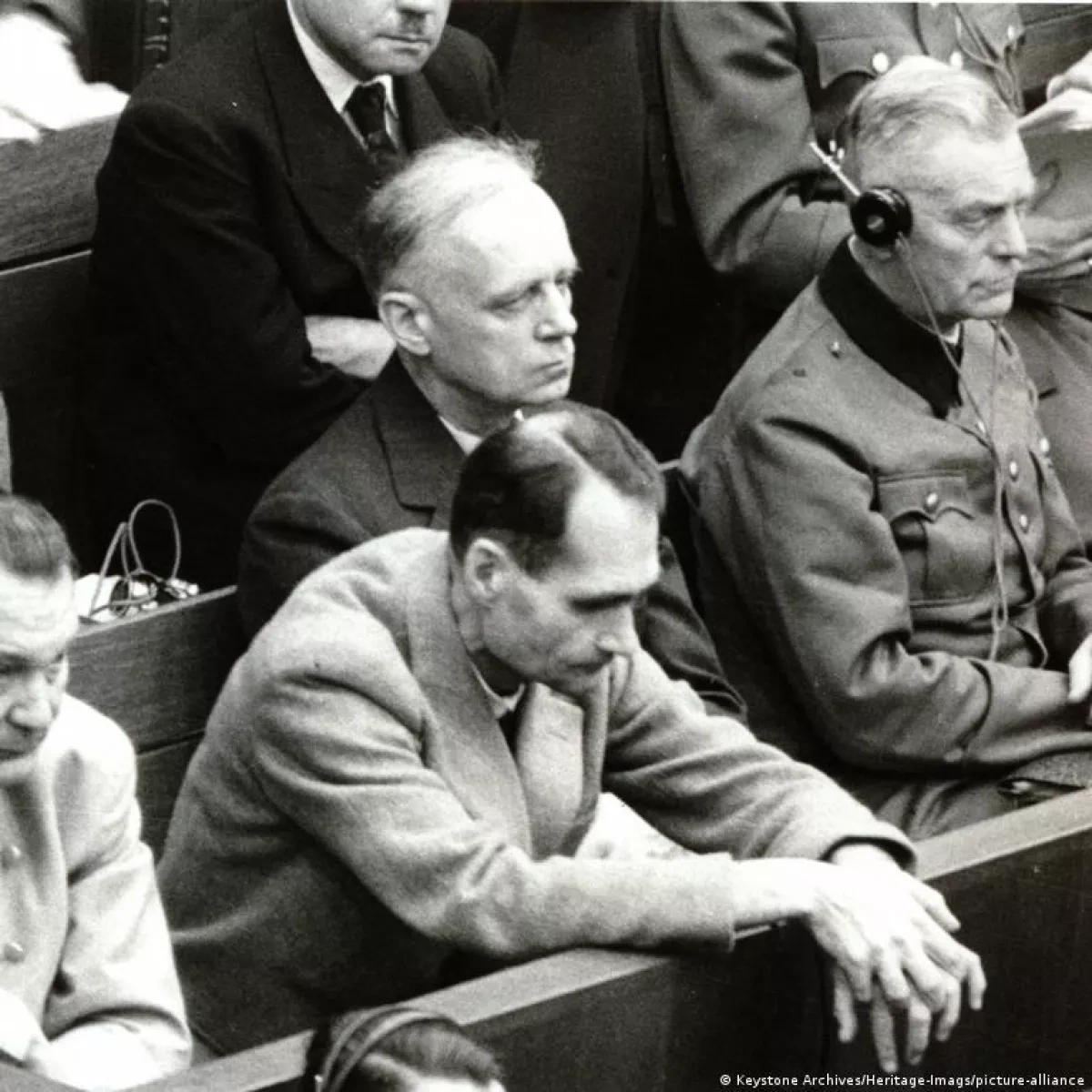
If individuals convicted of war crimes are to be released immediately simply because one side of a conflict labels them “prisoners,” then what was the point of the Nuremberg Trials?
The International Military Tribunal, which sat from November 1945 to October 1946, convicted 24 top leaders of Nazi Germany — twelve of them were sentenced to death by hanging. This process became a cornerstone of international criminal law. It legally enshrined the principle, formulated during the war itself, that leaders bear personal responsibility for policies that lead to mass atrocities. Official position and state status do not provide immunity from justice, and orders from above do not absolve individual guilt.
Let us imagine for a moment that in 1946 someone had demanded the release of the defendants at the Nuremberg Trials “for the sake of strengthening peace.”
Peace in Europe was, without doubt, fragile. Germany lay in ruins. Millions of displaced persons needed to return home. The continent’s economy was devastated. By Mirzoyan’s logic, it was precisely in such circumstances that “humanism” should have been shown — prison doors opened and figures like Wilhelm Keitel and Joachim von Ribbentrop set free.
Of course, nothing of the kind happened. The Allies understood: impunity today means new crimes tomorrow. That is why the sentences were carried out. That is why twelve Nazi war criminals were executed on the night of October 16, 1946. That is why the Nuremberg principle — the inevitability of punishment for crimes against humanity — became a cornerstone of the post-war international order.
The same principles were reaffirmed half a century later, when the international community faced the bloody disintegration of Yugoslavia. The International Criminal Tribunal for the former Yugoslavia was established by the UN Security Council in 1993 to prosecute those responsible for serious violations of international humanitarian law, ultimately indicting 161 individuals.
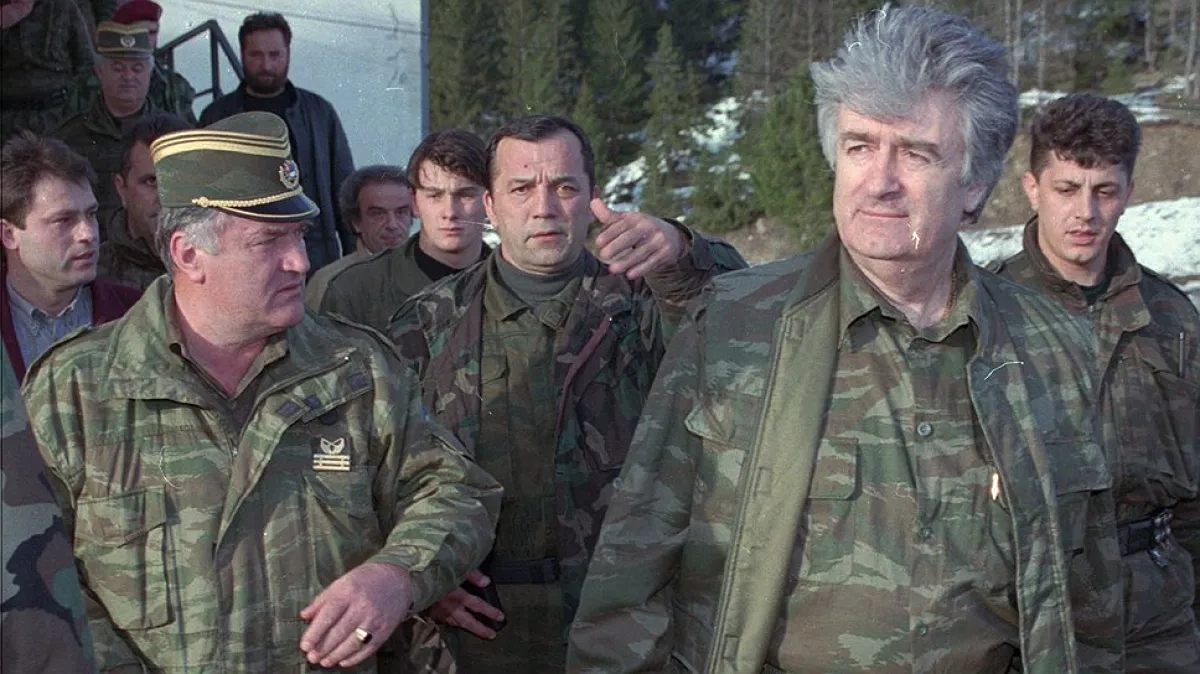
Former President of Republika Srpska Radovan Karadžić — an architect of ethnic cleansing and the genocide in Srebrenica — was sentenced to 40 years in prison, later increased to life imprisonment. Commander of the Army of Republika Srpska Ratko Mladić, known as the “Butcher of Bosnia,” received a life sentence for genocide, war crimes, and crimes against humanity. The court described his actions as “among the most heinous in human history.”
Both men evaded justice for years — Karadžić for thirteen, Mladić for sixteen — but were ultimately captured and brought to trial. No one — neither Serbia (notably, Belgrade in 2025 appealed to the UN Security Council to allow convicted individuals to serve their sentences on Serbian territory), nor the international community — demanded their release “for the sake of peace in the Balkans.” Even though such arguments could easily have been made: peace was fragile, interethnic relations remained tense, and the past could have been framed as something to leave behind.
Let us move to the present day. The International Criminal Court is conducting a large-scale investigation into the situation in Ukraine. Arrest warrants have been issued for the President of the Russian Federation, Vladimir Putin and the Commissioner for Children’s Rights, Maria Lvova-Belova. Warrants have also been issued for Lieutenant General Sergey Kobylash and Admiral Viktor Sokolov — over strikes on civilian infrastructure — as well as for former Defence Minister Sergey Shoigu and Chief of the General Staff Valery Gerasimov.
The Prosecutor General’s Office of Ukraine is investigating thousands of alleged war crimes. The UN Independent International Commission of Inquiry on Ukraine continues its work, with its mandate extended until 2027. The entire Western world — the very countries whose representatives at times support Yerevan’s calls for the “release of prisoners” — insists on holding Russian military and political figures accountable for crimes in Ukraine. The list of suspects is growing. The evidentiary base is expanding. The principle of the inevitability of punishment is being upheld as fundamental.
But if Mirzoyan’s demands are to be considered valid, then these lists should simply be discarded. If those convicted of war crimes must be released because the war has ended and peace has set in, then figures like Karadžić and Mladić should also be set free. It would mean that the entire system of international criminal justice — built from Nuremberg Trials through The Hague to the present day — is a meaningless construct, one that can be dismantled at the mere request of one side to a conflict that has, in effect, come to an end.
Of course, Yerevan does not formulate its position in such terms. The word “prisoners” sounds far more advantageous than “convicted war criminals.” References to “families” and “suffering” create the desired emotional backdrop. Appeals to “international partners” and “humanitarian law” lend the argument an appearance of legal legitimacy.
But upon closer examination, this construct falls apart. Those whom Mirzoyan calls “prisoners” are not soldiers captured on the battlefield and subject to repatriation after the end of hostilities. They are individuals convicted by an Azerbaijani court under specific criminal charges, based on concrete evidence. The Baku Military Court delivered its verdicts following an open trial that lasted more than a year. The defendants were provided with legal defence. The judgments were grounded in witness and victim testimonies, as well as documentary and video evidence.
This is justice — the very justice that victims of Armenian aggression had sought for decades.
It is also worth recalling that among the victims of the crimes for which the defendants in the Baku trial were convicted were the civilians of Khojaly — 613 people killed on the night of February 26, 1992: 106 women, 63 children, and 70 elderly individuals. Eight families were completely wiped out. Twenty-five children were left fully orphaned. People were shot while trying to flee, and bodies were subjected to desecration.
In its judgment of April 22, 2010, the European Court of Human Rights classified the mass killing of Azerbaijani civilians in the town of Khojaly as “acts of particular gravity, which may amount to war crimes or crimes against humanity.” Armenia denied responsibility for Khojaly for decades, yet Serzh Sargsyan, while serving as defence minister, openly boasted of the atrocity as a deliberate policy of intimidation.
And when Mirzoyan today speaks of “peace” and “sensitive issues,” it is worth remembering whose “sensitivity” was trampled on that February night in 1992.
The Baku trial has accomplished what should have been done long ago: it has legally established responsibility for aggression, occupation, and mass killings. Azerbaijan has gone down this
There is also another aspect that is often left outside the discussion: the will of the people. For thirty years, the Azerbaijani people waited for justice. Generations grew up as displaced persons — more than a million people were deprived of their homes, their land, their history. The destroyed cities of Aghdam, Fuzuli, Jabrayil, and Zangilan became symbols of impunity and international indifference. When Azerbaijan restored its territorial integrity and brought those responsible to justice, it responded to a demand that had been forming for decades. To demand that Baku overturn court verdicts is to demand that the Azerbaijani people renounce the justice they have pursued for thirty years.
Mirzoyan may choose his words as he wishes. But facts remain facts: in Azerbaijan, individuals convicted of specific crimes are serving their sentences. Their release would set a precedent that undermines the very idea of accountability for war crimes — the idea that humanity has painstakingly built from the Nuremberg Trials to the present day. And the Azerbaijani state stands as a guardian of that principle.