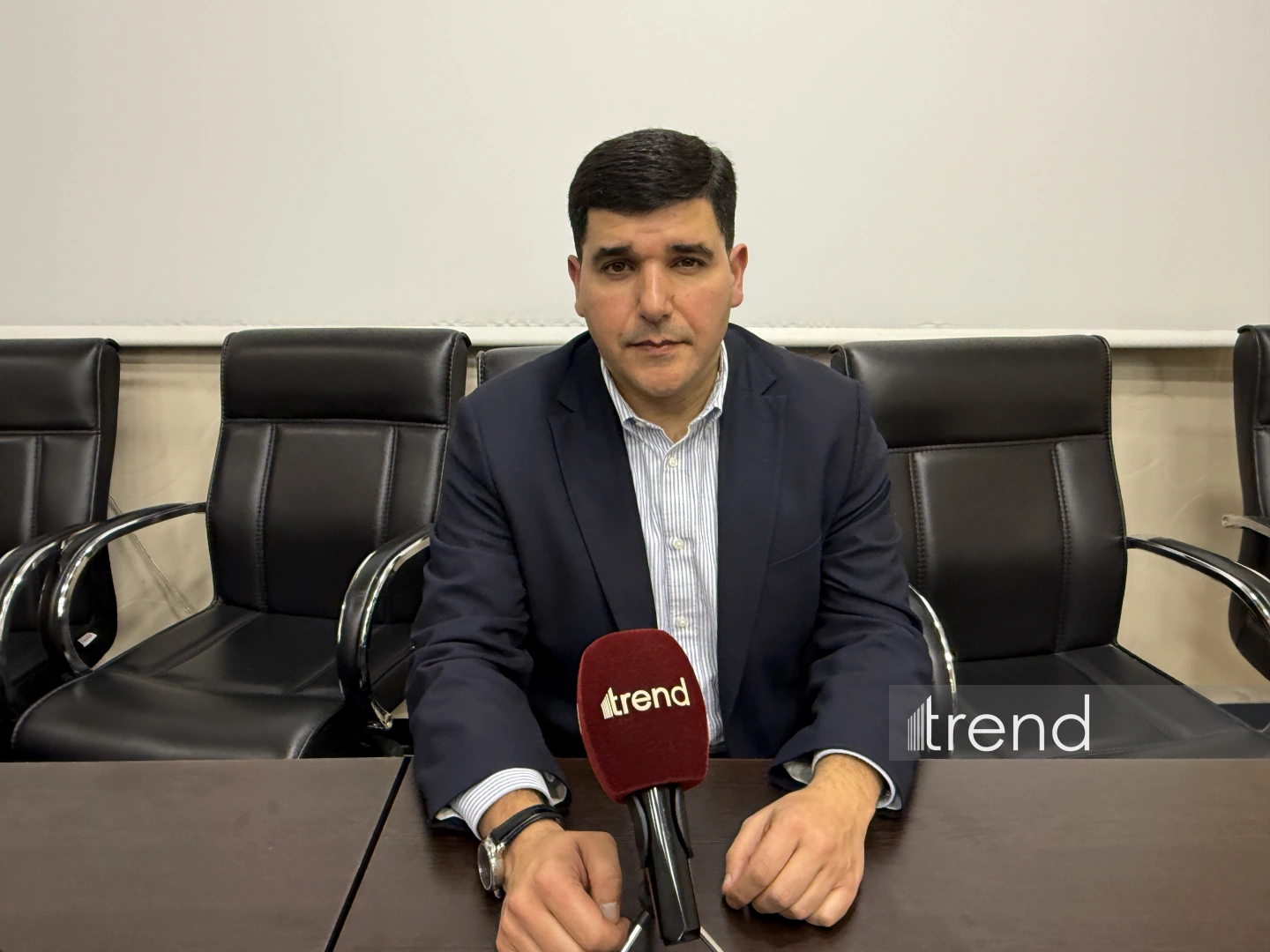
BAKU, Azerbaijan, April 3. Armenian
representatives will visit Azerbaijan, Farhad Mammadov, main
coordinator of the Peace Bridge Initiative, said during the public
discussion of "Involvement of women and youth organizations in the
peace process in Azerbaijan within the framework of the Peace
Bridge Initiative" held in Baku with the participation of women and
youth organizations and members of the initiative today, Trend reports.
According to him, since the August meeting, the number of
high-level contacts between Azerbaijan and Armenia has increased
significantly, and initial steps have been taken towards economic
activity, both directly and through alternative channels.
He noted that the issue of the preparation of civil society for
peace is also being actively discussed.
"Representatives of the civil societies of Azerbaijan and
Armenia have maintained certain contacts since the early days of
the conflict. Initially, this process took place within small
groups, but later its scope expanded.
The current peace process is of an unusual nature. While the war
has ended, the Armenian side is creating certain obstacles in the
process of signing a peace agreement.
The foundations of interstate relations have already been
established. However, these agreements cannot come into force
without a referendum on amendments to the Armenian Constitution. In
this regard, there are two approaches: either the results of the
referendum should be awaited, or the existing contacts should be
continued.
Efforts are being made to show both societies that cooperation is
possible. We can specifically point out the real opportunities in
economic areas such as the transit and transportation of oil and
gasoline products. While some progress is observed in political and
economic directions, the process at the civil society level is
still in the formation stage.
In this regard, various dialogue platforms have already been
created through the European Union and the United Nations. However,
the parties believe that since interstate relations are bilateral
in nature, the direct involvement of a third party is not
appropriate.
One of the interesting points concerns the initiatives of donor
organizations. Although several international bodies have expressed
their readiness to finance the activities, the parties agree that
this process should only be seen in a bilateral format.
Currently, all meetings are organized by the government, and
institutional mechanisms for joint activities haven't yet been
established. After the peace agreement is signed and interstate
relations are fully established, more systematic support mechanisms
will be created in this area.
The main directions of the process are focused on two questions:
what should the approach to peace be, and what practical steps can
be taken?
A meeting is planned to be held soon, and an Armenian delegation
is expected to visit Azerbaijan. During this meeting, the position
of Azerbaijani civil society will be presented to the other side,
and possible areas for cooperation will be discussed," Mammadov
noted.
This public discussion seeks to disseminate the outcomes of the
dialogue among civil society representatives from Azerbaijan and
Armenia, engage in an open discourse regarding the present
circumstances, and develop actionable frameworks for the
participation of women and youth moving forward, while also
gathering recommendations.
Stay up-to-date with more news on Trend News
Agency's WhatsApp channel