BAKU, Azerbaijan, March 18. Financial close for
the 240-megawatt Absheron-Garadagh wind project in Azerbaijan is
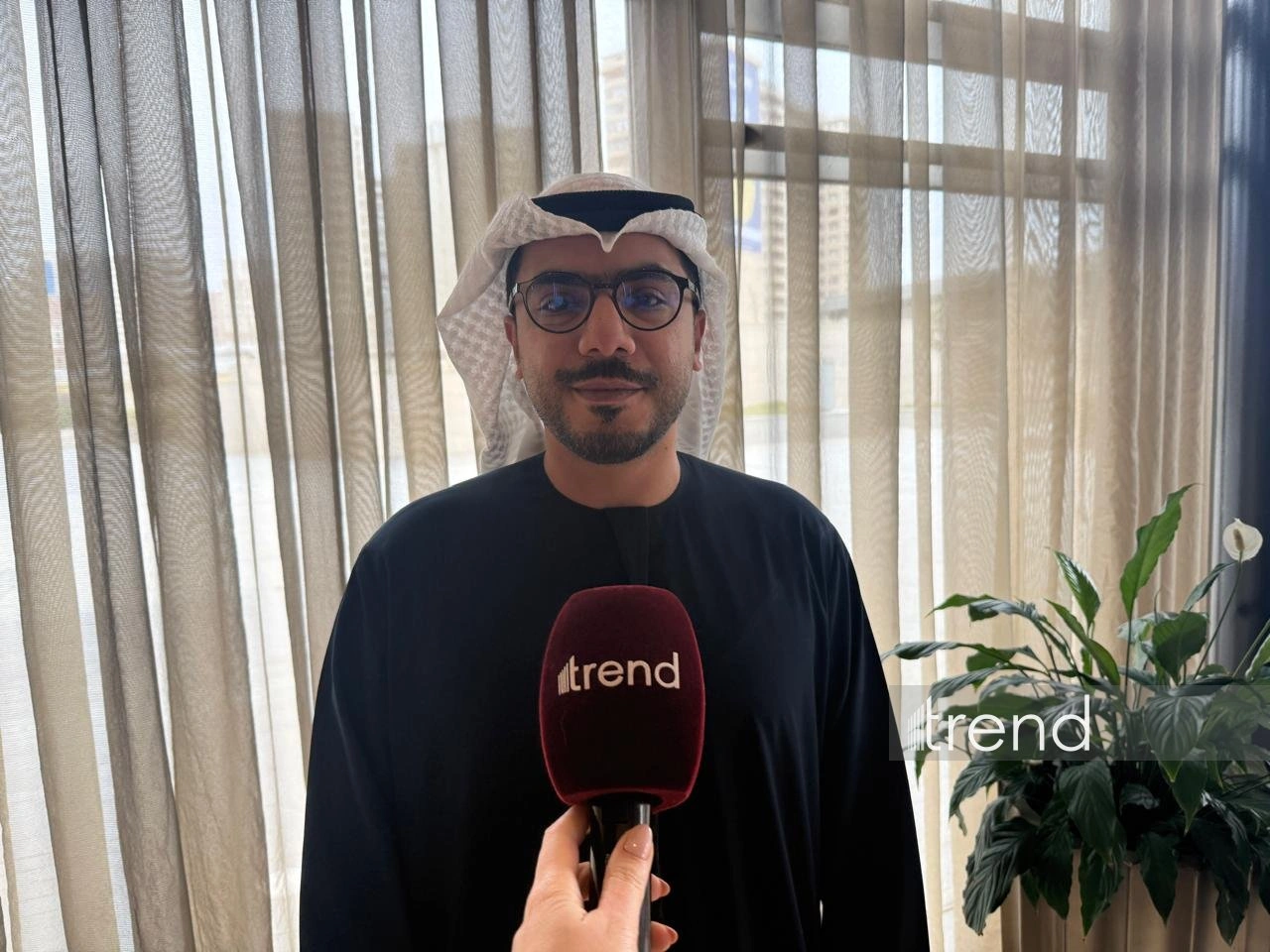
expected by mid-2026, Abdulla Zayed, Director, Business and
Projects Development at Masdar, the global clean energy leader
based in the United Arab Emirates (UAE), said in an exclusive
interview with Trend.
“We began our journey in Azerbaijan around eight years ago, when
we initiated discussions with the government and the Ministry of
Energy to support the development of the country’s renewable energy
framework. These initial discussions materialized in the
230-megawatt Garadagh solar project, which has been operational
since 2023. The project has been a success and has laid a strong
foundation for future cooperation between Masdar and the government
of Azerbaijan. Building on the success in Garadagh, we agreed with
the government to develop additional projects in Azerbaijan. This
includes three renewable energy projects currently at advanced
stages. Two solar projects — in Bilasuvar and in Neftchala — are
under construction. The third project is a wind farm in the
Absheron-Garadagh region,” he said.
Zayed pointed out that the two solar projects are progressing
well, and Masdar expects to inaugurate the Bilasuvar project by the
end of this year, as it is more advanced.
“We’re targeting completion of the Neftchala solar project by
the first half of next year. The wind project is also at an
advanced stage, and we hope to reach financial close by mid-year.
That’s when full construction activities will start. Some
preliminary work is already happening on the ground, but the main
construction is expected to begin once the financial close is
finalized,” he explained.
Zayed noted that these projects represent clear opportunities
that Masdar is pursuing in collaboration with the government of
Azerbaijan.
“Together, they will expand our renewable energy capacity in the
country to 1.2 gigawatts, with total investments exceeding $1
billion. To give you an example of our impact in Azerbaijan, the
1.2 gigawatts of projects we are developing will supply electricity
to more than half a million homes.
“Beyond these projects, we continue to explore additional
opportunities with the government. Azerbaijan has strong solar and
wind resources. When planning new capacity, the focus is not only
on individual projects or specific sites, but also on aligning with
the national grid and the areas where electricity demand is
highest. While Azerbaijan has abundant land resources, it makes
strategic sense to locate projects where the energy is most needed.
This approach has guided our collaboration with the government,
exemplified by the Bilasuvar project. We are also continuing
discussions on further developments, including the potential
expansion of the Garadagh project,” he added.
Zayed went on to add that Masdar is actively discussing with the
government of Azerbaijan opportunities beyond these three projects,
as part of its broader green collaboration.
“As I mentioned, Azerbaijan has abundant renewable resources,
with excellent solar and wind potential. Ultimately, our ability to
develop additional projects depends on the technical feasibility.
As Masdar, an investor from the UAE, we are very eager to expand
our presence and increase our investments in Azerbaijan. We have
observed strong momentum from the Azerbaijani government in
decarbonizing the energy sector, promoting green electricity,
reducing dependency on oil and gas, and creating additional
capacity that can be exported or utilized in other markets. We
value this proactive approach and, building on our successful track
record in Azerbaijan, we are committed to doing more and supporting
the government in advancing green electricity initiatives,” he
added.
Presenting on outcomes of Masdar’s activities in Azerbaijan
during the Southern Gas Corridor Advisory Council meeting in Baku,
he noted that this meeting continues to be an important platform
for the company.
“Masdar has been participating for many years, and it provides a
valuable opportunity to update Azerbaijan, the region, and all
stakeholders on our activities in the country. During our
presentation, we shared our ongoing projects in Azerbaijan and
highlighted our deep appreciation for the collaboration with the
Azerbaijani government in promoting green energy,” he said.
Zayed noted that Masdar has been active in Azerbaijan for a long
time, and is extremely pleased with the ongoing collaboration with
the government.
“We are also working closely with SOCAR Green as our local
partner,” he noted.
Zayed pointed out that from day one, SOCAR Green has been
involved in every aspect of these projects—from developing the
concept and business case to discussions with the government,
banks, and other stakeholders to bring the projects to
fruition.
“Their involvement has been invaluable. As a local company, they
bring critical know-how and experience, and as part of SOCAR, one
of the largest international oil and gas companies, they share a
strategic vision to decarbonize and develop green energy
capabilities. This partnership benefits both sides: it ensures
transparent communication between the foreign investor, the
government, and the local partner, while also allowing SOCAR Green
to build its internal expertise in solar, wind, and other green
energy technologies. It positions them to potentially expand their
green energy activities beyond Azerbaijan in the future,” he
said.
Talking about regional and global presence, Zayed said Masdar is
the largest renewable energy company in Central Asia and the South
Caucasus.
“Since entering Azerbaijan in 2018, we have expanded into
Uzbekistan and Kazakhstan, achieving early successes thanks to
supportive government policies. We have implemented bilateral
projects in those countries as well. We have also explored
opportunities in other countries in the region, however, none are
as large or as mature as those in Azerbaijan, Uzbekistan, and
Kazakhstan. Development in the other countries is still ongoing,
but there is strong interest in expanding renewable energy,” he
said.
Zayed noted that by the end of last year, Masdar had secured
approximately 65 gigawatts of renewable energy capacity
internationally. Of the 65GW portfolio, 45GW is operational, under
construction, or committed, with a further 20GW of advanced
pipeline.
“We operate globally and are active in Southeast Asia, Central
Asia, Azerbaijan, the Middle East, Africa, Europe, and in the
United States. Our portfolio is diversified across solar and wind
development, as well as standalone energy storage projects, which
are gaining increasing traction, particularly in Europe. Our total
investments in the renewable energy sector exceed $30 billion
worldwide.
“Masdar has set an ambitious target of 100 gigawatts by 2030, as
defined by our shareholders. To achieve this goal, we view
Azerbaijan and the broader region as a core area for growth. We
will continue to pursue opportunities here when the resources,
regulatory environment, and market conditions align,” he
concluded.