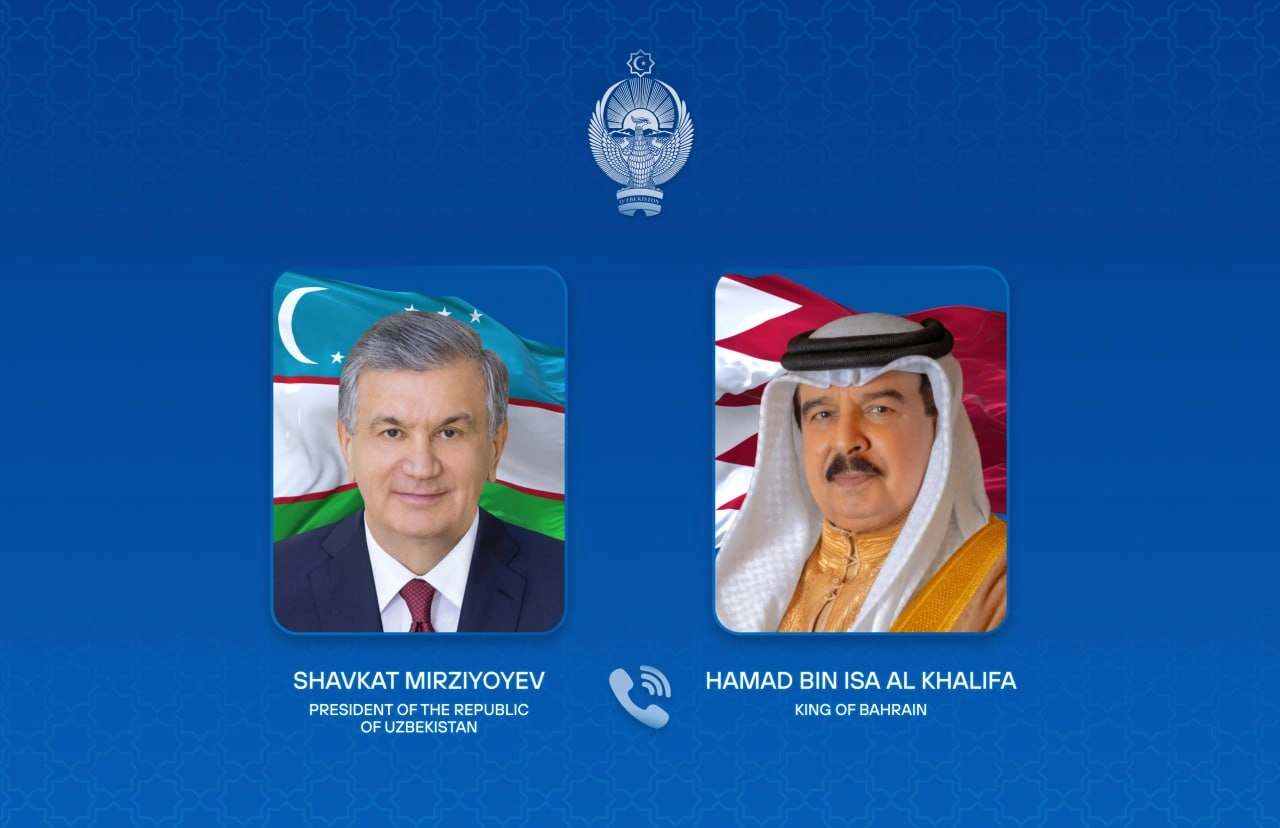
TASHKENT, Uzbekistan, March 4. President
Shavkat Mirziyoyev of Uzbekistan and King Hamad bin Isa Al Khalifa
of Bahrain engaged in a dialogue to address recent developments in
the Middle East that have significant implications for regional
security and stability, Trend reports via the press service of the Uzbek
president.
During their conversation, the sides underscored the imperative
of halting any actions that threaten peace, disrupt the well-being
of citizens, and inflict suffering upon innocent individuals. They
emphasized that such challenges must be addressed solely through
diplomatic means and constructive negotiations.
In addition, President Mirziyoyev expressed unwavering support
and solidarity with the leadership and people of Bahrain,
reaffirming Uzbekistan’s commitment to fostering peace and
stability in the region.
Following the 2nd round of nuclear talks between Washington and
Tehran on February 17, which ended without progress, the U.S.
increased its presence in areas near Iran, deploying over 150
aircraft to bases in Europe and the Middle East.
The escalation follows the 3rd round of nuclear talks between
Iran and the United States in Geneva on February 26. Held under the
administration of U.S. President Donald Trump, the negotiations
were viewed as the final chance to strike a deal diplomatically.
However, no agreements were reached, as Tehran refused to halt
uranium enrichment, dismantle its nuclear facilities, or accept
indefinite restrictions on its nuclear program. Israel launched its
airstrikes shortly afterward, with the country's Defense Minister
Katz emphasizing that the operations were preemptive.
In a significant escalation, military airstrikes conducted by
Israel and the United States the previous day have reportedly
resulted in the deaths of Iran’s Supreme Leader Sayyid Ali Khamenei
and several members of his family.
Additionally, several of Iran’s most senior military and
security officials were killed in the airstrikes, including Chief
of Staff Major General Abdolrahim Mousavi, Islamic Revolutionary
Guard Corps (IRGC) Commander-in-Chief Mohammad Pakpour, Supreme
Leader adviser and Defense Council Secretary Ali Shamkhani, and
Defense Minister Aziz Nasirzadeh.