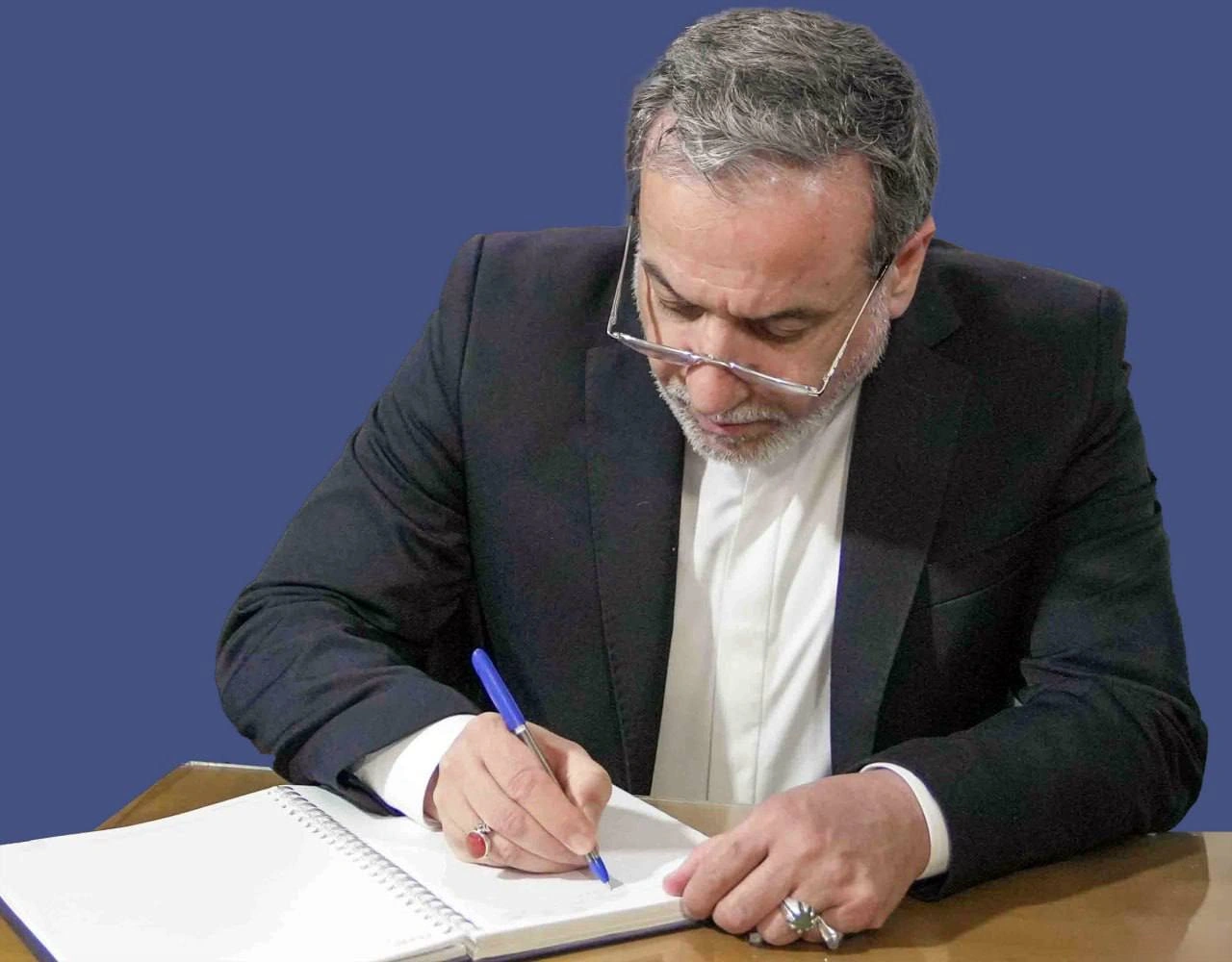
BAKU, Azerbaijan, March 2. Iran's Foreign
Minister Seyyed Abbas Araghchi has reached out to international
organizations and foreign ministers across several nations,
addressing the military airstrikes conducted by the United States
and Israel on Iranian territory, Trend reports, citing the Iranian Foreign
Ministry.
According to the ministry, in a letter addressed to UN
Secretary-General Antonio Guterres, Araghchi detailed the attacks
to the UN, the UN High Commissioner, and foreign ministers,
explaining Iran’s position. He reported that the air strikes on
February 28 targeted numerous civilian facilities, including
schools, hospitals, and emergency aid centers.
"On the first day of the Israeli and U.S. attacks on Iran, a
girls’ school in Minab, Hormozgan province, was struck, resulting
in the deaths of 165 students. Numerous civilians were also killed
in Tehran and Qazvin. On March 1, the attacks hit the buildings of
the Iranian Red Crescent Society, three hospitals in Tehran, a
hospital in Ahvaz, and emergency centers in Sarab, Chabahar, and
Hamadan. On March 2, a residential area in Sanandaj was targeted,
and the number of casualties is still being verified," he said.
In his letter, the Iranian foreign minister urged the UN, the UN
Security Council, and other relevant international bodies to take
serious measures in response to these attacks.
Following the second round of nuclear talks between Washington
and Tehran on February 17, which ended without progress, the U.S.
increased its presence in areas near Iran, deploying over 150
aircraft to bases in Europe and the Middle East.
The escalation follows the 3rd round of nuclear talks between
Iran and the United States in Geneva on February 26. Held under the
administration of U.S. President Donald Trump, the negotiations
were viewed as the final chance to strike a deal diplomatically.
However, no agreements were reached, as Tehran refused to halt
uranium enrichment, dismantle its nuclear facilities, or accept
indefinite restrictions on its nuclear program. Israel launched its
airstrikes shortly afterward, with the country's Defense Minister
Katz emphasizing that the operations were preemptive.
In a significant escalation, military airstrikes conducted by
Israel and the United States the previous day have reportedly
resulted in the deaths of Iran’s Supreme Leader Seyyed Ali Khamenei
and several members of his family.
Additionally, several of Iran’s most senior military and
security officials were killed in the airstrikes, including Chief
of Staff Major General Abdolrahim Mousavi, Islamic Revolutionary
Guard Corps (IRGC) Commander-in-Chief Mohammad Pakpour, Supreme
Leader adviser and Defense Council Secretary Ali Shamkhani, and
Defense Minister Aziz Nasirzadeh.
Stay up-to-date with more news on Trend News
Agency's WhatsApp channel