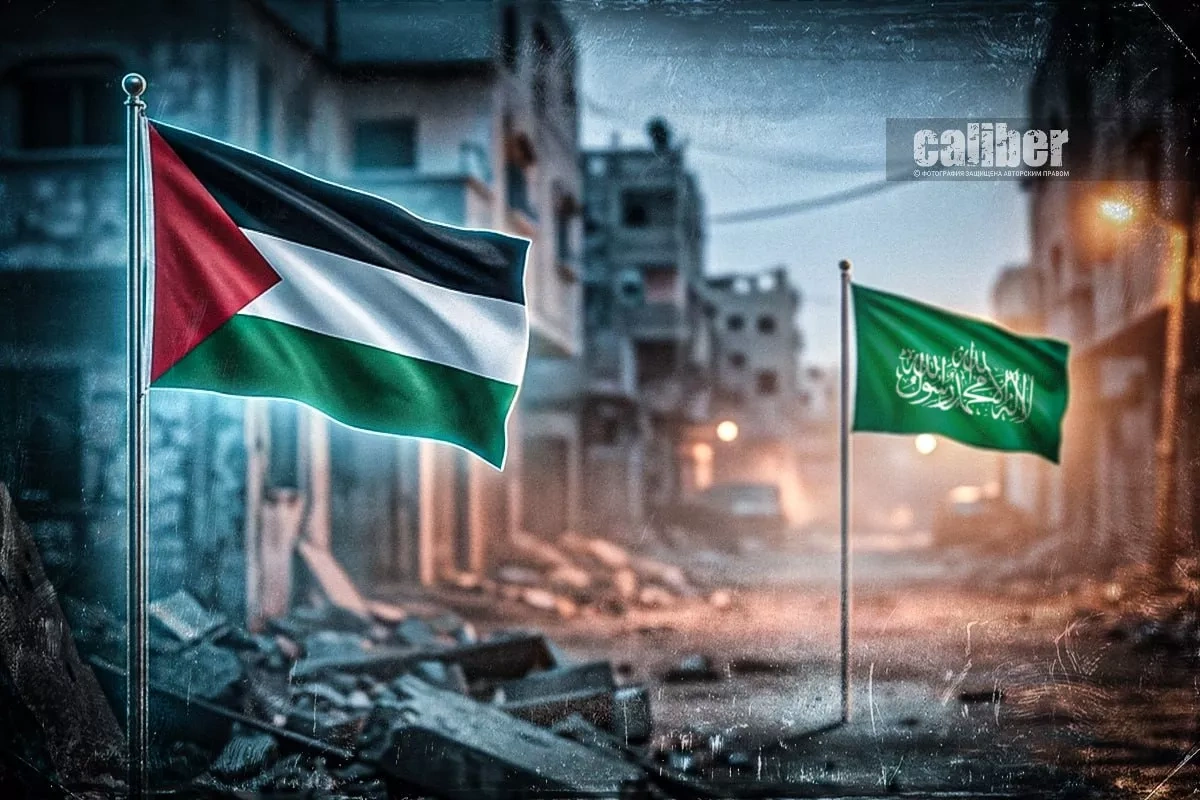
The Board of Peace has published a draft roadmap for implementing U.S. President Donald Trump's Comprehensive Plan for resolving the situation in the Gaza Strip.
The document is based on Trump's initiative and UN Security Council Resolution 2803. The plan envisages the phased implementation of commitments by Israel and Hamas under international supervision.
According to the roadmap, Israel is expected to complete the implementation of the provisions of the Sharm El-Sheikh Protocol, including the cessation of military operations and the full withdrawal of its forces from the Gaza Strip.
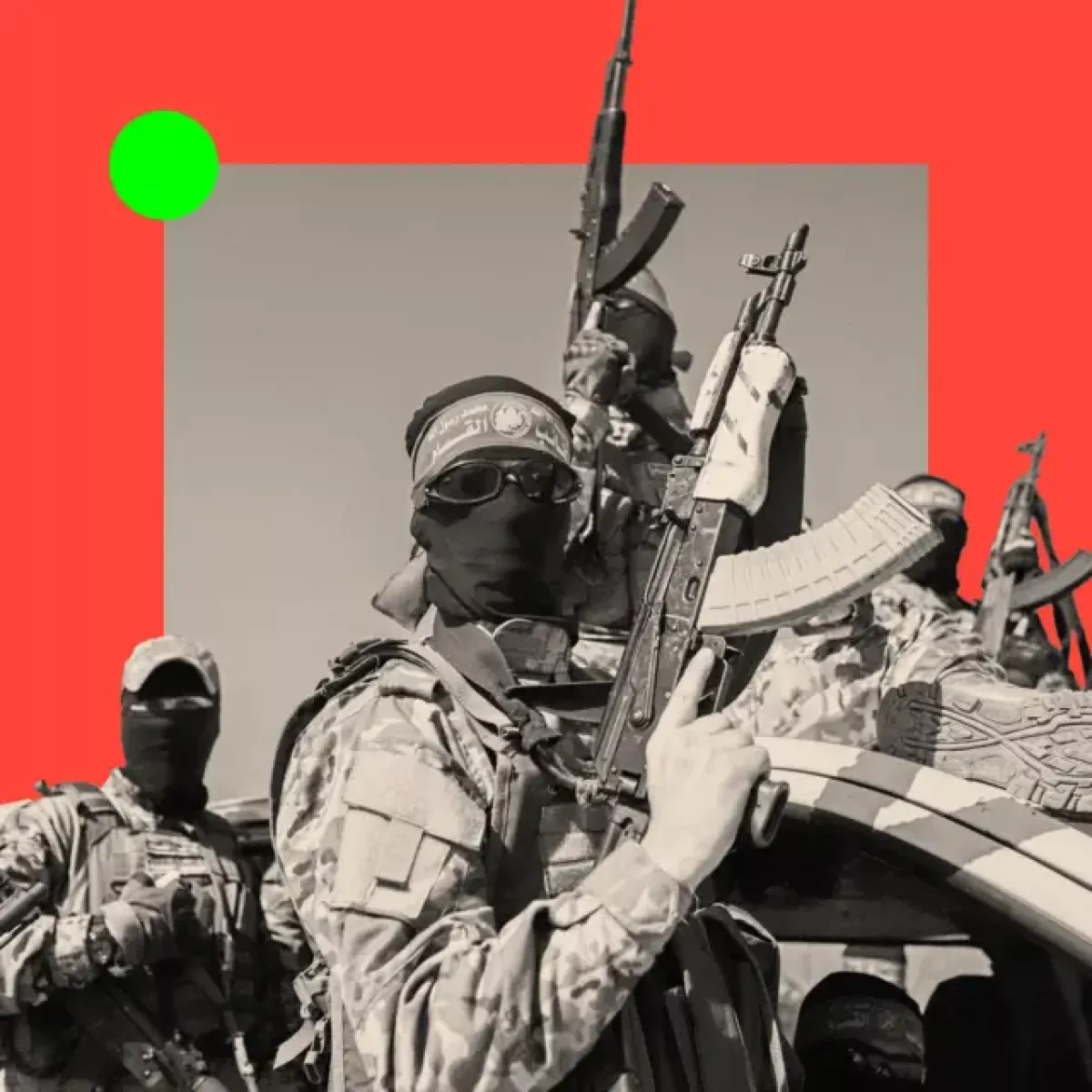
For their part, Hamas and other Palestinian armed groups are required to cease hostilities and transfer responsibility for civilian governance and security to the National Committee for the Administration of Gaza (NCAG).
Implementation of the agreement will be monitored by the International Verification Committee (IVC), which will assess whether each side has fulfilled its commitments before authorising the transition to the next phase.
Once the NCAG begins its work, it will be responsible for restoring state institutions, auditing the financial system, managing public assets, and gradually settling outstanding obligations to contractors and suppliers amounting to up to $400 million over a three-year period.
How feasible is this plan in practice? Can it realistically be expected that Hamas will agree to complete disarmament in exchange for the withdrawal of the Israeli military from Gaza? Or will the organisation view such a plan merely as an opportunity to buy time, secretly rebuild its arsenal, construct new tunnels, and eventually resume attacks against Israel?
Prominent regional experts shared their views on these questions with Caliber.Az.
Turkish political scientist, PhD in History, Middle East expert, and Associate Professor at the Department of Foreign Regional Studies at the Moscow State Linguistic University, Mehmet Emin İkbal Dürre, stressed that implementing the plan would face enormous challenges.
"Although Donald Trump and the Board of Peace he established have announced an agreement providing for a ceasefire and a phased transfer of authority, I, like many experts, remain highly sceptical about its chances of being fully implemented.
For Hamas, this is first and foremost a pragmatic manoeuvre rather than a voluntary renunciation of its ideology of armed struggle.
The Hamas leadership has grown weary of the heavy burden of governing the devastated Gaza Strip and providing its population with basic necessities. By relinquishing its civilian responsibilities and transferring them to the National Committee for the Administration of Gaza (NCAG), the movement effectively frees itself from responsibility for the humanitarian crisis and the reconstruction of the enclave's infrastructure.
At the same time, the group's more radical wings, as well as other Palestinian factions, may refuse to surrender their weapons and continue armed resistance.
The fundamental deadlock is that not only Hamas's most hardline factions, but Hamas as a whole, will not agree to surrender its entire arsenal until it is convinced that Israeli forces have been fully and irrevocably withdrawn. Israel, however, will not complete such a withdrawal until Hamas has fully disarmed," Dürre said, outlining the core dilemma.
Israeli analyst and journalist Mikhail Gurevich, who runs the Telegram channel Kolya Hadashot, believes the situation is far more complex and shaped by numerous domestic political considerations.
"The U.S. administration is approaching the midterm elections and, naturally, needs foreign policy successes. This explains the renewed activity of the Board of Peace, which is seeking to demonstrate progress on an issue that the international community has somewhat shifted its attention away from in recent months.
At the same time, Israel is also entering an election campaign. Parliamentary elections are scheduled for late October, and it would be politically disadvantageous for the current government to withdraw troops from Gaza before Hamas has been disarmed.
In addition to the three main parties to the process—the United States, Israel, and Hamas—Egypt should also be taken into account. Cairo's image has suffered because of the situation. Despite its solidarity with the Palestinians, Egypt has found it difficult to distance itself from criticism over the closure of its border and allegations that bribes of up to $10,000 were demanded to cross the checkpoint. Egyptian mediators are therefore seeking to resolve the crisis as quickly as possible in line with their country's interests.
As a result, a document has been drafted. However, as of Friday evening [July 31], neither Prime Minister Benjamin Netanyahu nor Hamas had issued an official response to it," the expert said.
He pointed out that there is a fundamental dispute over the sequence of steps: Israel insists that Hamas must be disarmed before any troop redeployment begins, while Hamas demands the withdrawal of IDF forces first.
"According to the agreement that has been reached but not yet approved, Hamas is expected to surrender heavy weapons, part of its small arms arsenal, and hand over plans of underground tunnels. However, under Palestinian regulations, civilians are permitted to possess registered pistols, which has triggered a negative reaction from Israel.
Israel fears that even confiscated weapons stored inside the Gaza Strip under the control of a technocratic government could at any moment find their way back into Hamas's hands. Hamas, meanwhile, insists that weapons cannot be removed from the Strip.
At the same time, within Israel itself, the issue of Gaza has somewhat faded from the centre of public attention in recent months.
Among Palestinians, a sense of despair is prevailing, with questions increasingly being raised over whether the sacrifices of October 7 were justified if the outcome is disarmament and the relinquishment of power. Unlike previous peace initiatives, there is currently no sense of enthusiasm in Gaza. For the right-wing parties within Israel's governing coalition, a troop withdrawal at this stage would carry electoral risks, so they are likely to delay the process.
While the United States may be able to exert pressure on Israel and compel it to follow a common decision, the situation with Hamas is far more complicated. Beyond the fact that the agreement would mean the loss of power for the group itself, the deal is also opposed by other forces, including Palestinian Islamic Jihad.
Despite the many unresolved questions, the issue of a Gaza settlement is once again returning to the forefront of global politics," Gurevich concluded.