BAKU, Azerbaijan, December 14. The continued
reference by the UN Secretariat and some members of the UN Security
Council to Resolution 2231, which has expired and envisaged the
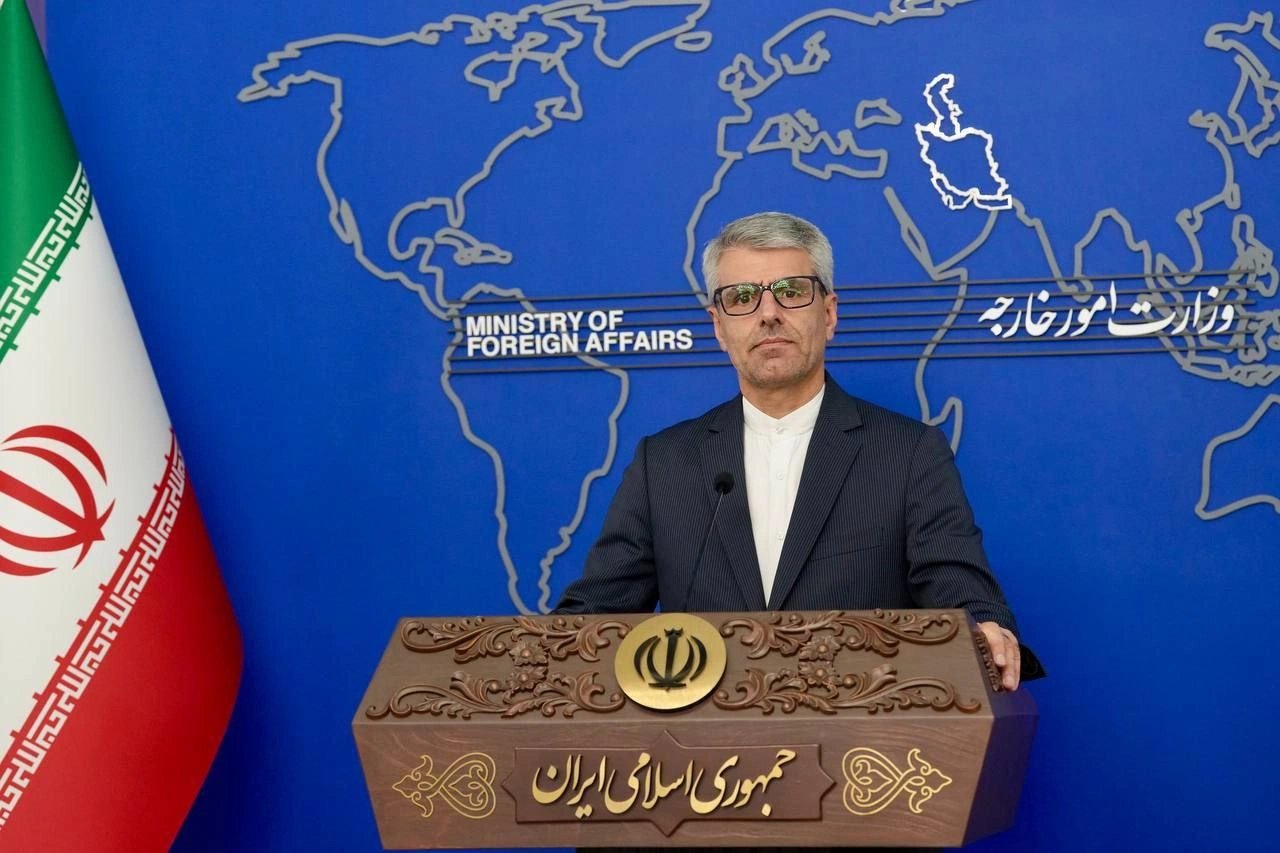
restoration of sanctions against Iran, has no legal basis, said
Iranian Foreign Ministry spokesman Esmaeil Baqaei, Trend reports.
He noted that the report prepared by the UN Secretary-General
for the Security Council is based on a resolution that has no
factual or legal basis. According to Iran, Resolution 2231 has
expired. This view is not only Iran’s but is also shared by two
members of the UN Security Council. The European trio’s reference
to the mechanism for restoring sanctions under the Joint
Comprehensive Plan of Action (JCPOA) is due to U.S. pressure and is
entirely politically motivated, with no legal foundation.
Baqaei emphasized that it was clear from the beginning that an
action lacking legality would have no effect. Iran has expressed
its protest to the UN Secretariat. China and Russia hold a similar
position, and their stance is completely clear.
“However, the European trio’s use of the Security Council
mechanisms for their own purposes has created a legal loophole
within the Security Council. Their insistence on continuing this
process will only result in the further expansion of this
loophole,” he added.
On November 20, the Board of Governors of the International
Atomic Energy Agency (IAEA) adopted a resolution requesting Iran to
provide precise information about its uranium enriched to 60
percent and to allow inspections of its nuclear facilities.
On September 26, the United Nations Security Council convened to
deliberate on a draft resolution presented by Russia and China,
which sought to extend the term of Resolution 2231 and prevent the
activation of the "snapback" mechanism. The resolution was met with
mixed reactions: four members voted in favor, nine opposed, and two
abstained. Consequently, as of September 28, the Security Council's
sanctions targeting Iran were reinstated. Resolution 2231, adopted
by the UN Security Council on July 20, 2015, marked a pivotal
moment in international diplomacy, annulling six prior resolutions
against Iran and lifting extensive sanctions related to its nuclear
program.
Under Articles 36 and 37 of the Joint Comprehensive Plan of
Action (JCPOA), if a member state files a complaint over another
party’s violation of the deal, a review process begins. If the
issue is not resolved, the complainant can escalate it to the UN
Security Council. Should the Council accept the complaint against
Iran, international sanctions may be reactivated, and the Council
may even authorize military action against Iran.