BAKU, Azerbaijan, December 12. National Leader
Heydar Aliyev's return to power changed Azerbaijan's destiny,
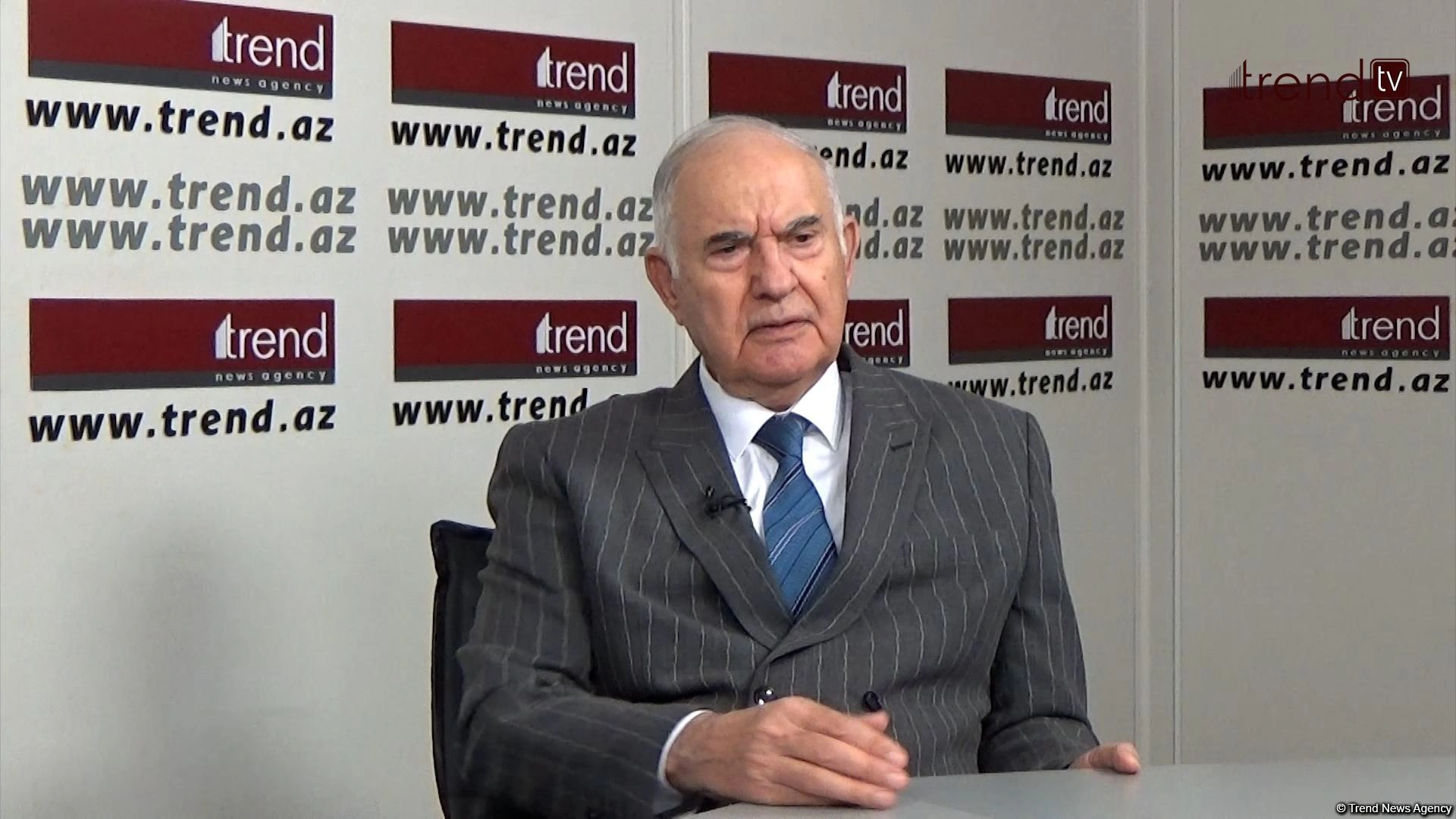
political analyst Azer Garayev told Trend.
"The Azerbaijani people today commemorate the memory of the
National Leader Heydar Aliyev. Today is not just a day of
remembrance of a leader—today is a day of remembrance of the
political will and national responsibility that changed the destiny
of Azerbaijani statehood, saved the country from disintegration,
and put it on the path of stability, development, and strategic
direction.
Although Azerbaijan restored its independence in 1991,
independence was not merely a legal act—it was a heavy
responsibility, a severe test, internal and external pressures,
political chaos, and a socio-economic crisis. During that time, the
country was facing several major challenges simultaneously: the
Karabakh war, occupation, the tragedy of refugees and internally
displaced persons, political crisis, economic collapse, a
governance vacuum, the presence of armed groups, and the weakening
of central authority in the regions.
The state institutions had not yet been effectively established,
there was no continuity in decision-making, and fragmentation
prevailed in governance. The country's strategic resources,
especially energy potential, were either misdirected or, due to
uncertainty, appeared risky for international investments. The most
dangerous moment for Azerbaijan was the very survival of the state
itself: on one hand, the weight of war, and on the other, internal
conflicts and armed confrontations; the country was on the brink of
collapse. It was precisely in such a critical situation that the
people placed their hopes on Heydar Aliyev’s political experience,
influence, and management skills. The events of 1993 were a turning
point in Azerbaijan’s history. Heydar Aliyev's return to power
essentially became the salvation of the statehood. At that time,
the issue was not just a change of political leadership—it was
whether the country would survive as a state," he noted.
According to Garayev, after Heydar Aliyev came to power, the
first thing he did was restore the "pulse" of the state.
Centralization of governance, the rule of law, neutralization of
armed confrontations, and ensuring internal stability became the
primary goals. This endeavor was fraught with complexities,
considering the prevailing circumstances of the era. Nonetheless,
his political resolve elucidated a fundamental principle: in the
absence of systemic stability, neither economic infrastructure
could be established nor sovereign autonomy preserved.
"After Heydar Aliyev's arrival, state institutions were
strengthened, and competence and responsibility became the main
criteria in governance. The 'statehood thought' was reinforced in
Azerbaijani society: citizens had to trust the state, and the state
had to rely on the citizens. From the mid-1990s, the directions of
legal and economic reforms were defined. The state's main
priorities were established: the irreversibility of independence,
national security, economic recovery, energy strategy,
international cooperation, and a balanced policy in the region. One
of the most important and decisive pillars of this strategy was
energy policy.
For Azerbaijan, oil was not just an economic resource but a
geopolitical tool that would ensure the future of the state. In
1994, under Heydar Aliyev’s leadership, the Contract of the Century
was signed, marking the beginning of a new stage in Azerbaijan’s
history. This agreement was not just an oil contract—it was
Azerbaijan's international recognition of its independent economic
policy, the restoration of investor confidence, the modernization
of the energy sector, and the strengthening of Azerbaijan's
position in the global energy market," he explained.
Garayev pointed out that with the Contract of the Century,
Azerbaijan began cooperation with the world’s leading energy
companies. This cooperation brought not only financial flows to the
country but also technology, management expertise, and long-term
partnerships. Most importantly, Azerbaijan’s international
political weight grew, and the world started to recognize
Azerbaijan’s sovereignty not just in diplomatic papers but also in
key strategic ventures.
"At that period, making such a decision required great courage.
There were many risks in the region, internal stability was just
being restored, and there were external pressures and doubts.
However, Heydar Aliyev put the state's interests above short-term
political maneuvers and transformed Azerbaijan into a long-term
winner. The energy strategy did not end with the contract; the main
issue was to bring oil to the market and deliver Azerbaijan’s
energy resources to the global market through safe and stable
routes. In this regard, pipeline policy strengthened Azerbaijan’s
geopolitical position.
By Heydar Aliyev’s initiative and political line, Azerbaijan
became the center of international energy projects. This strategy
paved the way for large-scale projects such as the
Baku–Tbilisi–Ceyhan pipeline, increased Azerbaijan’s role in the
region’s energy security, and contributed to Azerbaijan’s becoming
a reliable partner in energy security. As a result of these
processes, Azerbaijan began to play the role of a 'geopolitical
bridge' in the international relations system: it became a crucial
link in energy, transportation, and economic ties between the East
and the West," Garayev stated.
The analyst pointed out that back in the 1990s, Azerbaijan had
its hands full dealing with security issues. The war was dragging
on, the toll was steep, and the weight on society's shoulders was
nothing short of a millstone.
"Heydar Aliyev also pursued a state-centered approach in this
matter: forming the army, building the defense system, ensuring
internal stability, and strengthening Azerbaijan’s rightful
position in the international arena were pursued simultaneously.
The ceasefire achieved during that period provided the country with
a breathing space: state-building accelerated, there was time and
opportunity for economic reforms, and a secure environment for
international projects was created. The legal framework and
institutions of independent Azerbaijan were established during that
period.
The adoption of the constitution was a historic step in
determining the legal foundations of the state and stabilizing
governance mechanisms. Responsibility, the rule of law, and
systemic principles were emphasized in state administration. The
National Leader ensured that institutions were not just 'on paper'
but functioning mechanisms. Personnel policy was also an integral
part of this strategy: professionalism, loyalty to the state, and
service to national interests were key criteria for him. In Heydar
Aliyev’s philosophy of statehood, the unity of society held a
special place.
He formulated the idea of Azerbaijanism as the ideological
foundation of the state: this idea aimed to unite all citizens
around Azerbaijan's statehood, regardless of their ethnic
background, and strengthen national solidarity. The development of
language, culture, education, science, historical attachment, and
the protection of national and moral values were important aspects
of his state policy. The strength of the state was measured not
only by economic indicators but also by the strength of national
identity and the people's self-confidence. Heydar Aliyev restored
that confidence. His foreign policy is characterized as 'balanced
and pragmatic.'
He made calculated decisions in international relations. Based
on Azerbaijan's interests, cooperation was established with various
centers, and the country became more active in international
organizations, while regional partnership mechanisms were
established. This policy allowed Azerbaijan to emerge from
international isolation, be recognized as a reliable partner, and
gain support for economic projects. Most importantly, Azerbaijan
was recognized as a state that made its sovereign decisions, with
an independent position in both domestic and foreign policy," the
analyst also noted.
Garayev highlighted that one of the greatest merits of the
National Leader was ensuring political continuity for the
future.
"In state governance, consistency, strategic planning, and
protection of national interests are still the key pillars of
Azerbaijan’s policy today. Under President Ilham Aliyev’s
leadership, the country’s development, strengthening, the expansion
of strategic projects, the growing power of the Azerbaijani Army,
and the strengthening of the country's international prestige are a
continuation and further development of this political legacy.
Honoring Heydar Aliyev’s memory is not only a tribute to the
past.
It's also a lesson in statehood. His life path shows that to
build a state, mere intention is not enough - political will,
experience, systematic thinking, and dedication to national
interests are required. He united the country in the hardest of
times, restored stability, paved the way for economic development,
elevated Azerbaijan's energy strategy to a global level, and laid
the foundation for modern statehood.
Today, Azerbaijan is an independent state that makes its own
decisions, protects its interests, plays a role in regional
processes, and is increasing its economic and political power, just
as Heydar Aliyev envisioned. The name of the National Leader will
forever live in the history of this state, not just as a leader but
as the very symbol of the state itself. The National Leader Heydar
Aliyev will always be remembered by the people as the savior of the
state, Azerbaijan’s great strategist, and the architect of our
modern independent statehood," the analyst concluded.
Stay up-to-date with more news on Trend News
Agency's WhatsApp channel