BAKU, Azerbaijan, Dec. 11. The transport and
logistics sector in Eurasia remains highly attractive for
investors, in part due to the active development of international
corridors, including the North-South Transport Corridor and the
Trans-Caspian International Transport Route (Middle Corridor),
Trend reports
citing the Eurasian Development Bank (EDB).
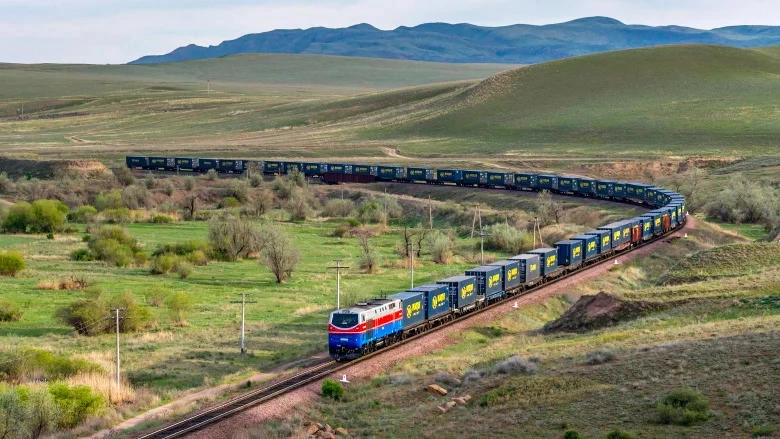
“The growing importance of the Middle Corridor and the
North-South Transport Corridor has been a key trend in recent
years. Cargo traffic along the Middle Corridor reached 3.3 million
tons in 2024, including 56,500 twenty-foot equivalent units (TEUs).
Shipments via the North-South Corridor exceeded 20 million tons,
including 50,000 TEUs. Target forecasts for 2030 are 11.4 million
tons for the Middle Corridor and 32 million tons for the
North-South Corridor,” the report said.
The growth in freight traffic is driving the development of
rail, road, port, and logistics infrastructure, including
warehousing and digital solutions to facilitate efficient
multimodal transit. Overall investment needs for the development of
the Eurasian transport framework in Central Asia are estimated to
exceed $52 billion by 2035, according to the EDB.
The Middle Corridor is a transport and trade route connecting
Asia and Europe and passing through several countries in the
region. The route starts in China, crosses Central Asian countries
including Kazakhstan, Uzbekistan, and Turkmenistan, then traverses
the Caspian Sea, passing through Azerbaijan, Georgia, and Türkiye
before reaching Europe. The corridor provides a land-based
connection linking eastern Asia, including China, to Europe,
bypassing longer maritime routes.