BAKU, Azerbaijan, December 11. Preparations are
under way in the Turkmen capital for a rare high-level gathering as
the country marks the 30th anniversary of its policy of permanent
neutrality. On Friday morning, Ashgabat began receiving an influx
of foreign delegations ahead of the anniversary event scheduled for
December 12.
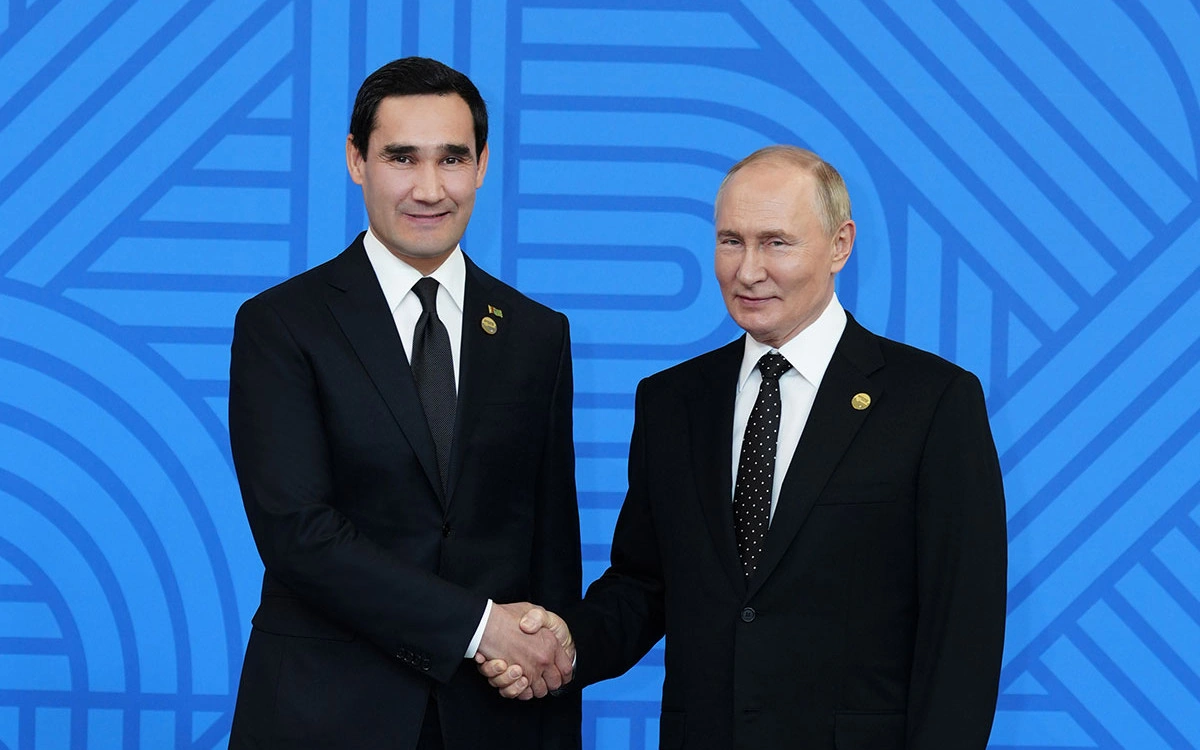
Russian President Vladimir Putin is expected to arrive in the
Turkmen capital later in the day. According to organizers, leaders
of Türkiye, Iran, and several other states have also been invited
to take part in the celebrations. Their presence is turning
Ashgabat into a temporary diplomatic center, where discussions may
extend beyond the official program.
While the main focus of the events is the commemoration of
Turkmenistan’s long-standing neutral status, the gathering is
likely to offer opportunities for broader exchanges on regional
logistics, trade corridors, and issues of geopolitical
cooperation.
The ties between the two countries stand for a long-term
partnership. Annual trade turnover between Russia and Turkmenistan
currently exceeds $1.6 billion. In 2025, the dynamics have shown a
marked increase, with growth in the first quarter alone reaching
21.4%, while for the first half of the year, trade volumes rose by
more than 30% year-on-year. At this pace, Russian and Turkmen
officials estimate that total turnover could exceed $2.5 billion by
the end of the year.
This upward trend is supported by the expanding scope of
bilateral cooperation. Russian companies are making waves in
Turkmenistan, dipping their toes not just in the usual waters such
as metallurgy, mechanical engineering, and deliveries of machinery
and equipment, but also in transport and logistics projects,
construction, agriculture, and digital and telecommunications
initiatives. As of today, around 40 business entities with Russian
capital are registered in Turkmenistan. These include
representative offices and branches of companies such as Gazprom,
KAMAZ, Vozrozhdenie, Tatneft, and others. In addition, 342
investment projects involving Russian companies have been
registered, with a total value of $3.5 billion, while in 2022
Russian Railways (RZD) and the Turkmen agency “Turkmendemiryollary”
signed a cooperation program for 2023-2025 that envisions extensive
collaboration, including RZD’s support in training specialists,
digitalizing production processes, enhancing logistics for the
development of transport corridors, including international ones,
and assisting with the electrification of Turkmenistan’s
railways.
In October 2025, several key documents were signed in Ashgabat,
including a protocol of the intergovernmental commission,
agreements between the commodity and raw materials exchanges of the
two countries, and a package of customs cooperation documents aimed
at simplifying trade procedures and expanding economic
exchanges.
In the sphere of international and regional diplomacy,
Turkmenistan and Russia continue to coordinate within several key
structures. Ashgabat participates in the Commonwealth of
Independent States (CIS), as well as in various Caspian and
regional consultative formats focusing on security, transport,
logistics, and sustainable development. Agenda items include the
exchange of expertise and coordination of positions at
international forums.
Even though there have been ups and downs in bilateral relations
since Turkmenistan’s independence—including gas disputes, shifts in
export routes, and attempts by Ashgabat to diversify its energy
supplies, particularly toward China, where Turkmen gas exports
reached $7.03 billion in the first 10 months of 2025—the current
phase is marked by rising trade, expanding contacts, and an
increase in joint projects. These trends indicate that both sides
see tangible benefits in strengthening their partnership.
President Putin’s visit to Turkmenistan could provide an
opportunity to consolidate these efforts. Owing to its neutral
status and geographical position, Ashgabat is not just a cog in the
wheel of regional transport; it also acts as a melting pot for
discussions among Russia and its neighboring states—including
Türkiye and Iran—on joint initiatives in logistics, transport,
trade, and regional security. Particularly given the mutual
interest in increasing freight turnover between Russia and Iran
along the North–South corridor, which is already estimated at 15 to
23 million tons, including the Azerbaijani and Central Asian
segments. In this context, Turkmenistan is emerging not only as a
partner but also as an active mediator and coordinator of regional
interests.
The visit could open a can of worms, leading to new agreements
just in the nick of time before winter sets in, all while the
global geopolitical landscape is shifting. These could encompass
expanded deliveries of Russian machinery, equipment, and
technologies; joint transport and logistics projects; cooperation
in digital development, science, and education; and possibly
cultural and humanitarian exchanges.
Overall, Russian-Turkmen relations currently rest on a solid
practical foundation. Trade is picking up, cooperation is
expanding, and political will is coming through. Putin’s visit
represents not only a ceremonial gesture but also an opportunity to
give bilateral cooperation a more systematic and institutional form
that is mutually beneficial on the international stage.