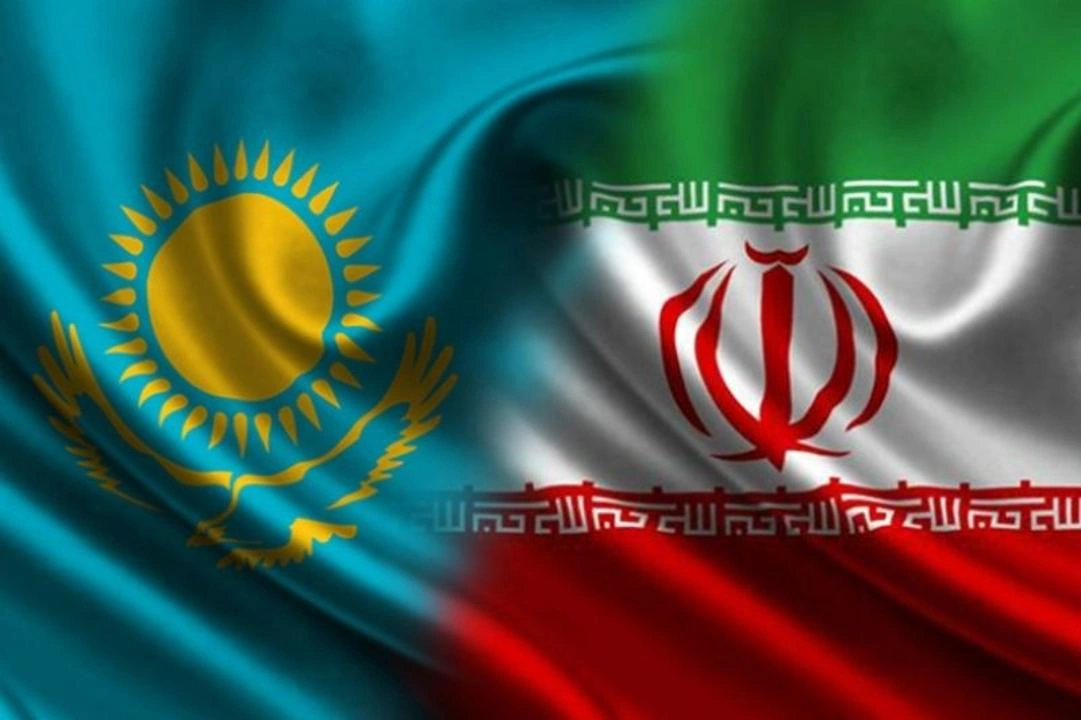
BAKU, Azerbaijan, December 10. Astana is
preparing for the visit of Iranian President Masoud Pezeshkian,
with the transport sector expected to be an important, if not key,
topic of discussion. Kazakhstan and Iran are participants in the
eastern branch of the International North-South Transport Corridor,
which connects Russia and Central Asia with the ports of the
Persian Gulf and India. In 2024, Iran, Kazakhstan, Russia, and
Turkmenistan signed a roadmap for the synchronized development of
the corridor for 2024-2025. The implementation of the measures is
expected to increase the corridor’s capacity to 15 million tons by
2027 and 20 million tons by 2030.
However, despite the progressive development of transport
cooperation, a number of unresolved issues remain. Specifically, UN
ESCAP (United Nations Economic and Social Commission for Asia and
the Pacific) representative Azhar Jaimurzina Ducrest, previously
stated in an interview with Trend that it is necessary to reassess
the “bottlenecks” on the North-South route and eliminate the
accumulated restrictions of recent years.
Kazakhstan’s Minister of Transport, Nurlan Sauynbaev, announced
at a recent briefing that a meeting with his Iranian counterpart is
being prepared, during which Astana plans to raise the issue of
Iranian vessels’ access to Kazakh ports. This issue is complicated
by international sanctions imposed on Iran. Restrictions, including
those from the U.S., create risks for the use of Iranian vessels in
international trade, directly impacting logistics in the Caspian
region.
An additional challenge for regional connectivity remains the
environmental situation: the persistent drop in the Caspian Sea
level has sharply reduced the loading capacity of Kazakhstan’s
ports of Aktau and Kuryk, with vessels only able to load up to 30%
of their capacity. This problem also affects Iran, making it a
significant topic for bilateral discussions.
Kazakhstan is actively expanding its presence in the southern
ports of Iran. Astana is interested in establishing a logistics
center in the Bandar Abbas region, and in May 2025, Kazakhstan’s
railway freight operators announced plans to build a terminal and
logistics hub at the Shahid Rajaee port. Both sides have also
expressed interest in strengthening cooperation within the
Trans-Caspian International Transport Route. These projects are
aimed at reinforcing Kazakhstan’s position in the international
transport network and boosting Central Asia’s transit
potential.
An important factor in the development of trade was the
implementation of the Free Trade Agreement between Iran and the
EAEU (Eurasian Economic Union), which came into force on May 15,
2025. It grants Iran preferential access to 90% of the commodity
nomenclature, and average import duties for goods from the EAEU
have been reduced from 20% to 4.5%. According to the Bureau of
National Statistics of Kazakhstan, trade turnover between
Kazakhstan and Iran grew by 44% in January-September 2025, reaching
$310.8 million. Iran also remains an important market for Kazakh
grain, with shipments totalling over 1 million tons in the
2024/2025 marketing year- a significant increase compared to 86,000
tons the previous year.
Iran has also shown interest in participating in road
construction projects in Kazakhstan, which could significantly
expand transport infrastructure. Kazakhstan, for its part, is ready
to provide Iranian investors with financial incentives and
investment guarantees.
Masoud Pezeshkian’s visit to Astana could be a turning point in
deepening the transport partnership between the two countries.
Removing restrictions, developing port and land infrastructure, and
leveraging the opportunities presented by the free trade agreement
could elevate bilateral cooperation to a new level and
substantially increase freight traffic between the two nations.