BAKU, Azerbaijan, December 9. The
Trans-Anatolian Natural Gas Pipeline (TANAP) enhanced pipeline
reliability by over 70% thanks to new corrosion protection
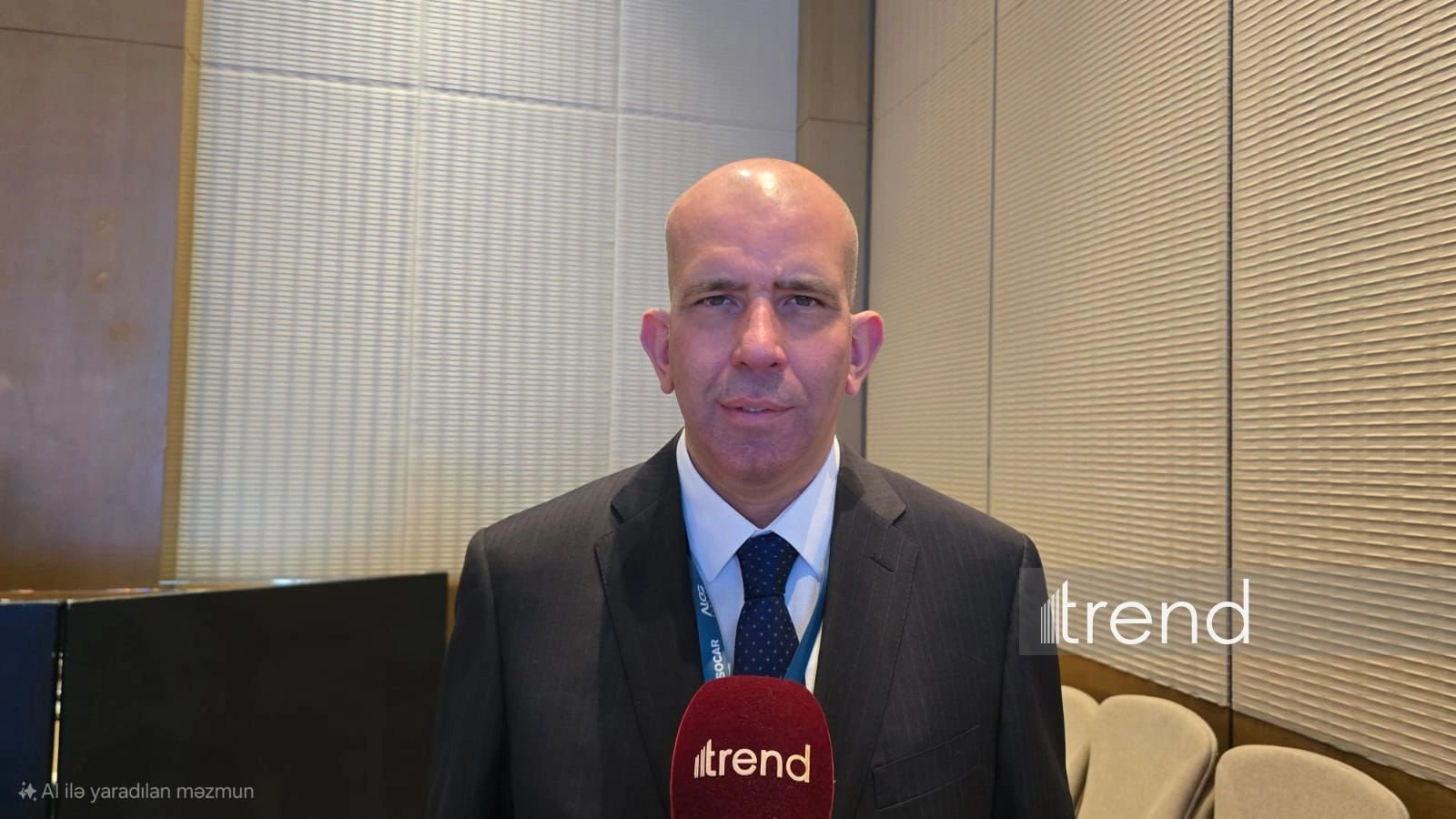
technologies, Yavuz Bozdoğan, Chief Maintenance Manager of the
TANAP project, told Trend at the Asset Integrity & Corrosion and Coatings
Conference in Baku.
Bozdoğan noted that the pipeline’s integrity is strengthened
through frequent risk assessments using Risk-Based Inspection
(RBI), corrosion monitoring techniques such as ACVG (Alternating
Current Voltage Gradient) and DCVG (Direct Current Voltage
Gradient), cathodic protection, and internal inspection tools.
“In numerical terms, implementing these technological solutions
can improve continuous transport reliability by more than 70%,” he
emphasized.
Since pipelines are typically buried underground, these
interventions and measurements enable full Condition Monitoring
Assessment (CMA), ensuring accurate evaluation of pipeline health.
Bozdogan highlighted that modern monitoring and corrosion
protection technologies are crucial for the safe and uninterrupted
operation of TANAP’s infrastructure.
TANAP transports gas from the second phase of Azerbaijan’s Shah
Deniz field from the Georgia-Türkiye border to Türkiye’s western
border, with a total project cost of under $7 billion. Expansion
plans include the installation of multiple additional compressor
stations to increase throughput to 24 billion cubic meters per
year, with a total of seven stations required to reach 31 billion
cubic meters.
Preliminary assessments are currently in progress regarding the
logistics of conveying a hydrogen-enriched mixture via the
Trans-Anatolian Natural Gas Pipeline (TANAP). From a technical
standpoint, hydrogen has the potential to represent as much as 2
percent of the natural gas conveyed via the pipeline
infrastructure.
The anticipated operational lifespan of TANAP is projected to
persist until the year 2062.
Stay up-to-date with more news on Trend News
Agency's WhatsApp channel