BAKU, Azerbaijan, November 5. The Food and
Agriculture Organization of the United Nations (FAO) is ready to
contribute its expertise and knowledge gained in various countries
to the development of sustainable fisheries and aquaculture in
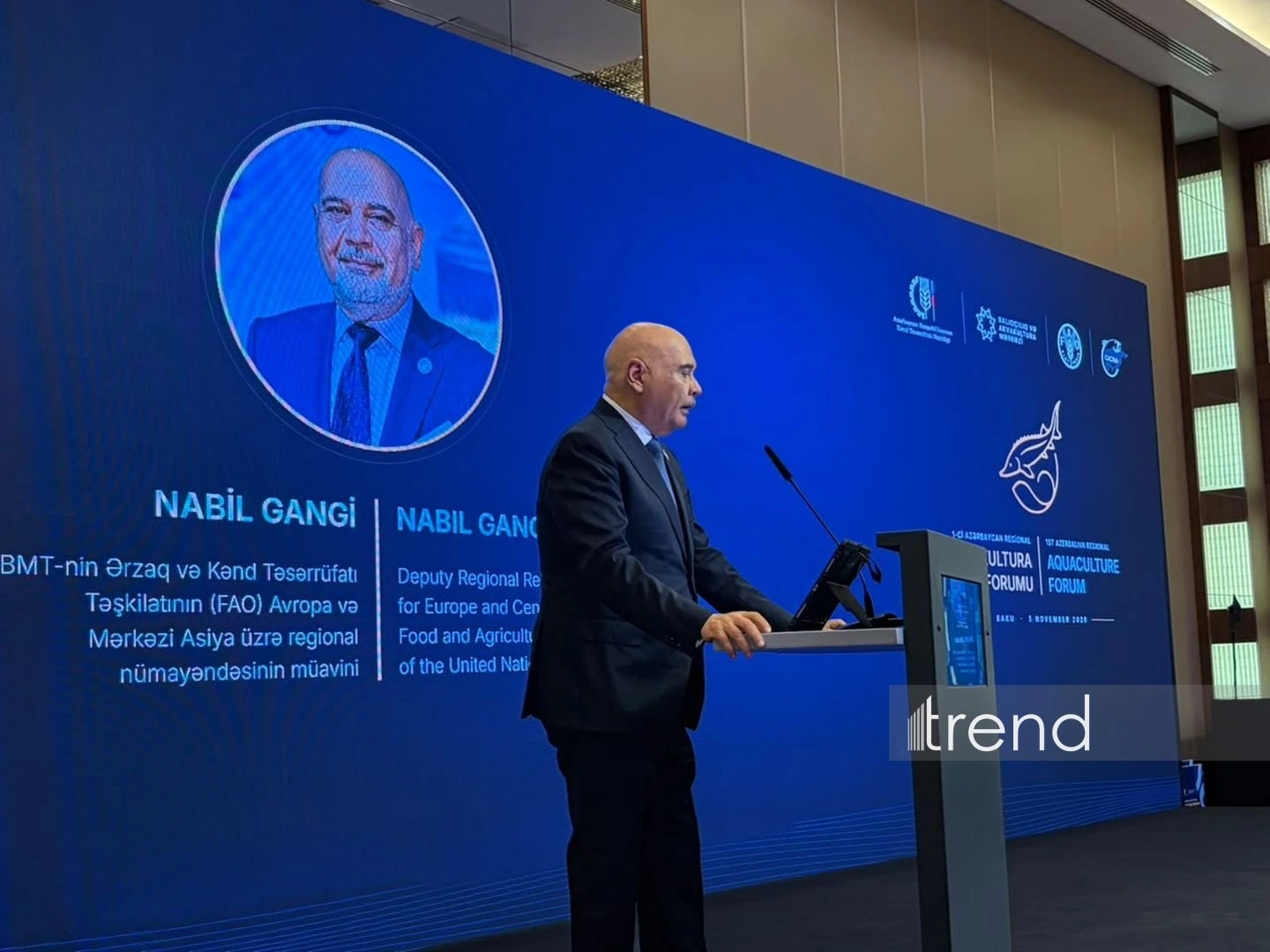
Azerbaijan and the wider region, FAO Deputy Regional Representative
for Europe and Central Asia Nabil Gangi said, according to Trend's correspondent
covering the event.
Speaking at the inaugural Azerbaijan Regional Aquaculture Forum
in Baku on Thursday, November 5, Gangi reaffirmed the UN agency's
commitment to supporting regional aquaculture development.
He said that the expansion of the Ministry of Agriculture's
mandate in fisheries and aquaculture creates opportunities to
improve the sector's access to investment, innovation and support
mechanisms.
According to Gangi, the 2026–2030 State Program provides a clear
framework for these objectives by placing fisheries and aquaculture
alongside agriculture among the country's development
priorities.
"FAO's latest assessment shows that aquaculture currently
accounts for more than half of global aquatic animal production.
Aquatic foods provide valuable nutrients, while fisheries and
aquaculture support livelihoods even in areas far from coastal
regions," he noted.
The FAO official emphasized that development should translate
into stable incomes, practical advice and better market access for
small-scale producers and fishing communities. Opportunities for
women and young people to establish sustainable businesses in their
local communities should also be expanded.
"Development must be based on healthy aquatic environments and
sound science. Effective fisheries management, habitat protection
and responsible aquaculture practices in the Caspian Sea and
Azerbaijan's inland waters are essential. Better information on
aquatic animal health, efficient water use and climate risks should
guide investment decisions," Gangi said.
He added that cooperation between FAO and Azerbaijan includes
sector assessments, work on a fisheries roadmap and exchanges of
experience with Türkiye. Through the Regional Commission for
Fisheries and Aquaculture in Central Asia and the Caucasus,
countries can share expertise and work together to address common
challenges.
Gangi noted that the cooperation framework for 2026–2030 brings
together efforts to improve advisory and information services for
producers, strengthen reliable food safety systems, and promote
more efficient use of water and natural resources.
He expressed hope that the next phase of the FAO-Azerbaijan
Partnership Programme would provide fresh momentum for cooperation
in sustainable fisheries and aquaculture.