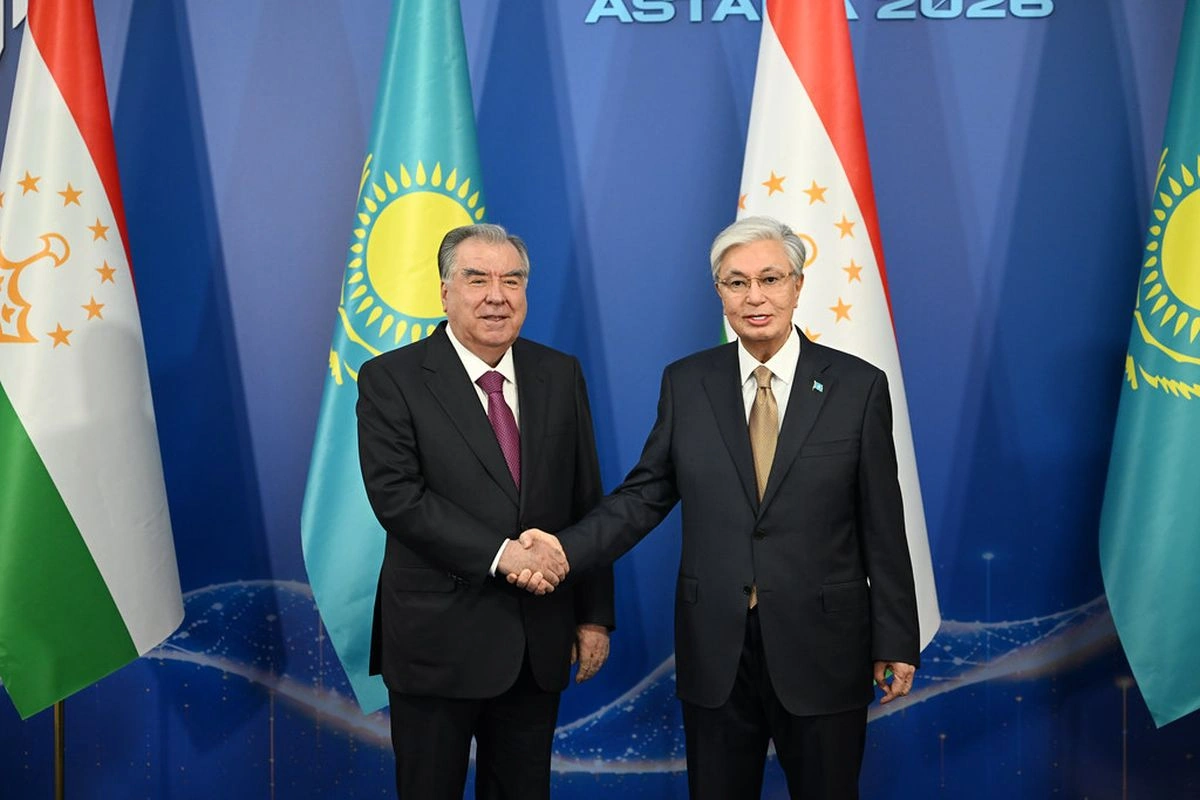
BAKU, Azerbaijan, November 5. Tajik President
Emomali Rahmon is scheduled to pay an official visit to Kazakhstan
on November 5-7 at the invitation of President Kassym-Jomart
Tokayev. The leaders are expected to discuss ways to further
strengthen the strategic partnership and allied relations between
the two countries. The visit coincides with the summit of the
international Aqaba Process initiative, scheduled to take place in
Astana on November 6 with the participation of several heads of
state. King Abdullah II of Jordan is also due to visit Kazakhstan
on November 5-6.
The Kazakh side has not yet disclosed a detailed agenda or a
list of documents that may be signed during the visit. Emomali
Rahmon will remain in Kazakhstan until November 7, allowing
bilateral contacts to continue after the summit concludes.
Kazakhstan and Tajikistan established diplomatic relations in
January 1993 and signed an agreement establishing the basis for
bilateral relations that same month. In 2015, the two countries
concluded a strategic partnership treaty. Subsequently, in May
2023, during Rahmon’s state visit to Astana, they signed a
declaration on allied cooperation. The next milestone was Tokayev’s
state visit to Dushanbe in August 2024, during which the Treaty on
Allied Relations was signed. Thus, the upcoming talks are taking
place within an already established framework of allied relations
rather than at the initial stage of building a political
foundation.
Regular political dialogue is also maintained at the highest
level. In April 2026, during a meeting in Astana, Tokayev and
Rahmon discussed, among other issues, military and
military-technical cooperation, as well as efforts to counter
regional and global threats. During a phone conversation with
Rahmon in October 2026, Tokayev highlighted Rahmon’s role in
establishing sovereign Tajikistan, maintaining peace, and
strengthening bilateral relations.
Economic ties remain one of the key areas. According to
Kazakhstan’s Ministry of Foreign Affairs, bilateral trade reached
$1.2 billion by the end of 2025. The two presidents have set a goal
of raising it to $2 billion in the coming years. In February 2026,
Kazakh Foreign Minister Yermek Kosherbayev confirmed during a visit
to Dushanbe that both sides were ready to work toward this target.
Particular attention was paid to expanding trade, joint investment
projects, energy, transport, and security. In the same month, the
two foreign ministries signed a cooperation program for 2026-2028,
providing for regular political consultations and the development
of interagency contacts.
The structure of trade shows how the two economies complement
each other. Kazakhstan supplies Tajikistan with wheat, natural gas,
flour, barley, pasta, and aluminum products. In the opposite
direction go copper, zinc, and lead ores and concentrates, dried
fruit, nuts, grapes, and other agricultural products. According to
Kazakhstan’s Foreign Ministry, more than 500 legal entities and
branches with Tajik participation are registered in Kazakhstan, and
over 90 joint Kazakh-Tajik enterprises operate there. This
indicates that relations go beyond mutual deliveries and include
business presence in both markets.
Reaching the $2 billion goal will require expanding not only
trade but also investment cooperation. In August 2025, Kazakhstan
expressed readiness to increase supplies of agricultural products,
food products, and machinery to the Tajik market by $200 million.
The sides also discussed the practical implementation of agreements
in water and energy, transport and transit, and cultural and
humanitarian cooperation.
Transport and logistics are of particular importance given
Tajikistan’s geographic position and its need for reliable transit
routes. Direct flights operate between Almaty and Dushanbe and
between Astana and Dushanbe. The sides may consider expanding
transport links and improving logistics conditions for trade, but
no specific new projects have yet been named in the published
information about the visit.
Water and energy cooperation requires constant coordination,
since the use of water resources and the development of power
systems affect the interests of several countries in the region.
This topic was among the priorities at the February talks between
the foreign ministers.
Regional and international security occupies a separate place.
Kazakhstan and Tajikistan cooperate within the United Nations, the
Shanghai Cooperation Organization (SCO), the Commonwealth of
Independent States (CIS), the Collective Security Treaty
Organization (CSTO), and other forums. The upcoming meeting may
offer an opportunity for further coordination of positions,
although the specific topics of the November 5-7 talks have not
been disclosed.
The coincidence of Rahmon’s visit with the Aqaba Process summit
gives the trip an additional international dimension. The
initiative was launched by the King of Jordan in 2015 to strengthen
international cooperation in countering terrorism and violent
extremism. It provides for informal high-level dialogue involving
heads of state, military and security officials, security experts,
and international organizations. Its areas of work include the
exchange of intelligence and experience, as well as coordinating
responses to new threats, including those related to drones and
other modern technologies.
Overall, the visit will be another step in implementing the
already established strategic partnership and alliance. The most
concrete topics are raising trade to $2 billion, investment ties,
industrial cooperation, transport, energy, and regional security.
The results of the trip will depend on the content of the talks and
on subsequent decisions by the governments and relevant agencies.
The relationship may develop through faster trade growth and
fulfillment of earlier agreements, through larger joint investment
and production projects, and through deeper cooperation in
transport and energy.