BAKU, Azerbaijan, November 4. On November 4,
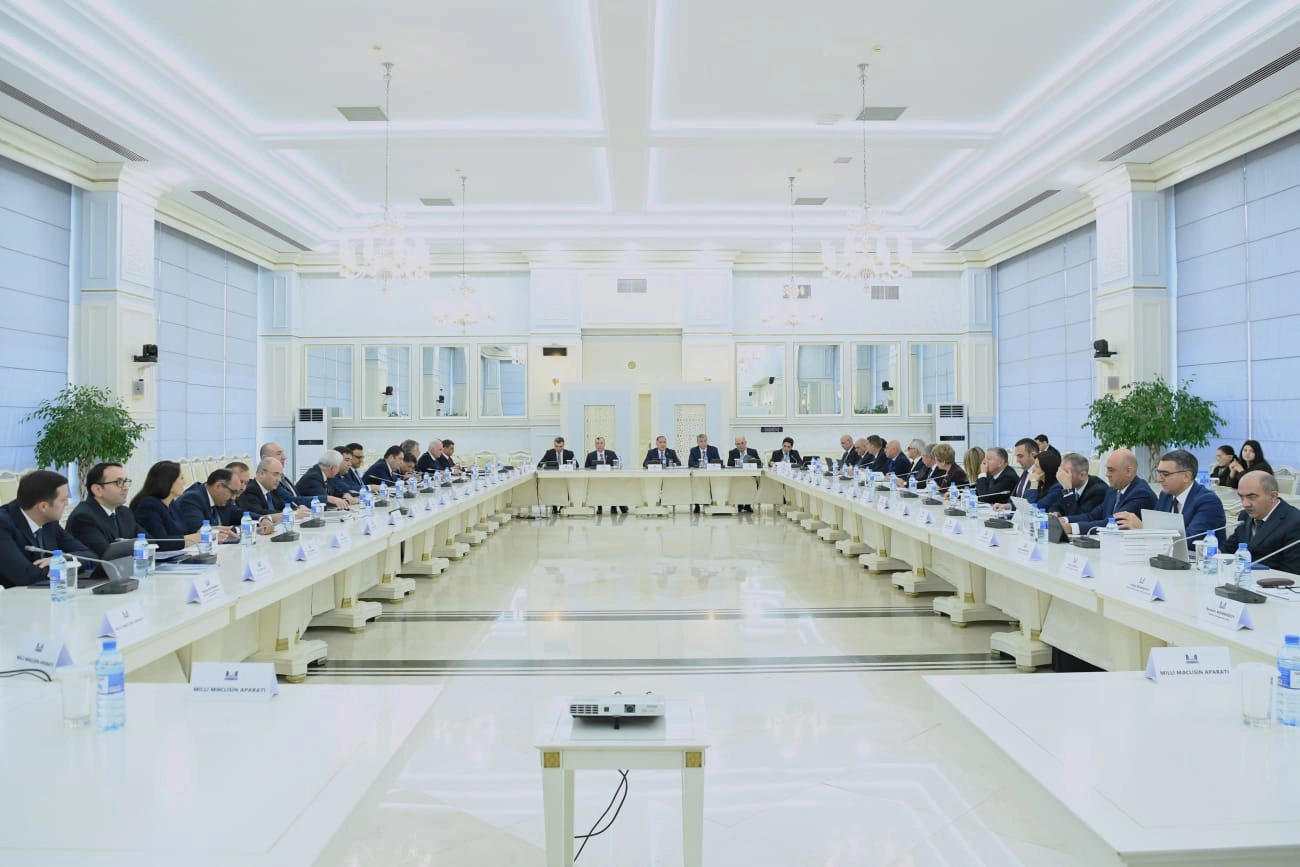
the Milli Majlis (parliament) Committee on Economic Policy,
Industry and Entrepreneurship discussed the draft law “On the State
Budget of the Republic of Azerbaijan for 2027.”
As reported by the Public Relations and Press Department of the
Milli Majlis, the meeting was attended by committee members,
representatives of political parties represented in parliament, as
well as heads and representatives of relevant government
agencies.
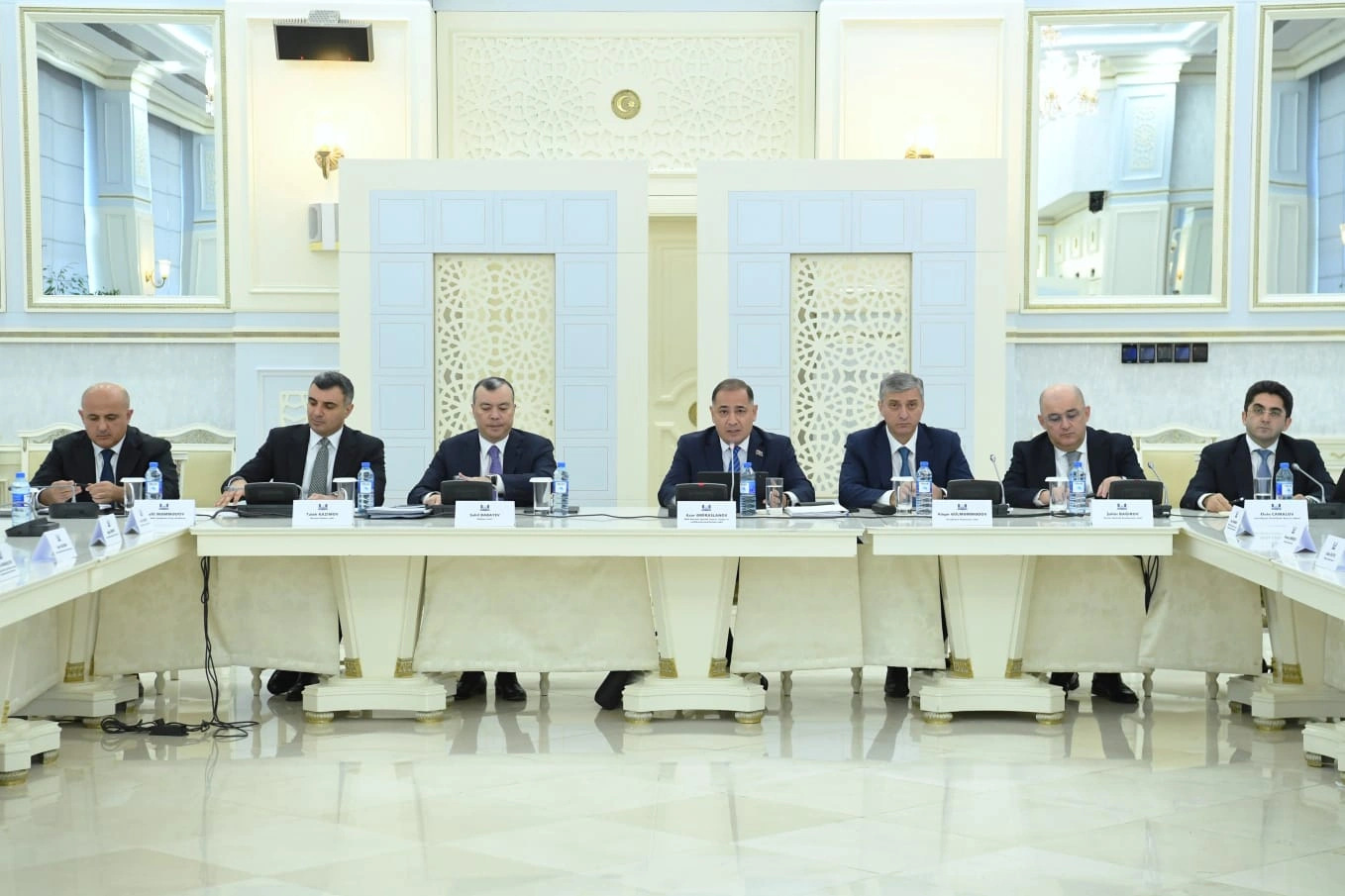
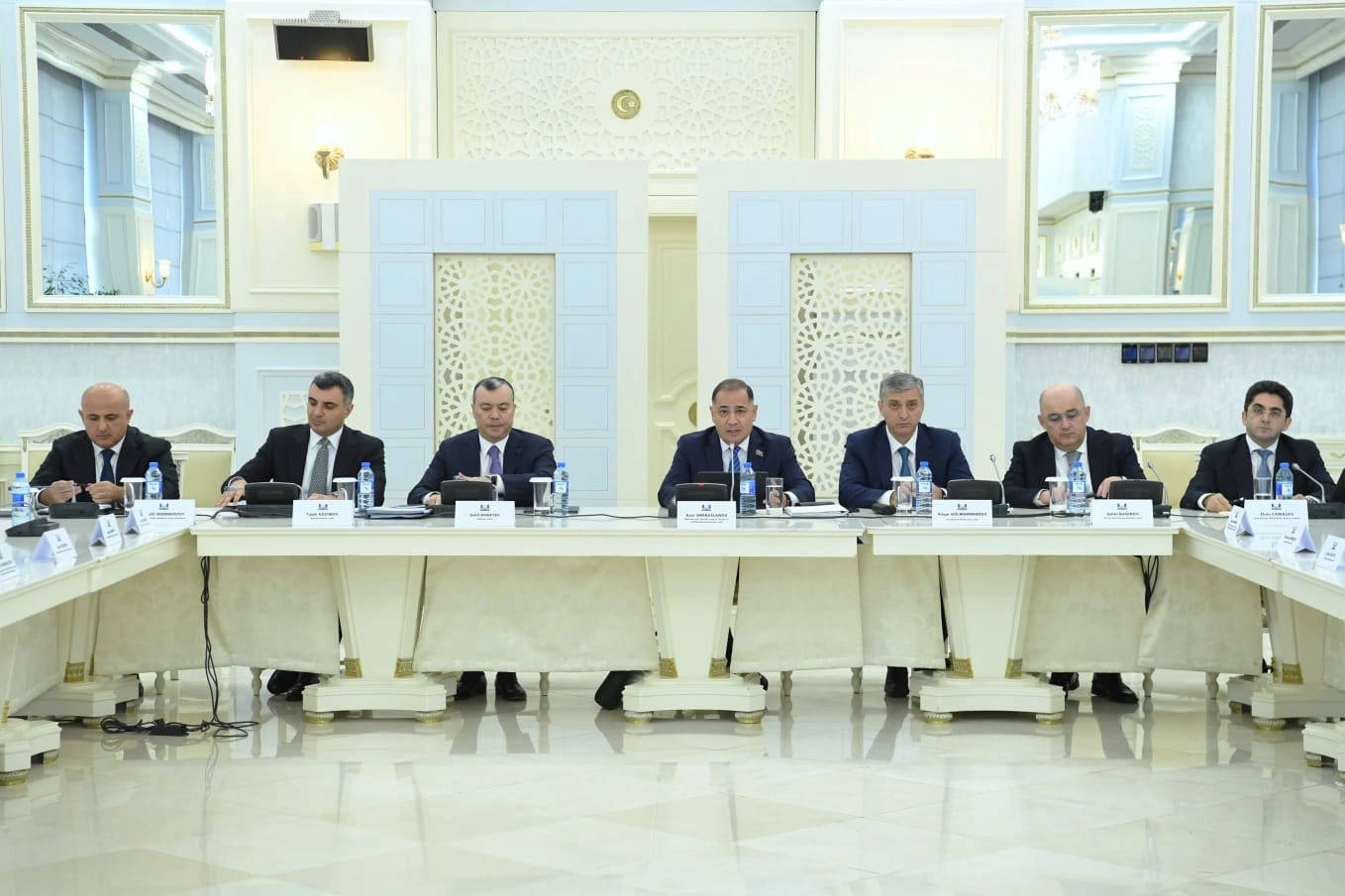
Opening the meeting, Chairman of the Committee on Economic
Policy, Industry and Entrepreneurship Azer Amiraslanov said that
the 2027 budget package had been submitted to the Milli Majlis in
accordance with the procedure established by law, while the Chamber
of Accounts had prepared its opinions on the budget documents.
Speaking about the key parameters of the 2027 state budget, the
committee chairman noted that budget revenues are projected at 39.2
billion manats and expenditures at 42.4 billion manats. This
represents a 1.7% increase in both revenues and expenditures
compared to the approved 2026 budget. The upper limit of the state
budget deficit is set at approximately 3.2 billion manats.
He emphasized that the budget package provides a solid financial
foundation for implementing the initiatives put forward by
President of the Republic of Azerbaijan Ilham Aliyev, the state
programs defined by him, and the strategic objectives facing the
country. It was noted that the budget package reflects a further
strengthening of the state's social policy next year. This is
evidenced by the fact that 18.7 billion manats, or 44.2% of total
expenditures, are allocated to social purposes. This amount is 1.6
billion manats, or 9.2%, higher than the 2026 figure. At the same
time, the state budget also prioritizes national security and
defense. Capital expenditures in the 2027 state budget are set at
13.8 billion manats, or 32.5% of total expenditures.
Speaking about the importance of ensuring budget sustainability,
the committee chairman noted that full compliance with budget
rules, increasing the share of non-oil revenues to more than 60% of
budget receipts in 2027, covering 90.1% of current expenditures
through non-oil and gas revenues, and reducing the transfer from
the State Oil Fund by 935 million manats are the main factors
reflecting qualitative changes in the budget.
Finance Minister Sahil Babayev then presented the draft law “On
the State Budget of the Republic of Azerbaijan for 2027” and the
documents included in the budget package.
The minister noted that under the leadership of the head of
state, the country's socio-economic development is being ensured
across all areas. Azerbaijan is transforming into a powerful and
more economically developed state, better able to ensure the
well-being of its population. The framework for ongoing structural,
institutional, economic and social reforms is also envisaged for
the coming period, both in the state budget and within the
medium-term expenditure framework.
He said that the main principles of the 2027 budget policy,
developed under the leadership of President Ilham Aliyev, include
supporting sustainable economic growth, maintaining macroeconomic
stability, fully financing measures to improve public welfare and
support the social sector, strengthening defense capabilities and
ensuring security, developing the Karabakh and East Zangezur
economic regions, expanding the use of digital technologies and
innovation, supporting the development of education and healthcare,
complying with the budget rule while maintaining fiscal discipline,
ensuring targeted and efficient execution of budget expenditures
through the State Treasury, and further accelerating the
development of the real sector of the economy.
Regarding the key macroeconomic indicators for 2027, it was
noted that the country's gross domestic product (GDP) is projected
to reach 141 billion manats next year, representing real growth of
2.7% compared to 2026. GDP in the non-oil and gas sector is
forecast at 109.1 billion manats, indicating real growth of 4.4%
compared to 2026. The average annual price of a barrel of crude oil
for next year is set at $65. Average annual inflation is projected
at 5.3%.
Currently, total public debt stands at 23.9 billion manats, down
2.8% compared to the beginning of this year. Of the total debt
portfolio, 16.2 billion manats account for domestic public debt and
7.7 billion manats for external public debt. As of October 1 this
year, strategic foreign exchange reserves had reached $89.4
billion. Next year's revenues of the State Oil Fund are projected
at $7.8 billion, expenditures at $7.1 billion, and transfers from
the Fund at $7 billion.
It was noted that one of the key priorities of budget policy is
to further reduce dependence on oil. To this end, the Azerbaijani
government is implementing consistent and targeted measures. Next
year, the ratio of the consolidated budget's non-oil primary
deficit to non-oil GDP is expected to stand at 17.1%, while the
share of non-oil revenues in the consolidated budget is projected
to reach 64.5%.
The minister noted that budget expenditures had been structured
in line with the country's socio-economic needs. According to him,
consolidated budget expenditures will amount to 46.2% of non-oil
GDP. Capital expenditures will account for 32.5% of the state
budget. Education and healthcare expenditures will reach 3.6% and
1.5% of GDP, respectively. Next year, allocations to the
agricultural sector will amount to 15.8% of agricultural GDP.
It was also reported that the dependence of districts on
subsidies would be fully eliminated in next year's state budget.
The subsidy allocated to Nakhchivan will be reduced by 13.6 million
manats, or 6.4%, compared to the current year.
S. Babayev noted that consolidated budget revenues would reach
47.6 billion manats next year, an increase of 2.6 billion manats,
or 5.9%, compared to 2026. The share of revenues in GDP will reach
33.8%, 1.2 percentage points higher than the 2026 figure. The share
of non-oil revenues in the consolidated budget will reach 64.5%, up
1.5 percentage points compared to the current year.
State budget revenues are projected to increase by 645 million
manats compared to the current year. Their share in GDP is forecast
at 27.8%.
Non-oil sector revenues are expected to amount to 23.8 billion
manats, or 60.6% of total revenues. The ratio of non-oil revenues
to non-oil GDP will stand at 21.8%. Oil sector revenues will amount
to 15.5 billion manats, or 39.4% of total budget revenues.
Meanwhile, receipts through the State Tax Service are expected
to reach 18.4 billion manats, or 47% of total revenues,
representing an increase of 1.5 billion manats, or 9%, compared to
the current year. Receipts through the State Customs Committee will
amount to 6.9 billion manats, or 17.1% of budget revenues, while
transfers from the State Oil Fund will total 11.9 billion manats,
or 30.3% of budget receipts.
Next year, dividend revenues from state-owned enterprises are
projected at 872 million manats, revenues from paid services
provided by budget-funded organizations at 949 million manats, and
other revenues at 484 million manats.
The minister then presented information on next year's
consolidated and state budget expenditures. It was noted that
consolidated budget expenditures are projected at 50.4 billion
manats, 1.5 billion manats higher than in the current year.
State budget expenditures are set at 42.4 billion manats, an
increase of 696.4 million manats, or 1.7%, compared to the current
year. They will account for 30.1% of GDP and 38.9% of non-oil
GDP.
In the structure of state budget expenditures, current
expenditures are projected at 26.4 billion manats, or 62.3% of
total expenditures. Socially oriented expenditures will amount to
18.7 billion manats, or 44.2%. Capital expenditures are projected
at 13.8 billion manats. Public debt servicing costs are estimated
at 2.2 billion manats. The finance minister also presented
expenditure figures by functional classification of the budget.
Chairman of the Central Bank Taleh Kazimov then addressed the
meeting.
According to him, despite the challenging global situation,
economic growth continued in Azerbaijan during the first nine
months of 2026. During this period, GDP increased by 1.5%, while
the non-oil and gas sector grew by 2.6%. The country's foreign
trade surplus amounted to $10.5 billion, while strategic foreign
exchange reserves increased by 5.1%, reaching $89.4 billion.
It was noted that this year, monetary policy, through monetary
conditions, was also aimed at keeping inflation within the target
range. Exchange rate stability was maintained in the foreign
exchange market during the reporting period of 2026.
It was also emphasized that the expansion of banking sector
assets during 2026 contributed to supporting economic activity. In
particular, over the 10-month period, banking sector assets
increased by 15.1%, reaching 65.7 billion manats. In addition,
insurance premiums rose by 8% in the first nine months of this year
compared to the same period last year, while insurance payouts
increased by 29%. Total trading turnover in the securities market
amounted to 35 billion manats. The overall volume of stock market
transactions increased ninefold, reaching 2.6 billion manats.
T. Kazimov then presented forecasts regarding the expected
macroeconomic policy for 2027. According to the Central Bank's
projections, the country's GDP will grow by 2.3% in 2027, while
non-oil and gas GDP will increase by 4.3%. The current account
surplus is projected at $5.4 billion, while annual inflation is
forecast at 5.9%.
Commenting on the 2027 budget draft, he generally gave a
positive assessment of the presented macro-fiscal framework for
2027 and the medium-term period. He noted that conservative growth
and optimization of public expenditures, a gradual reduction in oil
transfers, an increase in the share of non-oil sources in budget
revenues, and keeping the budget deficit and public debt at
manageable levels contribute to strengthening fiscal
sustainability.
Head of Staff of the Ministry of Economy Elvin Jamalov then
addressed the meeting. He spoke about the qualitative changes that
had taken place in the economy during the reporting period.
It was reported that private sector investment in fixed capital
amounted to 14.7 billion manats, increasing by 10.9% in real terms.
Private investment in the non-oil and gas sector grew by
approximately 21%. It was also noted that the main drivers of
growth in the non-oil and gas sector were non-oil industry,
logistics and digital services.
At the same time, it was emphasized that the full execution of
state budget expenditures, including capital expenditures, by the
end of the year is an important factor affecting the pace of
economic growth.
Excluding the State Oil Fund's gold transactions, non-oil and
gas exports increased by 20.5% over the first nine months, reaching
$3.2 billion, of which 60% accounted for industrial products. The
foreign trade surplus, excluding the Fund's gold transactions,
increased by 25%, reaching $7.1 billion.
It was noted that tax revenue targets for the first nine months
of this year were fulfilled by 107.2%, including 102.9% in the
non-oil and gas sector. At the same time, 80.6% of the annual
forecast had already been achieved. Tax revenues increased by 9.4%,
while taxes collected from the non-oil and gas sector rose by
12.6%.
At the committee meeting, Chairman of the Chamber of Accounts
Vugar Gulmammadov presented the Chamber's opinion on the draft
state budget of the Republic of Azerbaijan for 2027. It was noted
that the draft law, prepared in accordance with legislation, had
been analyzed article by article, revealing the need to improve
certain provisions.
Vugar Gulmammadov said that, unlike previous years, the
explanatory section of the budget package provided a more specific
definition of fiscal risk, while the degree of impact and
probability of occurrence of such risks had been assessed in line
with international recommendations.
During the discussion, the deputy chairman of the Committee on
Economic Policy, Industry and Entrepreneurship, other MPs, and
representatives of political parties also spoke. They shared their
views, assessments and proposals regarding next year's state budget
draft and raised a number of questions.
Finance Minister Sahil Babayev, Central Bank Chairman Taleh
Kazimov, Chairman of the State Customs Committee Shahin Baghirov,
Executive Director of the State Oil Fund Israfil Mammadov, Head of
Staff of the Ministry of Economy Elvin Jamalov, and Chairman of the
Chamber of Accounts Vugar Gulmammadov provided explanations on the
issues raised during the speeches.
Following the discussions, the draft law “On the State Budget of
the Republic of Azerbaijan for 2027” was recommended for
consideration by the Milli Majlis at a plenary session in its first
reading.