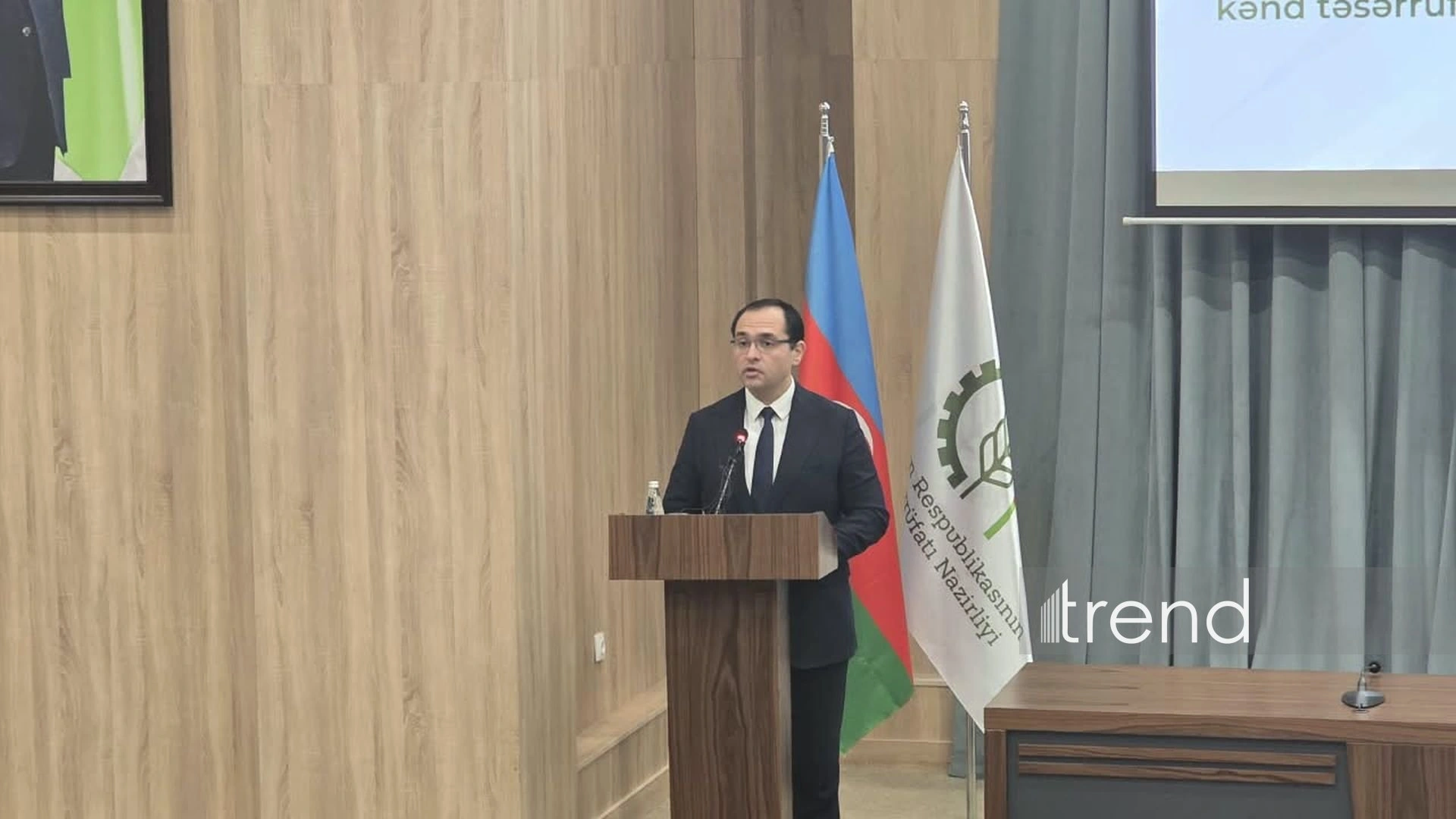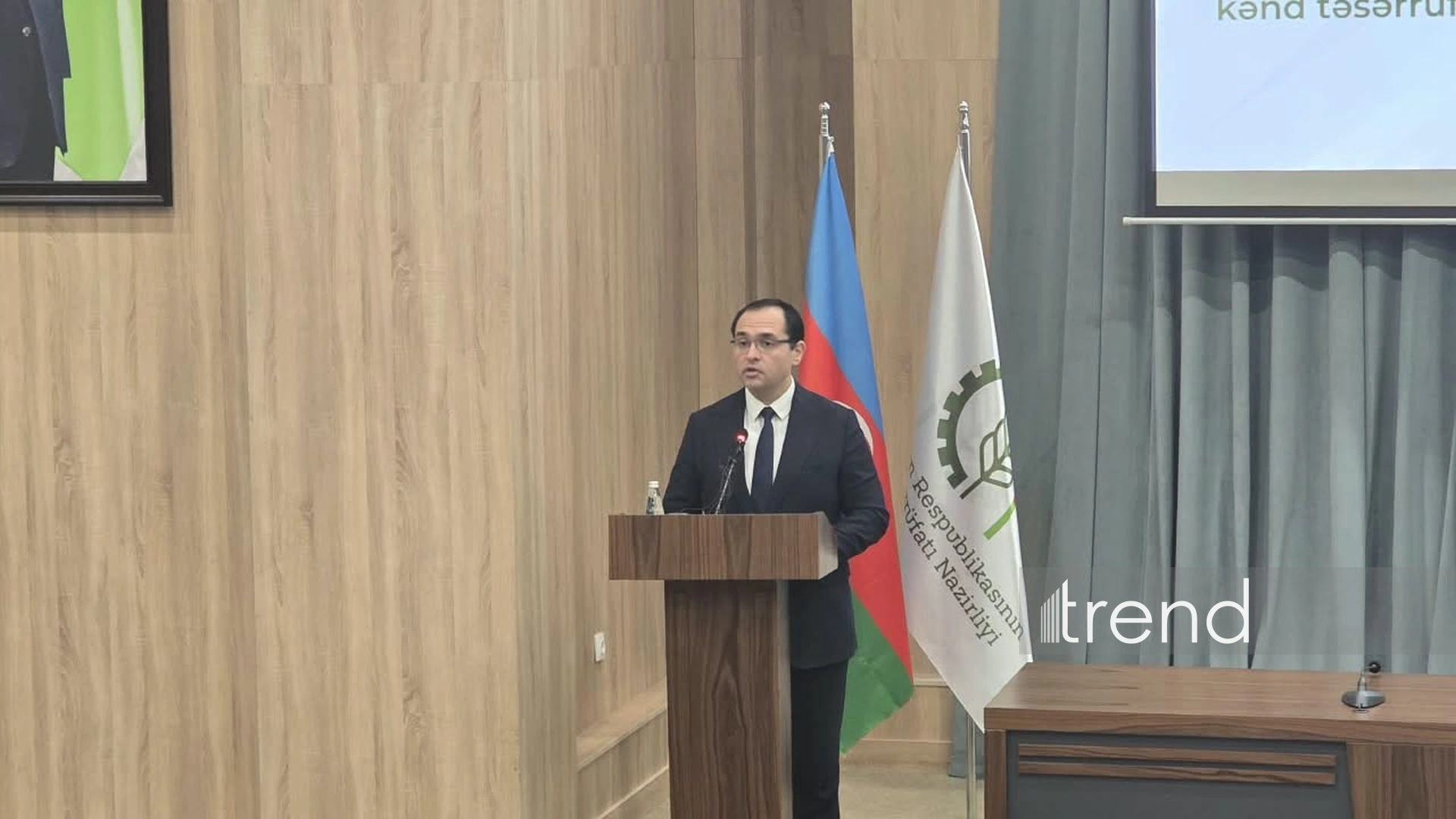
BAKU, Azerbaijan, October 30. Agricultural
production in Azerbaijan exceeded 11 billion manat ($6.5 billion)
in January-September 2026, Azerbaijan’s Minister of Agriculture,
Majnun Mammadov, said during an event held at the ministry’s
administrative building to mark November 1 – Agriculture Workers'
Day on Friday, Trend’s correspondent reports from the event.
The minister noted that the development of agriculture in
Azerbaijan is one of the key priorities of state policy. According
to him, the agrarian reforms initiated by National Leader Heydar
Aliyev laid a solid foundation for the development of this sector;
currently, under the leadership of President of Azerbaijan Ilham
Aliyev, consistent measures are being implemented to modernize the
agrarian sector, enhance its competitiveness, and strengthen food
security.
Mammadov pointed out that the state program for the development
of the production and processing of agricultural, fisheries, and
aquaculture products for the years 2026–2030 defines the primary
directions for a new phase in the development of the agrarian
sector.
"Within the framework of this program, key objectives include
increasing productivity, implementing modern irrigation
technologies, ensuring the efficient use of land and water
resources, and expanding production and processing capacities," he
remarked.
According to the minister, it is essential to continue
coordinated efforts with state institutions, the private sector,
farmers, and other partners to achieve the goals set out in the
state program.
He emphasized that improving the legal framework of the
agricultural sector, including the adoption of new laws "On seed
production" and "On fisheries," as well as the implementation of
new approaches to state support mechanisms, serves to create a more
favorable operating environment for farmers.
Mammadov mentioned that in the first 9 months of 2026, the
production of grain crops rose by 8.2% compared to the same period
last year, with wheat yields rising to 36.3 centners. Meanwhile,
the production of fruits and berries grew by 5%, reaching 842,600
tons. A positive trend was also observed in the export of
agricultural and processed products.
He added that, despite these results, factors such as climate
change, limited water resources, and shifts in international
markets necessitate the adoption of more agile and innovative
approaches within the agricultural sector.
"Digitalization, the implementation of modern technologies, and
the integration of scientific knowledge into production must remain
the key priorities for agricultural development," the minister
explained.
The minister also stressed the particular importance of
restoring the agricultural potential of the liberated territories.
According to him, the establishment of modern farms in Karabakh and
East Zangezur, the development of production infrastructure, and
the incorporation of land resources into economic circulation are
creating new opportunities for the country.