ASHGABAT, Turkmenistan, October 28. The
Japanese steelmaker Nippon Steel has received an order to supply
high-quality, corrosion-resistant pipes for oil and gas wells as
part of Phase IV of the Galkynysh gas field development project in
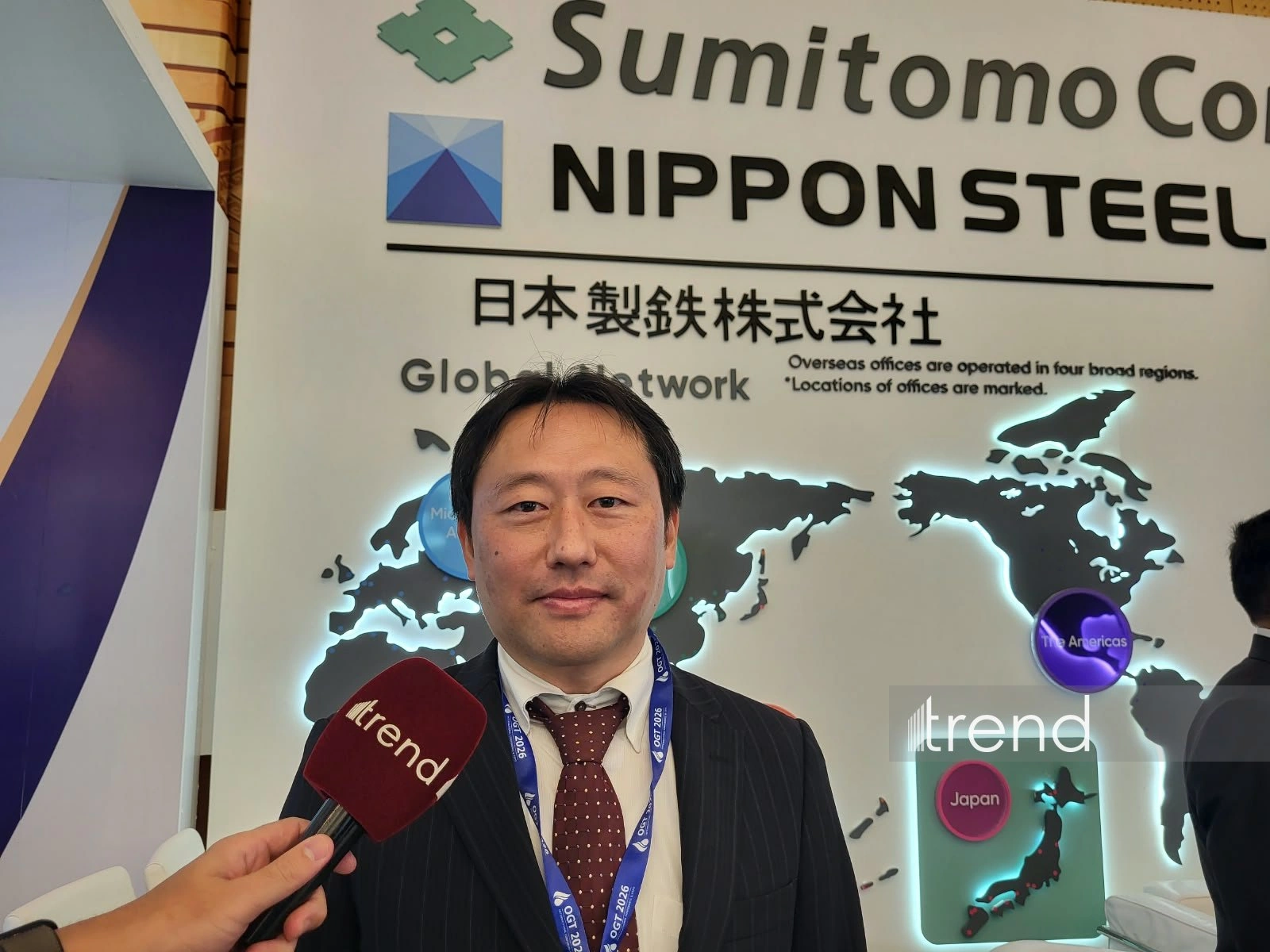
Turkmenistan, the company's marketing representative Keiichi Kuroda
told Trend on the sidelines of the 31st International Conference
and Exhibition "Oil and Gas of Turkmenistan" (OGT 2026) in
Ashgabat.
According to him, the company has been supplying pipes for the
Galkynysh project since 2012. Over this time, cooperation with
Turkmenistan has evolved into a long-term partnership tied to the
development of one of the country’s largest gas fields.
"We are pleased to have received the order for Phase IV of the
Galkynysh development and to have the opportunity to continue
contributing to Turkmenistan’s development," Kuroda noted.
Nippon Steel Corporation is one of Japan’s largest steel
companies, founded in 2012 through the merger of Nippon Steel
Corporation and Sumitomo Metal Industries. The group is engaged in
the production of steel, steel products, engineering solutions, and
new materials. According to the company’s own data, its total crude
steel production capacity is approximately 76 million metric tons
per year.
One of Nippon Steel’s business areas is the production of pipes
for the oil and gas industry, including OCTG pipes used in drilling
and well operations. The company also manufactures pipes made of
corrosion-resistant alloys (CRA) designed for use in aggressive
environments, including conditions with elevated levels of carbon
dioxide and hydrogen sulfide. These products are used in projects
where equipment must meet stringent requirements for reliability
and durability.
Earlier, Trend’s correspondent reported that, as part of
the fourth phase of development of the Galkynysh gas field in
Turkmenistan, there are plans to build a gas processing plant with
a capacity of 10 billion cubic meters of marketable gas per year.
The project also calls for the drilling of 30 production wells and
the creation of the necessary production infrastructure, as well as
social and residential facilities. The total investment is
estimated at approximately $5 billion.