BAKU, Azerbaijan, October 28. Despite all the
pressure on Iran, activities in the Iranian nuclear industry have
not ceased, and the country’s nuclear industry undoubtedly has a
bright future.
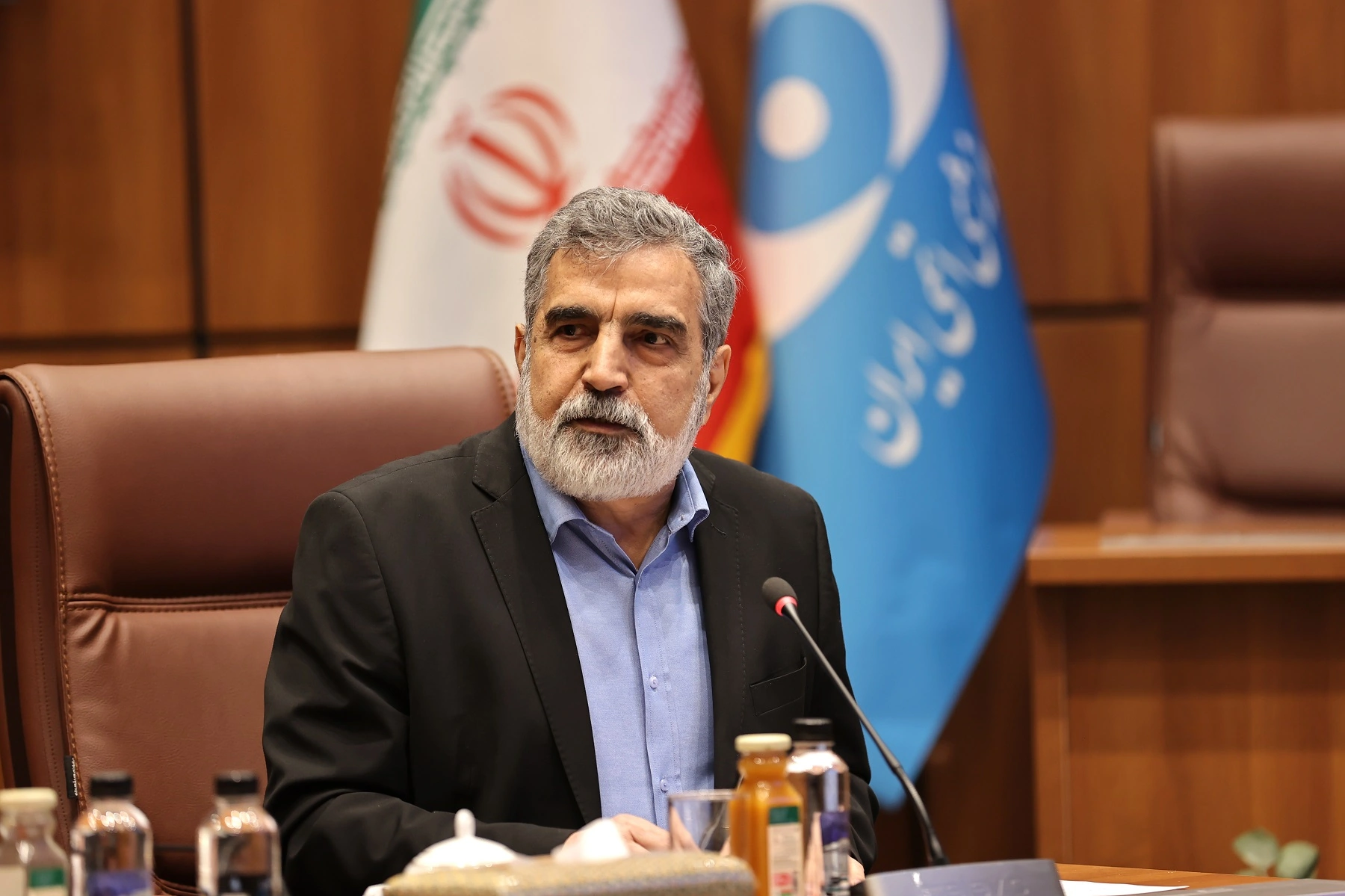
According to the Atomic Energy Organization of Iran, this was
stated by Behrouz Kamalvandi, deputy chairman and spokesperson for
the Atomic Energy Organization of Iran.
“Unfortunately, certain pressures have prevented Iran’s plans
and projects from being completed on schedule. Despite this,
nuclear activities in Iran have not ceased, and the development
process continues,” he said.
Kamalvandi added that during the U.S. and Israeli airstrikes on
Iran, an attack was carried out on the Darhovin Nuclear Power
Plant, which was under construction in the city of Ahvaz in the
southwestern province of Khuzestan. This move was intended to set
Iran’s program back by several years. The Darkhovin Nuclear Power
Plant was attacked during the initial stage of construction.
A spokesperson for the organization noted that Iran is in the
process of signing a protocol with Russia regarding small and
modular reactors (SMRs). This will accelerate the joint production
of reactors of this type.
Kamalvandi stated that small modular reactors can be used to
meet energy needs. This technology is considered one of the
emerging technologies attracting attention worldwide.
“The Sixth International Conference on Nuclear Energy is being
held in South Korea. At this conference, Iran emphasized the
importance of states party to the Treaty on the Non-Proliferation
of Nuclear Weapons (NPT) fulfilling their obligations, as well as
maintaining a legal balance. After all, for a country like Iran, it
is important that the obligations set forth in this treaty be taken
into account and that its rights not be ignored,” he said.
The organization’s representative added that the development of
environmentally friendly energy is of great importance worldwide.
This issue is not limited exclusively to Iran. Electricity must be
generated in a way that minimizes environmental pollution. For
example, the Bushehr Nuclear Power Plant has, to date, prevented
the release of approximately 86 million metric tons of pollutants
into the environment and saved 132 million barrels of crude
oil.
The first power unit at the Bushehr Nuclear Power Plant in Iran
began operations in 2011. In 2013, operation of the power unit was
transferred from the Russian nuclear company to an Iranian company.
Since 2013, the maximum electricity generation capacity of this
power unit has been 1,000 megawatts. In total, this plant has
generated more than 80 billion kilowatt-hours of electricity.
Construction of Power Units 2 and 3 at the Bushehr Nuclear Power
Plant began in 2017 on a 50-hectare site. Once commissioned, each
of these power units will be capable of generating 1,057 megawatts
of electricity. The commissioning of these two power units will
save 10 million barrels of crude oil or 1.6 billion cubic meters of
natural gas per year and prevent the release of 7 million metric
tons of polluting gases into the environment.