ASHGABAT, Turkmenistan, October
23. Reducing methane emissions in Turkmenistan by
30% by 2030 can bring economic benefits for the country exceeding
$300 million, while also delivering significant social and
environmental impacts, Economist at the Office of the UN Resident
Coordinator in Turkmenistan, Uladzimir Valetka, said, Trend's special correspondent reports.
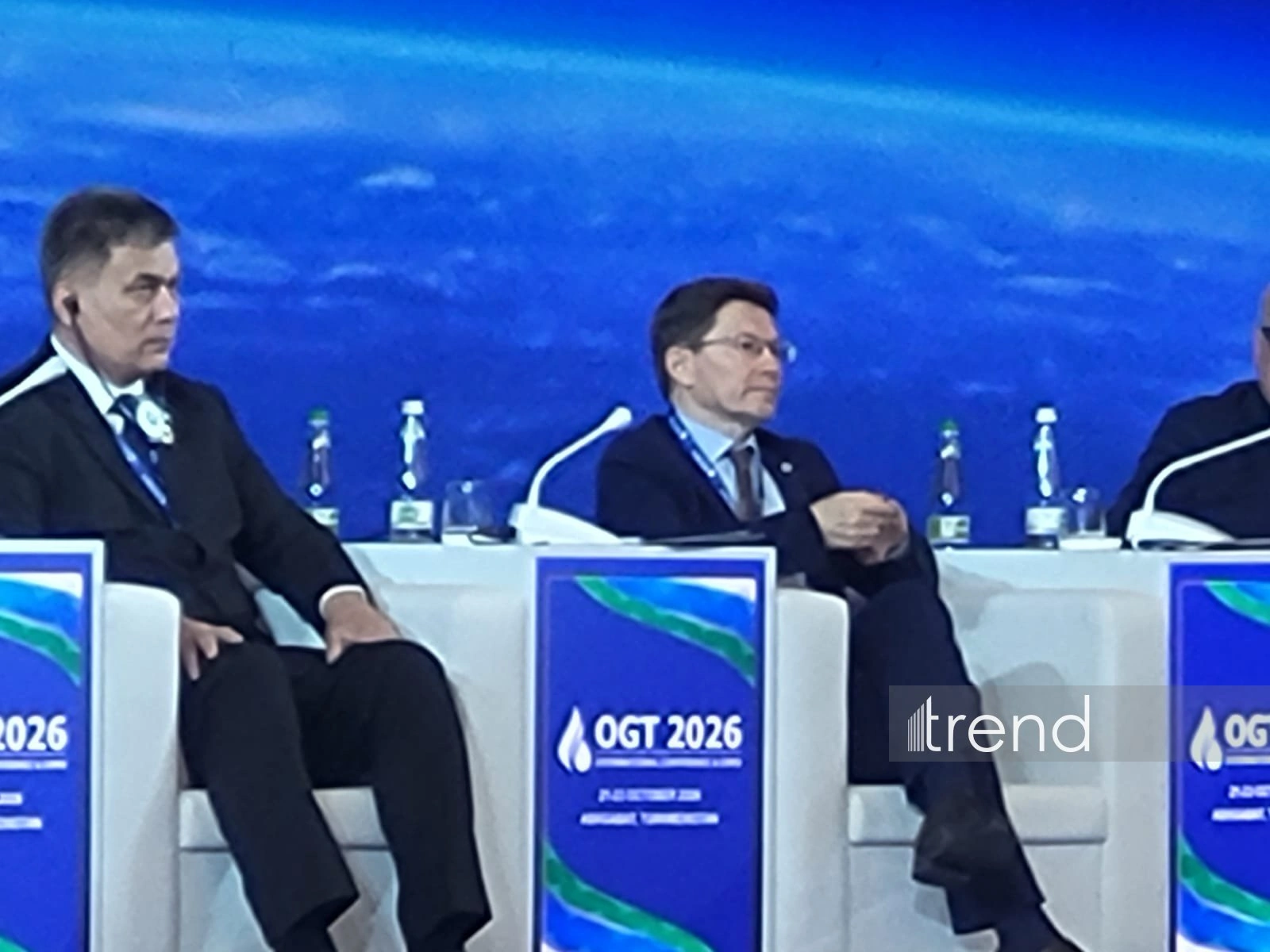
Valetka made the remark on the third day of the OGT 2026
conference in Ashgabat on October 23.
"The most compelling aspect of reducing methane emissions is
that the impact is immediate - it happens right now. Adhering to
the Global Methane Pledge and cutting emissions by 30% by 2030
would yield over $300 million in economic benefits for the
country," he noted.
According to Valetka, reducing emissions carries both
environmental and economic significance. He pointed out that, given
the 7% methane intensity mentioned during the session, the volume
of gas lost could exceed 5 billion cubic meters, based on
Turkmenistan’s current production levels.
The economist also emphasized that lowering emissions could have
a positive impact on public health, agriculture, and labor
productivity. Specifically, he cited global estimates from the
International Energy Agency (IEA), extrapolated for Turkmenistan.
These estimates suggest that measures to curb emissions could
significantly reduce the number of premature deaths and mitigate
losses linked to the health and agricultural impacts of
pollution.
"Applying the IEA’s global estimates to Turkmenistan shows that
such a reduction would lead to 11,000 fewer premature deaths. The
results are truly tangible, as confirmed by socio-economic
analysis," Valetka said.
He noted that the groundwork for further emission reductions is
already being laid in the country, supported by international
partners, investments, capacity building, and the supply of
equipment. The economist also highlighted the findings from
satellite monitoring conducted by the UN Environment Programme
(UNEP) in collaboration with authorized representatives of
Turkmenistan’s government agencies.
"UNEP has reported that its satellite monitoring system, which
operates in close coordination with government representatives, has
already yielded concrete results. Measures have been taken
regarding eight sources of super-emitter-level emissions, and these
outcomes have been verified, which is highly significant," he
emphasized.
According to Valetka, the next step is to scale up the
initiatives already underway. He also highlighted the importance of
regional energy connectivity, an area in which Turkmenistan is
already investing, identifying it as a key factor for sustainable
energy development.
"What we can do, in partnership with the country, is to help
scale up the efforts already being made. According to the UN’s
energy projections, which we presented to OGT participants last
year, reducing methane emissions is one of the few measures that
will never be a source of regret. The same applies to investments
in regional energy connectivity, an area where Turkmenistan is
already actively engaged," the economist concluded.
Meanwhile, the final day of the 31st International Conference
and Exhibition “Oil and Gas of Turkmenistan” (OGT 2026) is underway
in Ashgabat.
On the third day, participants are discussing ways to reduce
methane emissions, improve environmental and energy efficiency, and
the role of natural gas in ensuring a balanced and sustainable
energy future.
Participants are exploring opportunities for international
exchange of expertise and technologies aimed at reducing greenhouse
gas emissions and improving the environmental performance of the
oil and gas industry. In addition, the role of natural gas in
shaping a balanced energy system is being discussed.