BAKU, Azerbaijan, October
20. Azerbaijan and the countries located along
the Middle Corridor provide a stable transport connection between
Asia and Europe against the background of ongoing regional
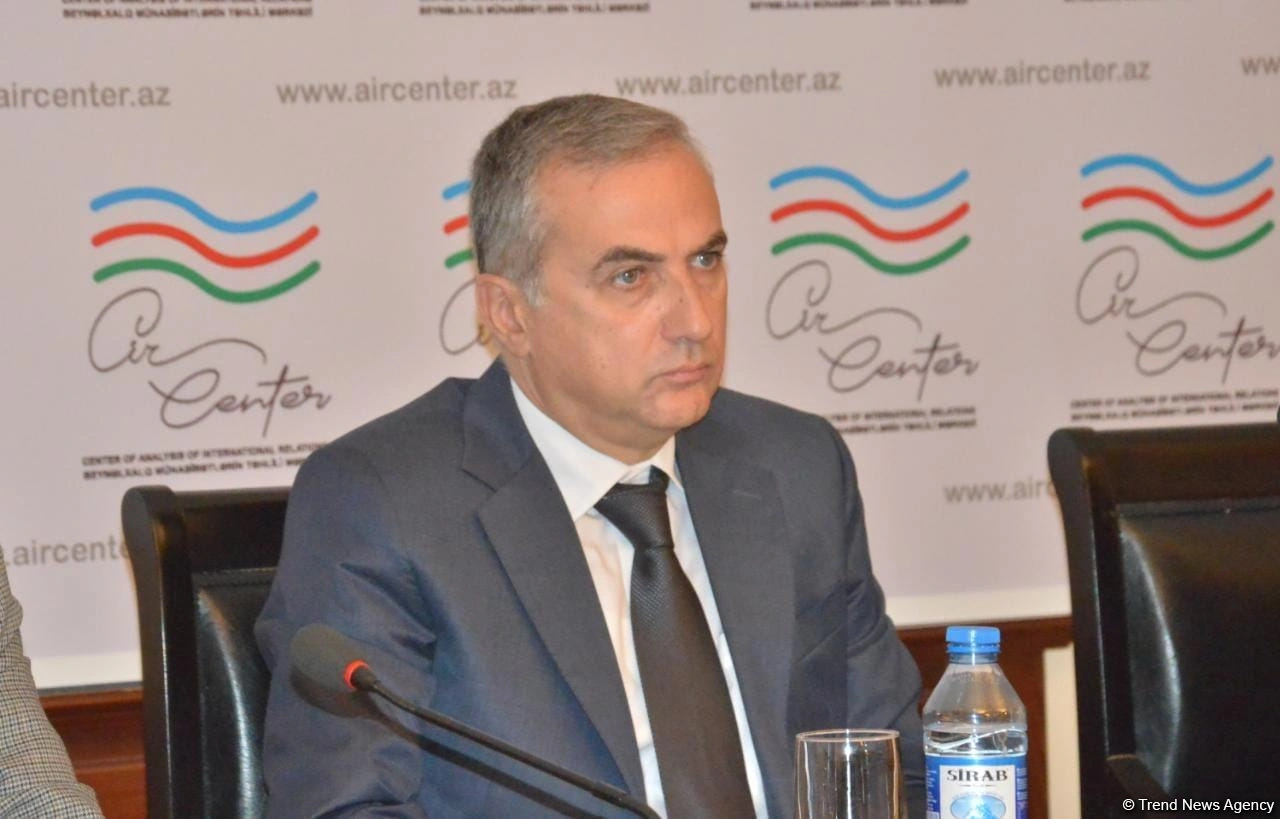
conflicts, the Chairman of the Board of the Center for the Analysis
of International Relations, Farid Shafiyev, said at the conference
"Middle Corridor and prospects of Eurasian transport connectivity:
Azerbaijan and Korea" in Baku on Tuesday, Trend’s correspondent
reports from the event.
According to Shafiyev, in recent years, the foreign policy of
Azerbaijan has strengthened its eastern direction, including within
the framework of international platforms and organizations.
"Azerbaijan is looking for various options and alternatives in
this complex and complex geopolitical situation. The increase in
the flow of goods along the Middle Corridor indicates the growth in
demand for this route. The same applies to growing trade.
The country sees good prospects for the development of trade and
investment in bilateral relations with the Republic of Korea.
Azerbaijan introduced a visa-free regime for citizens of Korea,
expressing hope for the development of tourist exchanges between
the two countries," he noted.
Shafiyev also highlighted Azerbaijan's participation in
international cooperation formats, including the Council on
Cooperation and Confidence-Building Measures in Asia (CICA), the
Organization of Turkic States, the Association of Southeast Asian
States (ASEAN) and the Shanghai Cooperation Organization.
The Middle Corridor is a multimodal trade and transport route
connecting Asia and Europe through Central Asia, the Caspian Sea,
Azerbaijan, Georgia and Türkiye. The route begins in China and runs
through Central Asia before crossing the Caspian Sea and continuing
through Azerbaijan, Georgia and Türkiye to European markets.
The Middle Corridor is being developed as an alternative to
traditional northern and southern transport routes, providing
connectivity between Asian markets, including China, and
Europe.