Uncertainty over when the global oil market will stabilise continues to grow as the conflict in the Middle East enters another phase of escalation. In September, Ansar Allah, also known as the Yemeni Houthis, took control of the Bab el-Mandeb Strait, one of the key maritime routes for oil shipments from Saudi Arabia. At the same time, oil tankers and the Kingdom’s energy infrastructure have come under repeated attacks. On Sunday, September 20, Houthi missiles and drones targeted Saudi Aramco facilities in Yanbu and a fuel terminal at Riyadh airport. The situation in the Strait of Hormuz also remains volatile, with a tanker coming under attack on Monday.
The large-scale conflict between the US-Israeli bloc and Iran has resulted in the destruction of oil production facilities, refineries, gas liquefaction plants, port terminals, and other energy infrastructure across the Persian Gulf states. The dual blockade of the Strait of Hormuz and the threat of attacks on oil tankers have prevented the full and sustained resumption of hydrocarbon shipments from the region. The severity of the situation around this vital maritime artery is also reflected in data from the UK Maritime Trade Operations (UKMTO), which reported that another tanker came under attack on September 21, injuring several crew members.
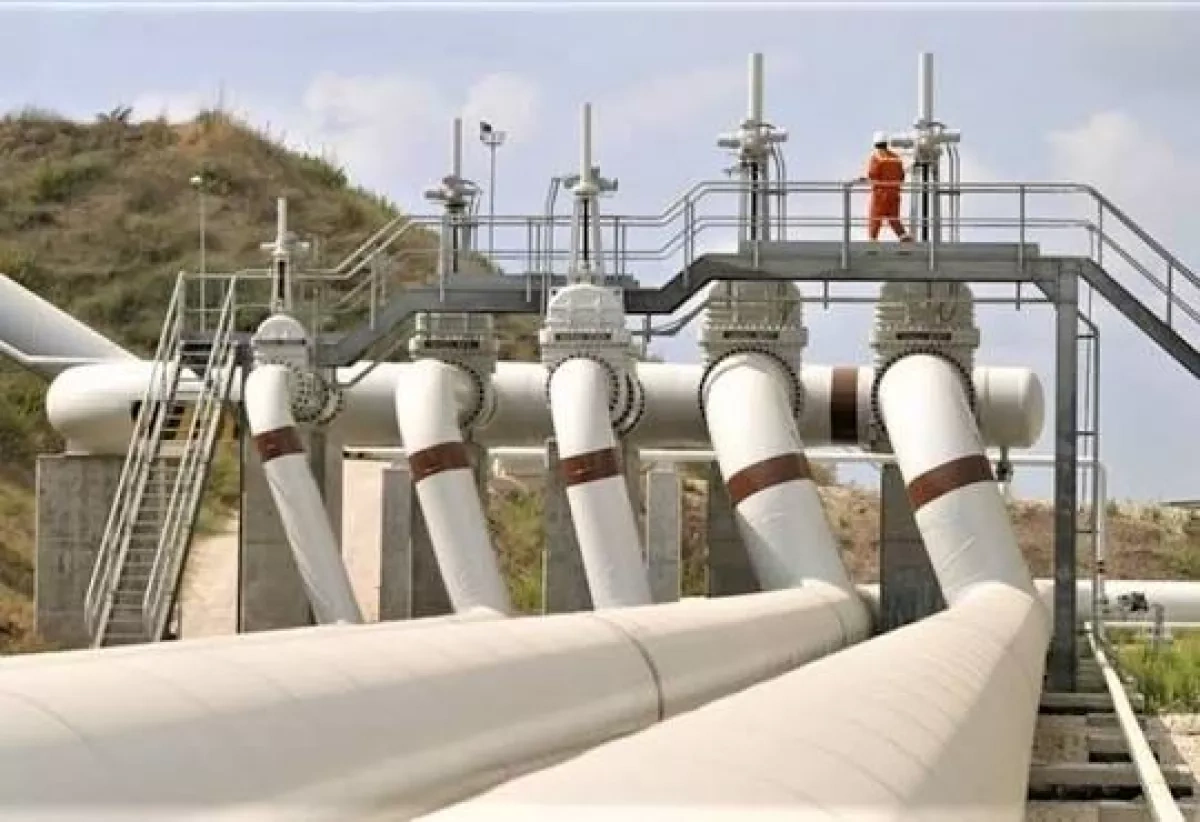
The situation has been further complicated by the Houthis’ declaration of a maritime blockade of Saudi Arabia. On September 11, they also attacked the Kingdom’s East–West oil pipeline, which provides an alternative route to the Red Sea. With the Strait of Hormuz remaining under blockade, as much as 75% of Saudi Arabia’s oil had been redirected through this pipeline. Following the attack, the pipeline is not expected to return to full operations for at least several weeks.
Moreover, the Yemeni movement has taken control of the Bab el-Mandeb Strait, further worsening conditions in the region’s oil market. Before the blockade, Saudi Arabia transported oil through the East–West pipeline at a rate of 7 million barrels per day (mb/d), of which around 5 mb/d was destined for export from the port of Yanbu: 1 mb/d was shipped westwards through the Suez Canal, while around 4 mb/d was transported eastwards through the Bab el-Mandeb Strait. Taking into account periodic attacks on tankers and Sunday’s strikes on Saudi Aramco oil terminals at Yanbu port, oil shipments along this alternative route have recently fallen to 2.3 mb/d.
As The Wall Street Journal (WSJ) notes, all of this necessitates moving more oil through the Strait of Hormuz, as well as using more complicated routes to bypass it. At the same time, several hundred supertankers, each capable of carrying between 1.6 million and 2 million barrels of oil, are either idling in the region or making short coastal voyages instead of operating on their usual routes around the world.
As a result, according to estimates by Windward, the cost of chartering a supertanker to load in the Persian Gulf and pass through the Strait of Hormuz has in some cases reached $1 million, compared with around $100,000 before the war. Transport costs now add as much as $26 per barrel of oil, increasing the cost of crude for refineries and, consequently, feeding into the final prices of petrol, diesel, jet fuel and other products. Accordingly, as the WSJ notes, even if global oil prices decline, petrol in the United States and Europe will remain relatively expensive.
Meanwhile, according to the International Energy Agency (IEA), global oil inventories have declined at a record pace over the past six months — by 2.8 million barrels per day — and actual oil stocks are now 507 million barrels below the level recorded at the start of the war. IEA member countries have released more than 300 million barrels from emergency reserves as part of a historic joint decision announced on March 11. Meanwhile, crude oil inventories in countries outside the Organisation for Economic Co-operation and Development (OECD) accounted for 105 million barrels of the overall decline, with 65% of that reduction coming from onshore storage facilities in China.
At the same time, the International Monetary Fund (IMF) believes that, under the current circumstances, oil and gas exporters in North and South America, Africa, and Southeast and Central Asia stand to benefit, as their energy supply routes are not dependent on the Persian Gulf region.
The situation in the oil market is also having a positive impact on Azerbaijan’s external and public finances. The average price of a barrel of oil in Azerbaijan’s state budget projections for the current year was set at $65, while its actual market price has remained significantly higher.
High global energy prices from March to September this year have served as a buffer, allowing for more stable adjustments to economic policy. The resulting foreign trade surplus is also having a favourable effect on budget revenues, helping to accelerate economic growth in Azerbaijan in 2026. According to statistics published recently by the Central Bank of Azerbaijan (CBA), the country recorded a current-account surplus of $4.7 billion in the first half of this year — more than double the figure for the same period a year earlier — equivalent to 12.4% of GDP. High revenues generated by the energy sector were among the main sources of this surplus.
This was also reflected in the growth of Azerbaijan’s strategic foreign-exchange reserves, which rose to $85.8 billion during the reporting period. In the first half of 2026, the actual average price of Azerbaijani oil stood at $94.5 per barrel, 33% higher than in the same period last year. Accordingly, the total value of Azerbaijan’s oil and gas exports amounted to $12.3 billion.
Global demand for oil and fuel is also contributing to an expansion in energy exports from the Caspian region. One positive factor in this regard is the potential increase in energy transit from Kazakhstan and Turkmenistan through Azerbaijan’s pipeline system. In particular, Kazakhstan’s national oil and gas company KazMunayGas plans to increase oil exports via the Baku–Tbilisi–Ceyhan (BTC) pipeline by 31% in 2026 compared with 2025, bringing the volume transported to 1.7 million tonnes.
It is difficult to predict how developments in the global oil market will unfold, as the situation remains extremely volatile. However, one thing is clear: without sustained progress towards resolving the confrontation in the Middle East, the oil market will continue to be rocked by turbulence on a scale exceeding any conventional measure of geopolitical risk.