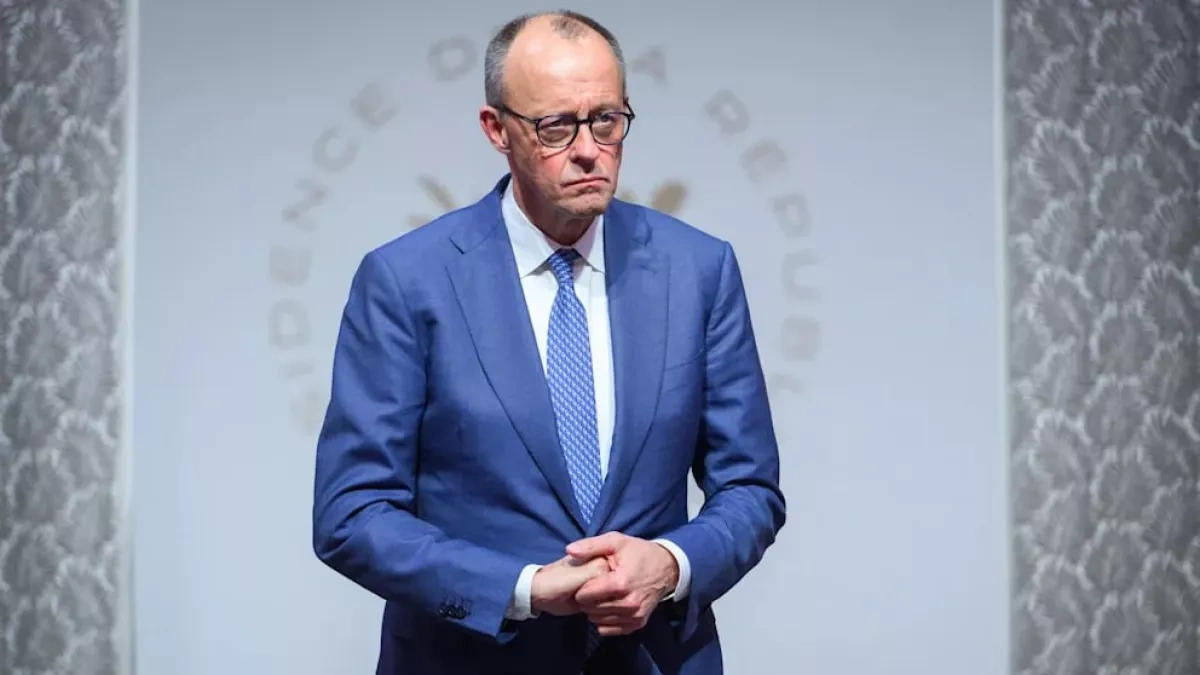
German Chancellor Friedrich Merz has said his government is struggling to reach a significant part of the German population, while acknowledging serious problems with its level of support.
Speaking at a press conference, however, he vowed to keep the German coalition together, Caliber.Az reports, citing Russian media.
“We know that we have serious problems with our level of support, that we can no longer reach a significant part of the population and that people are getting the feeling that there is no longer any justice in our country,” he noted.
Earlier, Bloomberg reported that members of the Christian Democratic Union (CDU) were considering the possibility of Merz stepping down soon following a second crushing defeat in local elections.
German Chancellor Friedrich Merz has pledged to keep his ruling coalition of the centre-right CDU and centre-left SPD together, saying this is essential to Germany’s “democratic future.”
“We are determined to live up to the historic responsibilities our country is facing,” Merz said, referring to the coalition between his CDU and the SPD. “It is about nothing less, and nothing more, than the democratic future of our country.”
The SPD has also pledged to remain in the coalition despite heavy losses suffered by the CDU, while indicating that it would seek changes to planned reforms.
The far-right Alternative for Germany (AfD) emerged as the strongest party in the northeastern state of Mecklenburg-Western Pomerania, where the CDU suffered its worst result since its establishment in 1945 and failed to secure seats in the state parliament.
Merz described the outcome as a “heavy blow”, adding: “This election is a profound turning point. It is a dramatic, unprecedented result for the CDU in Germany.”
In Berlin, the other state election held on September 20, the CDU was pushed into second place by the left-wing Die Linke party, while the AfD also made significant gains.
Despite calls from within the AfD for him to step down after just 16 months in office, Merz reiterated that he would remain chancellor and continue pursuing difficult economic and social welfare reforms.
“But we know that we owe people answers to their worries, to their fears,” he said.
Merz rejected suggestions that his low personal approval ratings were responsible for the election setbacks.
“The reasons for these election results go far beyond my own person,” he remarked. “We are witnessing a profound transformation of the political party system in Germany as well as in many other countries around the world.”
By Bakhtiyar Abbasov