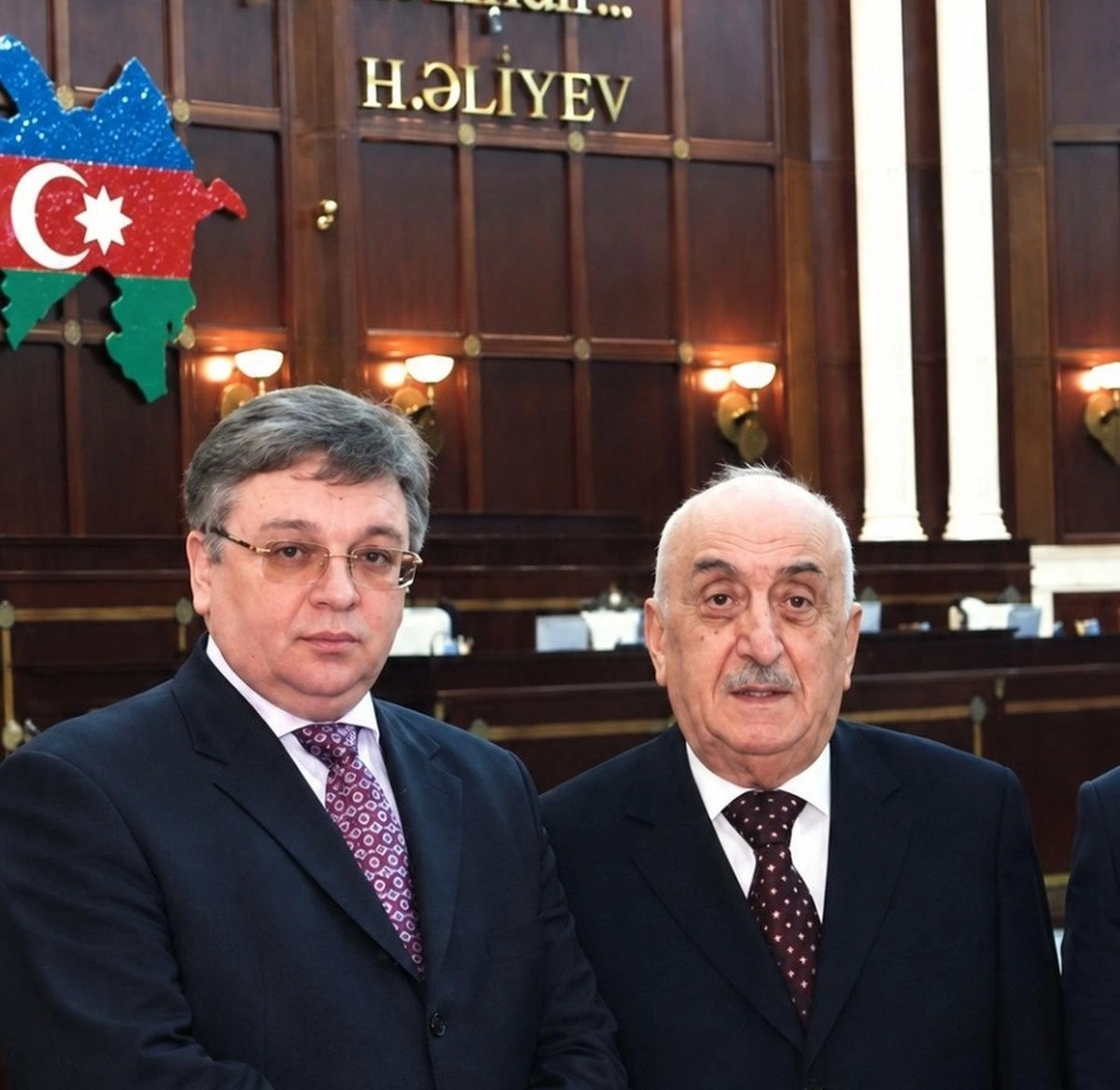
The inspiring story of a Baku native who travelled the arduous
path from geophysical engineer to president of a major oil company
in Azerbaijan.
PROLOGUE
…It can be said with confidence that those who have bound their
destinies to the exploration and development of oil and gas fields,
both on land and at sea, are people of extraordinary resilience.
Oilmen are indeed as remarkable as they are selfless. Especially
when one watches from afar those who labour on the oilfields of the
Caspian Sea, constantly confronting danger and extreme conditions,
it is hard to escape the impression that these people were born
with courage in their blood and fearlessness in their hearts.
For them, the oil industry becomes, in a sense, a battlefield
where courage reveals itself and a proving ground where
determination and mastery are put to the test. Yet those who lack
these qualities, captivated by the “romance” of the sea and drawn
to the offshore platforms of the Caspian, often find themselves
unable to withstand the harsh reality of the work. And although
they may enter the profession filled with enthusiasm, the very
first “storm” that crosses their path is often enough to make them
leave it behind.
Our hero belongs to the first group—to the courageous and the
steadfast…
A Distant posting and the First Trial
Every profession has its hardships and burdens, yet each
possesses a beauty and romance of its own. One need only love the
An oilman accustomed to extreme conditions—especially one who
works on offshore platforms—belongs to a noble profession that
demands immense dedication, endurance, and tireless labour. Suffice
it to say that these specialists extract “black gold” day and
night, regardless of the weather: beneath the scorching summer sun,
in the piercing winds of winter, amid raging storms on the open
sea, or in the most inaccessible reaches of the land. Through their
labour, they secure an inflow of foreign currency for the country
and contribute to the successful implementation of social projects
aimed at improving the well-being of the population.
Thus, the fruits of an oilman’s labour touch the prosperity and
everyday life of every citizen. In Azerbaijan, being an oilman is
more than merely having a profession; it is the embodiment of a
deeply rooted tradition, devotion to one’s calling, and heroism—a
legacy whose history stretches back to the middle of the nineteenth
century. We were reminded of this once again during our
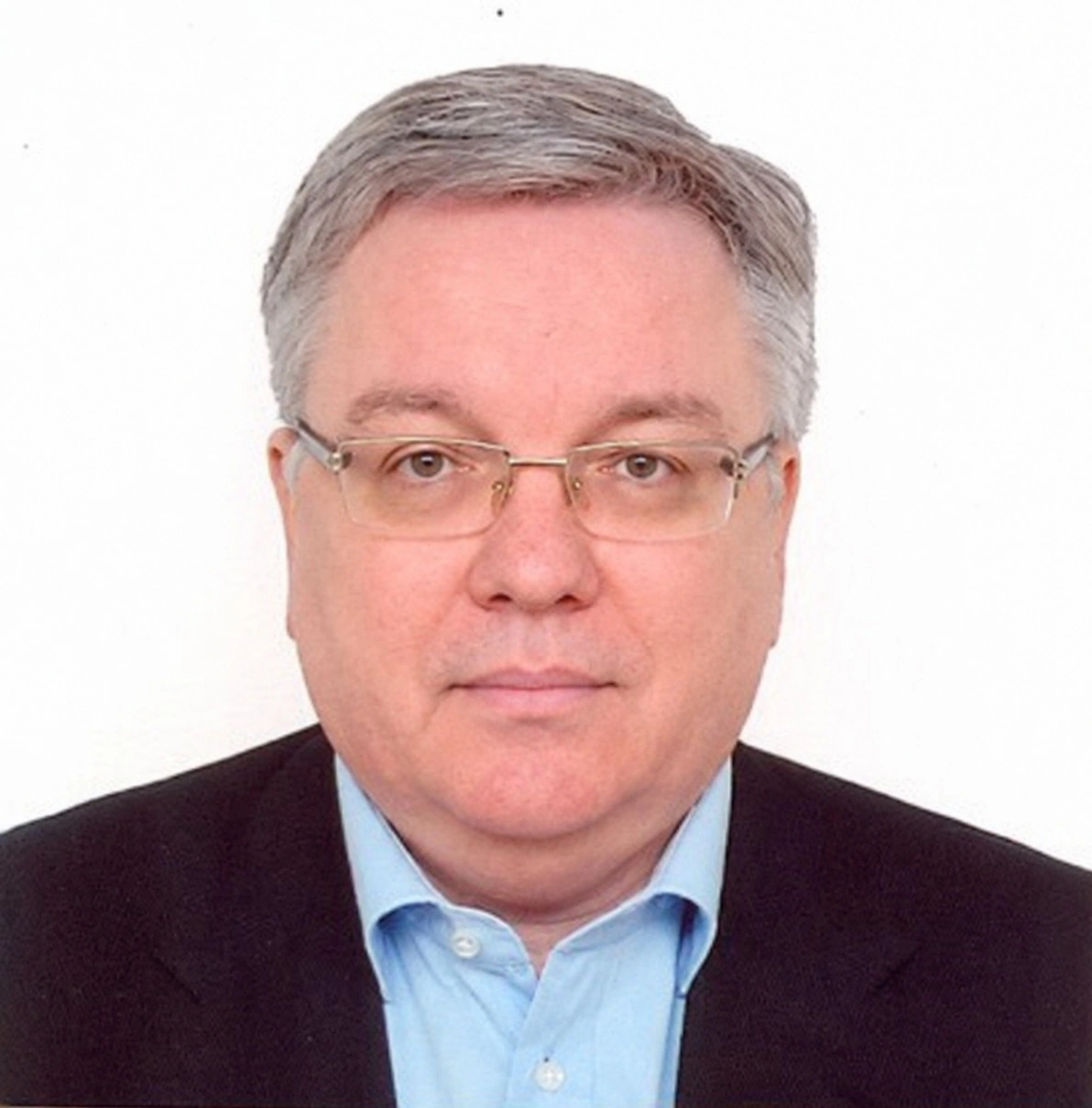
conversation with Igor Ivanovich Kirdoda, an Honoured Engineer of
Azerbaijan and recipient of the “Taraggi” Medal, who has devoted
his entire life to this field.
In 1986, after graduating from what was then the Mashadi
Azizbayov Azerbaijan Institute of Oil and Chemistry with a degree
in geophysical engineering, the young Igor was assigned to the
all-Union Soyuzgazgeofizika Trust and, from there, to one of its
divisions in the city of Kharkiv. By that time, he was already
married and raising a young son, but at his very first place of
employment, the young father encountered his first serious
hardship—his first true test. He was not provided with
accommodation in the trust’s dormitory, leaving his family with
nowhere to live. After enduring considerable hardship as a result,
about a year later, in the spring of 1987, the geophysical engineer
travelled to Moscow to appeal directly to the central
administration overseeing the trust. There, he requested a transfer
to Baku—and his request was granted.
From this point, he continues the story in his own words:
— I was born and raised in a fairly well-to-do family in Baku.
By the time I married, both my wife and I had homes of our own.
Soon afterwards, I joined the Kaspmorneftegeofizika Trust and
began working at sea aboard Shelf-type floating drilling rigs as a
geophysical engineer. Before long—after just five months—I was
appointed head of an integrated geophysical survey team. From that
moment onward, one might say, my career entered a marathon of
success, and by the age of thirty I already held a position of
great responsibility—one that many people spent years striving to
attain.
Working from floating drilling rigs, I took part in the
exploration and discovery of the Azeri–Chirag–Gunashli fields, as
well as the Shah Deniz field, which is exceptionally rich in
natural gas. You see, as a geophysical engineer, I was engaged in
exploration and downhole geophysical surveys. The results of this
work were recorded on well-logging charts.
As head of the team, it was I who signed the final documentation
containing the results and conclusions. It was a mission that
carried an extraordinary weight of responsibility.
A Pillar of support named Khoshbakht
Yusifzade
In 1993, Igor Kirdoda joined the American corporation Pennzoil,
where he was appointed assistant administrative manager. According
to him, the main reason he agreed to take a position unrelated to
his professional field was the considerably higher salary:
— By then, our two children were growing up, and caring for them
made it impossible for my wife to work.
Both during that period and throughout the years that followed,
Professor Khoshbakht Yusifzade (Khoshbakht Yusifzade, 1930–2023,
Doctor of Geological and Mineralogical Sciences, Professor, Full
Member of the National Academy of Sciences of Azerbaijan, and First
Vice-President of the State Oil Company of the Republic of
Azerbaijan for Geology, Geophysics and Field Development) was a
close friend of our family—a man who always looked out for us. As a
geophysical engineer, I had regarded him as my teacher and mentor
ever since my student years.
It troubled him to see me working outside my profession. He
would tell me, “You are a specialist in this field. Great prospects
lie ahead of you. You must continue working in your
profession.”
And, of course, my wise elder friend—one of Azerbaijan’s most
experienced and accomplished geologists—was absolutely right. (At
this point, Igor Ivanovich falls silent, lost in thought for a
moment, before continuing…)
I trusted him as I would a father. Although he passed away three
years ago, his memory will remain forever in my heart, and every
year I visit his grave.
Yet those who lived through that period know only too well the
social hardships we faced at the time. At CIPCO (Caspian
International Petroleum Company), which I joined after leaving
Pennzoil, I was in a very comfortable financial position. Fortune
favoured me in another respect as well: alongside my professional
qualifications, I spoke English. Today, almost everyone speaks
English, but in those days, people with such a command of the
language were so few that one could count them on the fingers of
one hand.
Thanks to this advantage, I was soon appointed assistant to the
president of CIPCO. Of course, I still dealt primarily with
administrative matters and was not working directly in my
professional field. Nevertheless, I gained invaluable experience in
international business.
I remember that, at the time, a barrel of oil cost a mere nine
dollars. Foreign companies engaged in the search for new oil and
gas fields would suspend their operations and leave the country at
the first disappointing results.
CIPCO was a consortium comprising Pennzoil, Agip, and Lukoil.
When this “trio” broke apart in 1998 and withdrew from Azerbaijan,
the company’s American president remained in the country. He was
appointed president of Shirvan Oil. He worked there for some time,
but eventually stepped down for health reasons and returned to the
United States.
He was an outstanding professional. Before coming to Azerbaijan,
he had spent nearly ten years working across the former Soviet
Union.
As for me, a new chapter began when I started working under a
power-of-attorney arrangement for the Japanese company Marubeni
Corporation. Two years later, they opened an official
representative office in Azerbaijan, and I found myself without a
job.
Where, in such circumstances, was a geophysical engineer from
the oil industry supposed to turn? By then, many of my former
colleagues had already sought their fortunes abroad…
In search of oil and opportunity
…Yes, the young geophysical engineer, whose true calling lay in
the search for new and promising oilfields, was compelled by the
need to earn a living to set out for Russia, where many of his
acquaintances in the oil and gas industry held influential
positions. Let us hear the rest of his story in his own words:
— I visited several companies where I knew people, and one of
them offered me a position as Deputy Head of the Foreign Economic
Relations Department. My principal responsibility was to develop
the company’s business in international markets.
The company, headquartered in Moscow, appointed me as its
official representative in Azerbaijan, Iran, Iraq, Jordan, and
Sudan. It was then that I began weaving an extensive web of
international connections, opening new horizons for my career and,
ultimately, paving the way towards establishing a business of my
own.
Soon afterwards, I began working as the representative of
another international company, overseeing its operations in
Algeria, Mauritania, Oman, and Qatar. In addition, I took part in
developing international projects in the oil-rich republics of
Central Asia.
Nearly seven years of my life were spent travelling from one
business assignment to another, with the road becoming almost a
second home. Yet wherever I lived and worked, my heart always
yearned for my native Baku, and whenever the slightest opportunity
arose, I returned home.
In 2007, an investor began acquiring promising oilfields in
Azerbaijan. The first person he sought out in Baku was me, for he
knew me and was well aware of my abilities. Gradually, a consortium
bringing together five operating companies was formed. However,
when the business failed to develop as he had envisioned, the
investor soon left Azerbaijan.
As Executive Director, I then began working with the
consortium’s new owner. Through our combined efforts, we developed
the enterprise and brought it to the level it has reached
today.
Global Energy Azerbaijan Management — the bp of Onshore
Operations
Finally, our interviewee, who, owing to his new professional
responsibilities, had now settled permanently in his native Baku,
tells us how the company he heads, Global Energy Azerbaijan
Management, acquired nearly all the enterprises engaged in onshore
oil production.
— In 2007, I returned to Baku and took up the position of
President of Global Energy Azerbaijan Management. In 2015, our
company discovered four new oilfields along the Caspian coast, in
the Hovsan area, and drilled the first exploration well.
The well yielded 110 tonnes of gas condensate and 425,000 cubic
metres of gas per day.
At one of the oil and gas exhibitions, we presented President
Ilham Aliyev with a sample of the high-quality oil extracted from
the newly discovered field.
Upon learning of the discovery, Professor Khoshbakht Yusifzade
personally came to the well site. Turning to me, he said:
— Igor, if this discovery is confirmed, it will mean that
Azerbaijan is entering a new era of oil production. We have never
before carried out drilling operations in this area or at this
depth.
Without wishing to sound immodest, given the scale of our
operations today, we can describe Global Energy Azerbaijan
Management as the “bp of Azerbaijan’s onshore oil industry.”
Unfortunately, after our first exploration well had been in
operation for some time, an accident occurred because of the
extraordinarily high pressure. The pressure there has now reached
600 atmospheres, and in view of the potential danger, we are
preparing to plug and permanently abandon the well.
Drilling a second well in this area would require substantial
financial investment. Nevertheless, we continue our work at other
fields.
A Disciple who carried his mentor’s words as a Lifelong
Lesson
Having proved himself in this demanding and strategically vital
field, geophysical engineer Kirdoda moved steadily forward, step by
step. Yet when he began speaking about the chapter of his
professional career connected with the Arab countries, we noticed a
striking change in his mood.
Answering our questions about that period, Igor Kirdoda turned
his gaze towards the Caspian Sea through the window of his
European-style office on the seventeenth floor of a skyscraper in
the heart of Baku. After remaining silent for three or four
seconds, he turned back to us and once again brought the
conversation to his mentor—his Teacher, Khoshbakht Yusifzade:
— We were also invited to meetings at SOCAR, which were attended
by representatives of foreign companies as well. I will never
forget how, addressing me so that everyone in the room could hear,
he would say:
“These people drill wherever they please and however they
please. But you are a geologist, and you know perfectly well that
Azerbaijan’s geology is different. All they want is to extract the
oil as quickly as possible and make a profit.”
And indeed, some companies thought of nothing but profit. In
other words, such an approach to the work promised nothing good for
the future. Yes, my Teacher was my guiding hand in dealing with
situations like these. I took his words deeply to heart and carried
them with me as a lesson for life. I will never forget them.
(As he spoke these words, our interviewee once again turned his
gaze towards the Caspian Sea beyond the window, and in his eyes we
once more caught the warm glow of nostalgia…)
At the beginning of our article, we likened the oil industry to
an arena of courage and heroism. Throughout Azerbaijan’s history,
the names of countless people who devoted their lives to the
oilman’s calling have been inscribed upon the most glorious pages
of our national chronicle.
Many oilmen have written heroic chronicles of their own—not only
in the history of the oil industry, but also in the collective
memory of our people. Among those whose names have been inscribed
in letters of gold upon this remarkable chronicle is the mentor and
guiding figure of our interviewee—Khoshbakht Yusifzade.
For Igor Kirdoda, who remained faithful to his Teacher and his
legacy, both the beginning and the end of his story would
invariably lead back to this great scientist and oilman…
EPILOGUE
Love for his profession had taken deep root in the very essence
of Igor Kirdoda’s being, and perhaps it was the romance of the
Caspian Sea that inspired him, from time to time, to turn his hand
to poetry and short stories. Three years ago, he also ventured into
the realm of playwriting: in 2023, his play The Corporation of Lost
Souls was staged at the Azerbaijan State Academic Russian Drama
Theatre.
Five months from now, the author of this autobiographical work,
which brings to life selected episodes from the journey of a
Baku-born oilman, will celebrate his sixty-fifth birthday. There
can be little doubt that still greater achievements await him on
the road ahead. We are confident that he will continue to face the
trials of life and the forces of nature with dignity and resolve,
emerging victorious from every challenge that destiny may yet place
in his