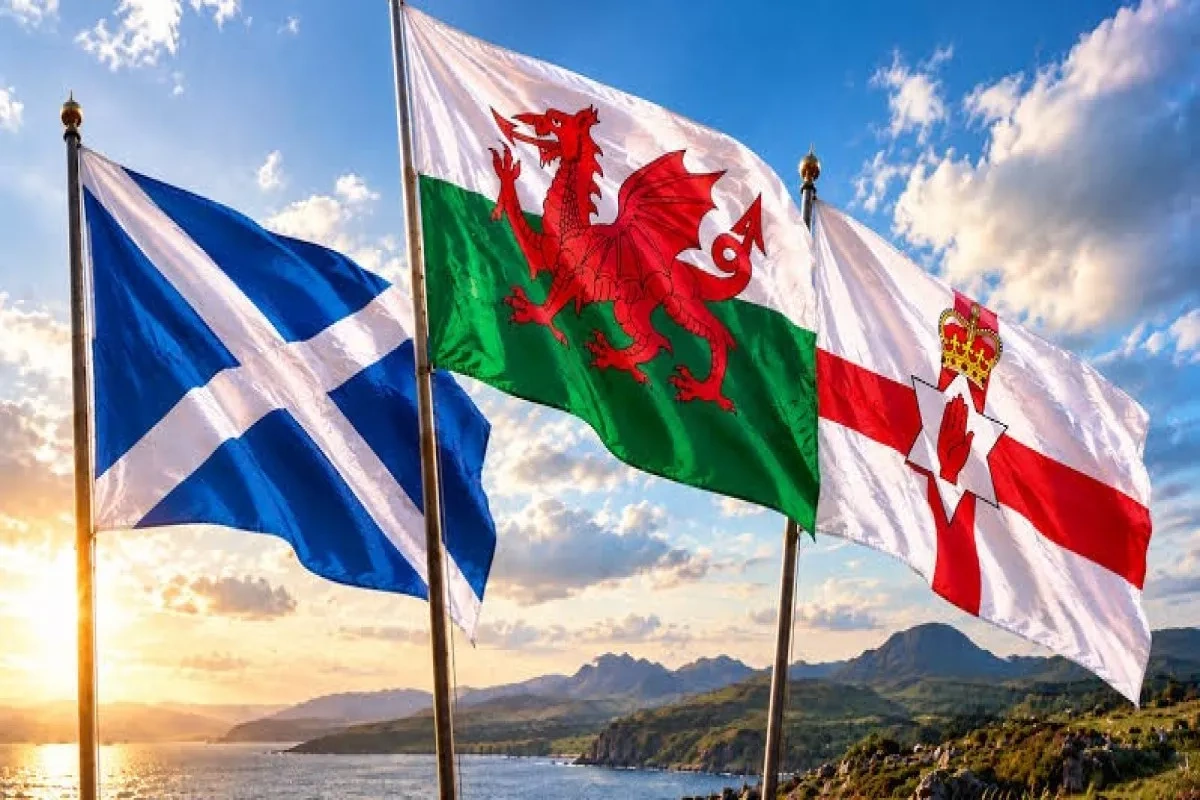
Against a backdrop of deep-seated tensions among the UK’s key institutions of power — the government, Parliament and the judiciary — the United Kingdom is entering a new phase of constitutional crisis. Scotland, Wales and Northern Ireland are increasingly asserting their right to determine their own futures and calling for clear legal mechanisms to hold referendums on their constitutional status.
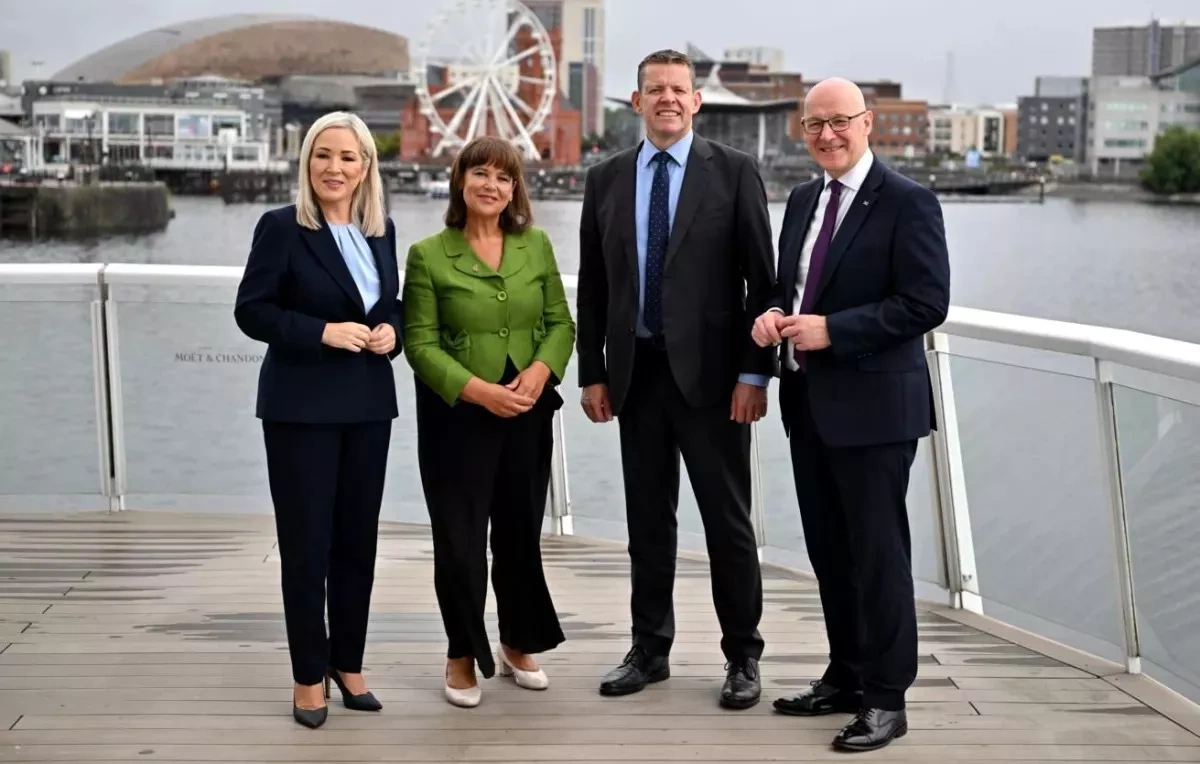
A turning point came on September 14, when Scotland’s First Minister John Swinney, Wales’s First Minister Eluned Morgan, and Northern Ireland’s First Minister Michelle O’Neill signed a memorandum of understanding in Cardiff, declaring their support for each nation’s right to self-determination and agreeing to cooperate in economic and other areas. In essence, the development was a consequence of the 2026 elections, which brought nationalist parties to power in all three regions, creating a political configuration unprecedented in British history: for the first time, forces advocating Scottish and Welsh independence, as well as Irish reunification, have formed a united constitutional front against Westminster.
For London, all this represents a challenge of enormous proportions. Previously, Scottish separatism, Welsh autonomy and the Northern Irish question were viewed as three separate issues. Today, however, nationalists are skilfully linking them into a single issue, calling into question the very structure of the United Kingdom. The logic of the regional leaders is straightforward: when several key territories simultaneously challenge the central government's right to determine their future, the issue is no longer about individual grievances, but about the effectiveness and legitimacy of the entire model of British statehood.
A dangerous trap
In September 2014, Scotland already held an independence referendum: 55% of voters chose to remain part of the United Kingdom, while 45% voted to leave. Since then, the Scottish National Party has repeatedly returned to the issue, which became particularly contentious after Brexit. Today, however, the Scottish leadership has moved from political declarations to decisive action: John Swinney has openly called on UK Prime Minister Andy Burnham to enshrine the principle of the Scottish people's right to self-determination in specific legal mechanisms, citing the Northern Irish model as his main argument. As is well known, the Belfast Agreement, also known as the Good Friday Agreement, explicitly provides for a referendum on Irish reunification if the necessary public conditions arise. This is where London faces a particularly dangerous trap: acknowledging that a sustained expression of popular will should lead to a referendum would give nationalists an irresistible argument: why should the mechanism that applies to Belfast not also apply to Edinburgh?
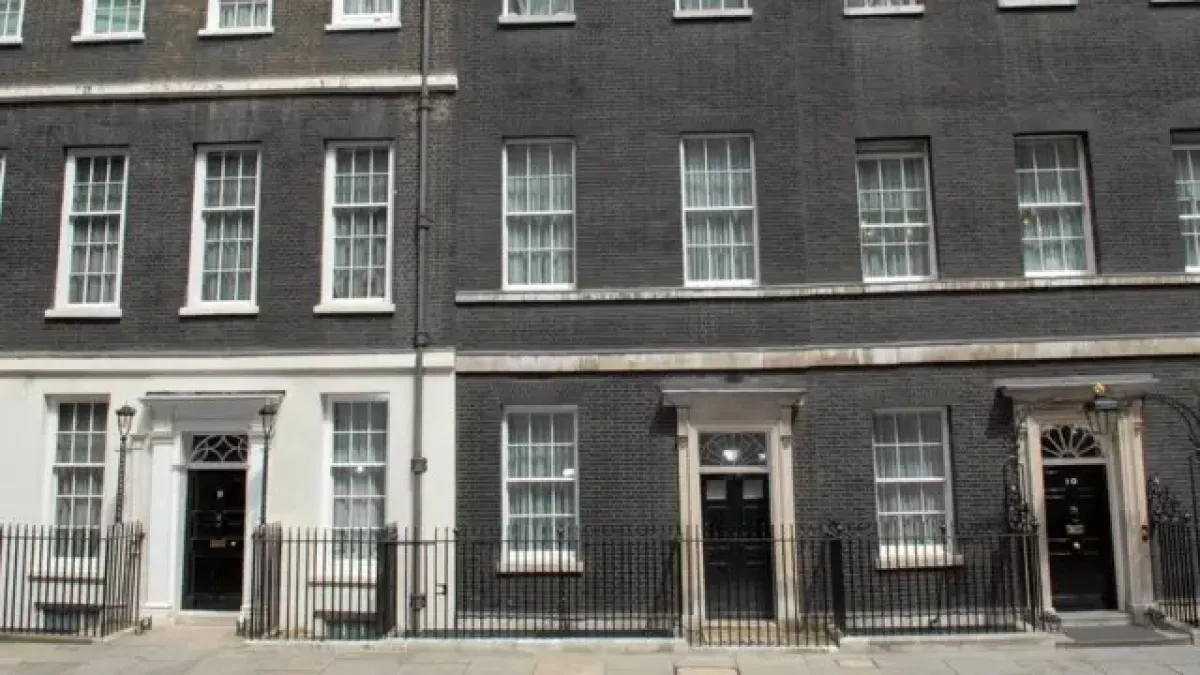
The situation is further complicated by the fact that Scottish public opinion itself is roughly divided down the middle. At the same time, even many supporters of remaining in the Union believe that the right to hold a referendum should be determined solely by the democratic will of the Scottish people. For Prime Minister Burnham, this has become a serious test. An uncompromising refusal would give nationalists grounds to accuse Westminster of undermining democracy, while agreeing to establish a clear framework would amount to acknowledging that the territorial integrity of the United Kingdom is no longer immutable, but depends on the intentions and wishes of its constituent nations. The situation is further complicated by Burnham's own previous imprudent remarks, in which he suggested that, if there were a convincing majority, the question of a Scottish referendum could be considered by analogy with the Northern Irish scenario. The British prime minister's subsequent attempts to distance himself from his own analogy and invoke the specific circumstances of the regions appear unconvincing, and experts broadly agree that the British government has been caught in a trap: resistance strengthens the slogan "London does not dictate to us", while concessions could trigger a chain reaction of new demands.
Wales as a political resonator of the common front
In Wales, independence movements have historically lacked the depth seen in Scotland. However, the political landscape has changed noticeably in recent years. The success of Plaid Cymru in the May 2026 elections brought supporters of Welsh sovereignty into government for the first time.
For now, Welsh nationalists are not calling for an immediate break with London. Their main objective is a substantial expansion of Cardiff’s powers, particularly in the areas of justice and law enforcement. In this configuration, Wales is acting not as an independent separatist hotspot, but rather as a powerful political resonator of Scotland’s demands. Any stubbornness on the part of the British central government over devolving powers only helps nationalists convince the public that the problem lies not in the details of governance, but in the very structure of the Union, which they argue has outlived its usefulness.
Special status and the international context
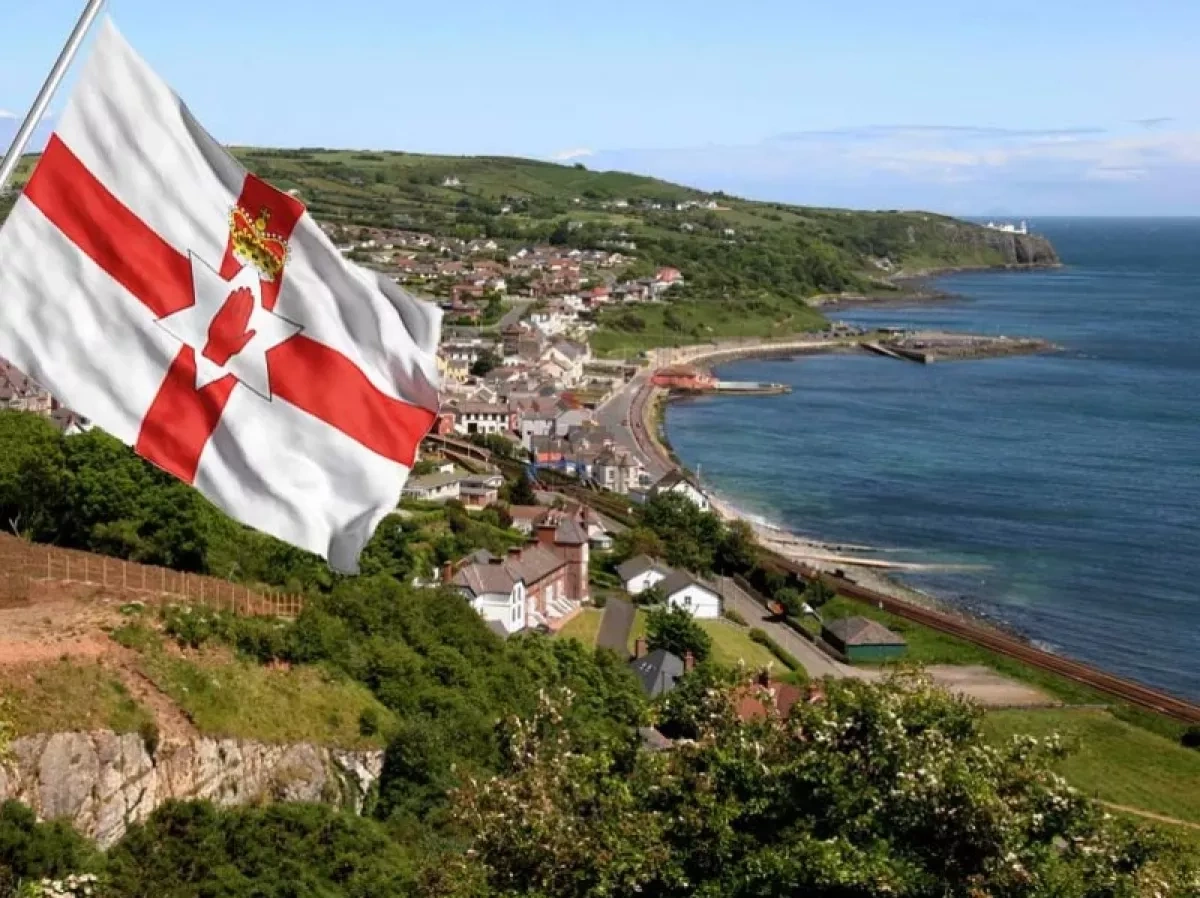
The Northern Irish issue is distinct, as it concerns not simply leaving the United Kingdom, but the potential reunification of the island of Ireland. The issue has also taken on an international dimension following controversial remarks by Donald Trump. During his visit to Ireland, he openly backed the idea of a united Irish state, describing such a scenario as a positive development. For London, such rhetoric from the White House is particularly sensitive, as the United States has traditionally played a key role in supporting peace in the region, while the local unionist community views such signals with acute concern.
Overall, the legal framework is fundamentally different in Northern Ireland. Under the Belfast Agreement, the UK Secretary of State for Northern Ireland is required to call a referendum on Irish reunification if it appears likely that a majority of voters would support a united Ireland. Unlike Scotland, where the constitutional process is governed primarily by UK domestic law, the question of Northern Ireland’s constitutional status is also anchored in an international agreement.
The European dimension
A key element of the regional leaders’ strategy is to consider what the future of their territories could look like beyond the United Kingdom. They are presenting citizens not with isolation, but with the prospect of renewed integration into the European political and economic space. Scotland has openly stated that it would seek EU membership if it became independent. In the event of Irish reunification, Northern Ireland would become part of the EU through its incorporation into the Republic of Ireland. Wales, too, is increasingly incorporating closer ties with Europe into its political arguments.
Against this backdrop, it is hardly surprising that the Cardiff summit identified the economy, energy, international cooperation and relations with the EU as priorities for joint work among the three nations. In this way, the prospect of a break-up of the United Kingdom is moving beyond the confines of a purely domestic constitutional dispute and becoming increasingly relevant to the wider European political landscape.
Intentions vs reality
However, it would be premature to suggest that the break-up of the United Kingdom is already inevitable. For now, what we are seeing is a combination of political declarations and coordinated action rather than enacted legislation, while public support and political preparedness vary considerably across the three nations.
Scotland has gone furthest in this respect: it has a functioning parliament, well-developed government institutions and experience of the 2014 independence referendum. The situation in Wales is considerably more complex. Despite a strong sense of national identity, full independence does not yet enjoy broad public support, prompting Plaid Cymru to focus primarily on securing greater powers for the Senedd. In Northern Ireland, meanwhile, the central objective is Irish reunification within the framework of the Belfast Agreement.
Thus, what is emerging is not a single separatist project, but the coordination of three distinct political processes around a common principle: that the people of each territory should have the right to determine its constitutional future, rather than having that future decided by Westminster.
Prime Minister Andy Burnham, for his part, is taking a firm stance, viewing the regional leaders’ initiatives as a form of political pressure rather than as an automatic entitlement to secession. Yet this creates a paradox: the more forcefully London resists these initiatives, the more ammunition nationalists gain to argue for further escalation.
The key question, therefore, is whether the Burnham government can seize the initiative and put forward a new unifying constitutional agenda, or whether pressure from a united regional front will eventually force the UK government to make substantial constitutional concessions.