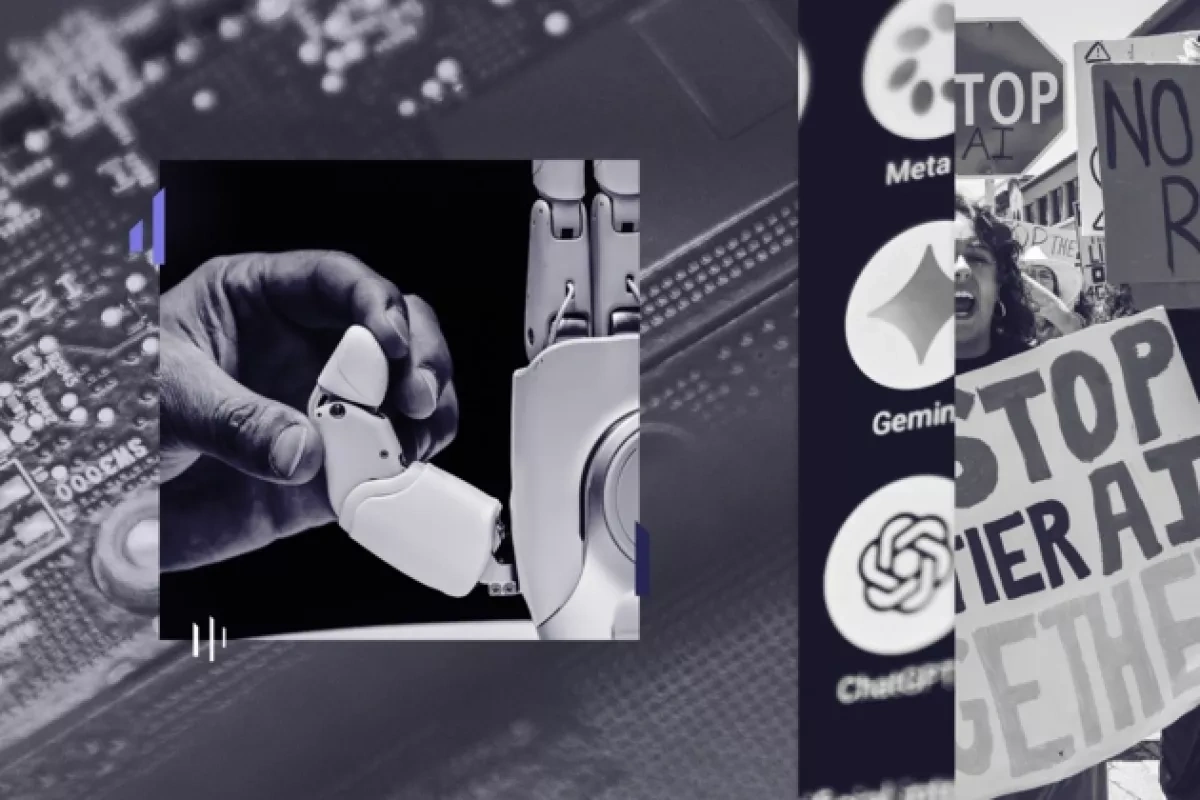
Artificial intelligence (AI) is no longer viewed by many Americans as simply a promising new technology: a majority now believe advanced AI could eventually pose an existential threat to humanity, according to a new POLITICO Poll.
About two-thirds of US adults say there is at least a “moderate” risk that advanced AI could destroy humanity, with majorities across political parties, genders and age groups sharing that concern. The findings underscore growing public anxiety as the technology develops rapidly and Washington debates how far its expansion should be regulated.
Americans who voted for former Vice President Kamala Harris in the 2024 election are somewhat more likely to see such a risk, at 70%, compared with 60% among those who voted for President Donald Trump, according to the poll.
The survey was conducted by independent London-based Public First from Sept. 13 to Sept. 15, as warnings from leading figures in the AI industry intensified. Anthropic chief executive Dario Amodei and OpenAI chief executive Sam Altman, along with Elon Musk, have called for a slowdown in advanced AI development, bringing concerns about the technology’s potential dangers further into public debate.
Americans appear inclined to take those warnings seriously. Roughly half of US adults believe AI industry leaders warning that the technology “will kill us all” genuinely hold that view. Only 26% believe such warnings are primarily a marketing tactic intended to make companies’ products appear more powerful or important.
The poll also found that Americans generally favour slowing or pausing AI development to reduce potential risks rather than continuing to build increasingly advanced models. Respondents also leaned towards more responsible development even if doing so meant the United States could fall behind other countries such as China.
Trump voters, however, were more divided. Forty-four per cent preferred pausing AI development, compared with 40% who wanted development to continue because of the technology’s potential benefits.
Trump has continued to advocate rapid AI expansion. In Truth Social posts, he described AI and data centres as “the Greatest Economic Development Engine in History” and said the technology “will not be stopped” during his term. He later dismissed warnings about AI as a “HOAX.”
The findings are adding pressure to a political debate in Washington over how to balance AI safety with the US effort to maintain its technological advantage over China.
Democrats are considering a House select committee on AI if they regain control of the chamber in November, while some lawmakers have called for restrictions on artificial superintelligence.
Democratic Sen. Chris Murphy told POLITICO that AI concerns are a “dominant issue” for voters.
“We have to stop AI from poisoning our kids, our culture, and destroying millions of jobs,” he said.
Republicans are also debating the extent of regulation. Some governors have supported state-level rules, while lawmakers, including Sen. Thom Tillis, have called for industry standards and congressional safeguards.
“The industry needs to convene, create a set of operating principles that they — that you’re either certified or you’re an outlier — and then find out what Congress needs to do to stitch it together,” Tillis said. “We’re one bad outcome of AI from an overreach here that’d be like Dodd-Frank for AI, and then it’s the worst possible time because China’s not going to slow down.”
By Sabina Mammadli