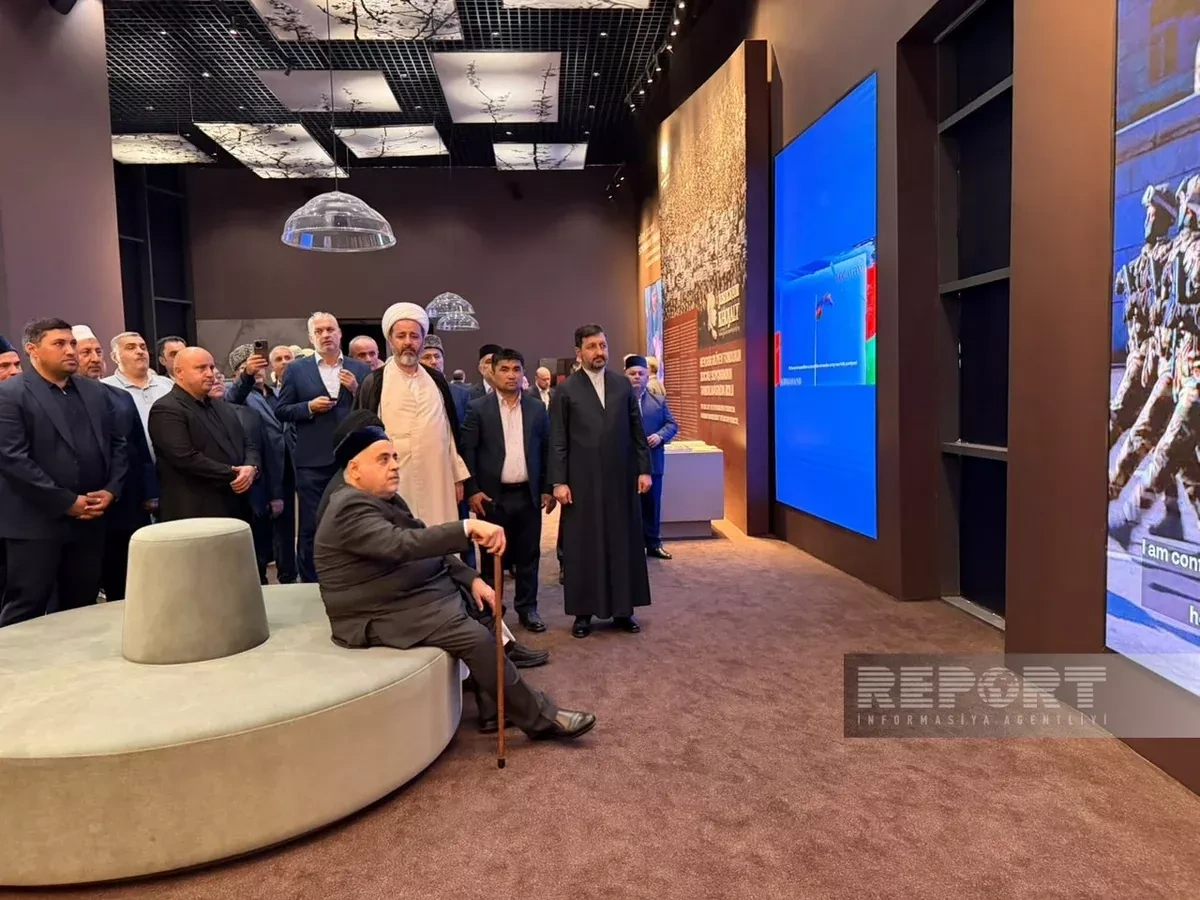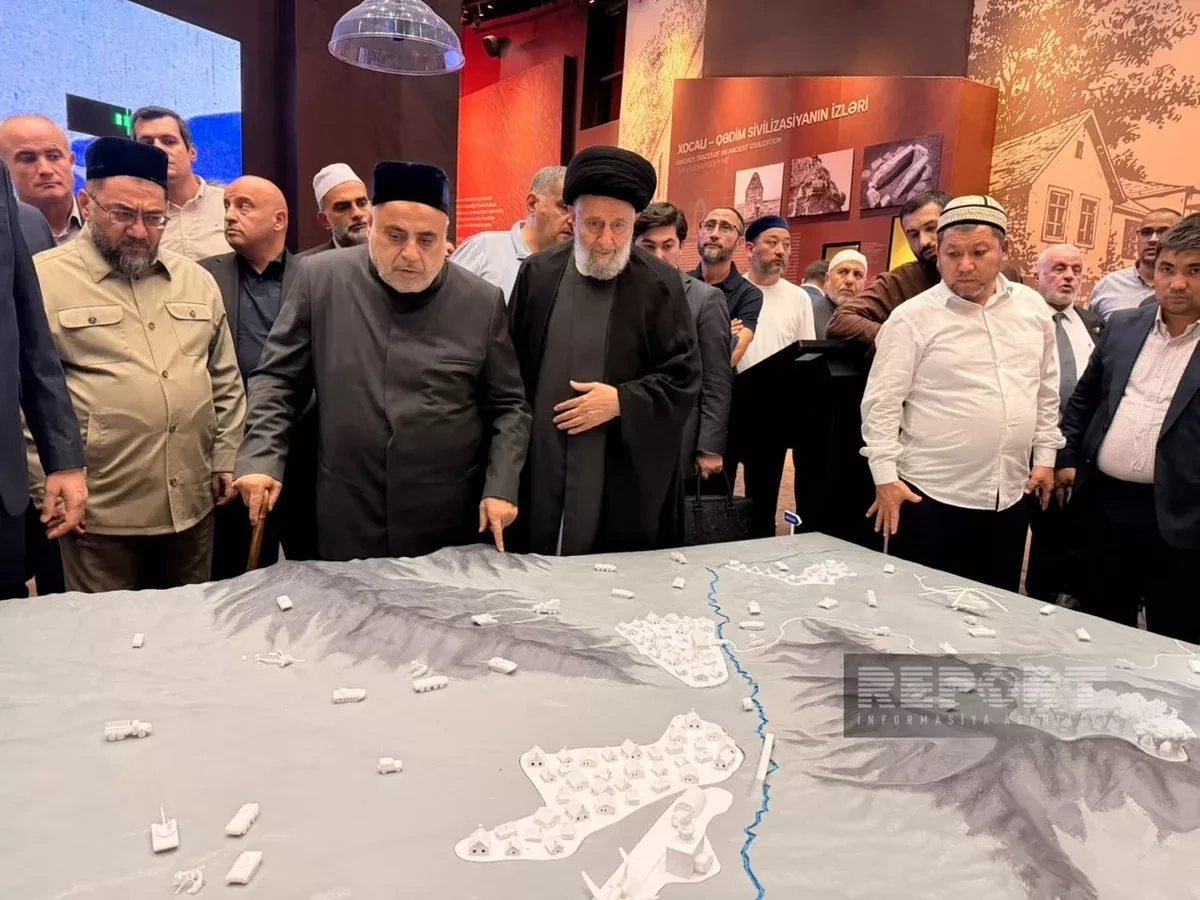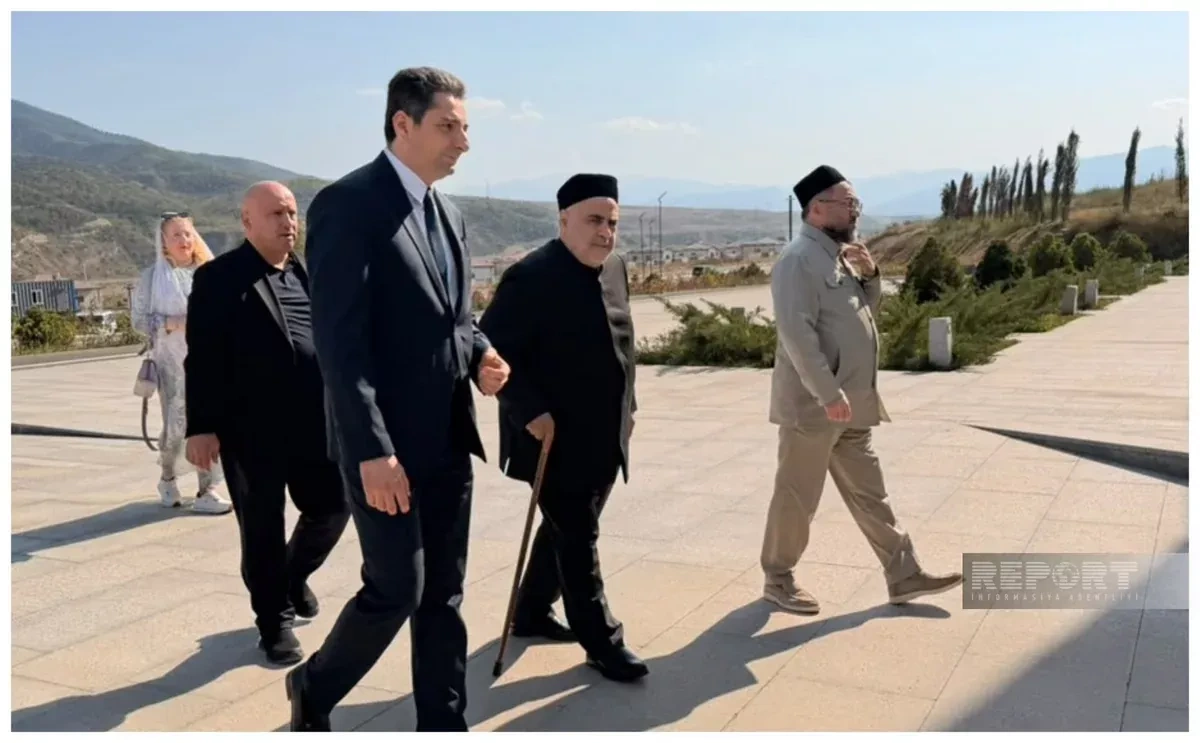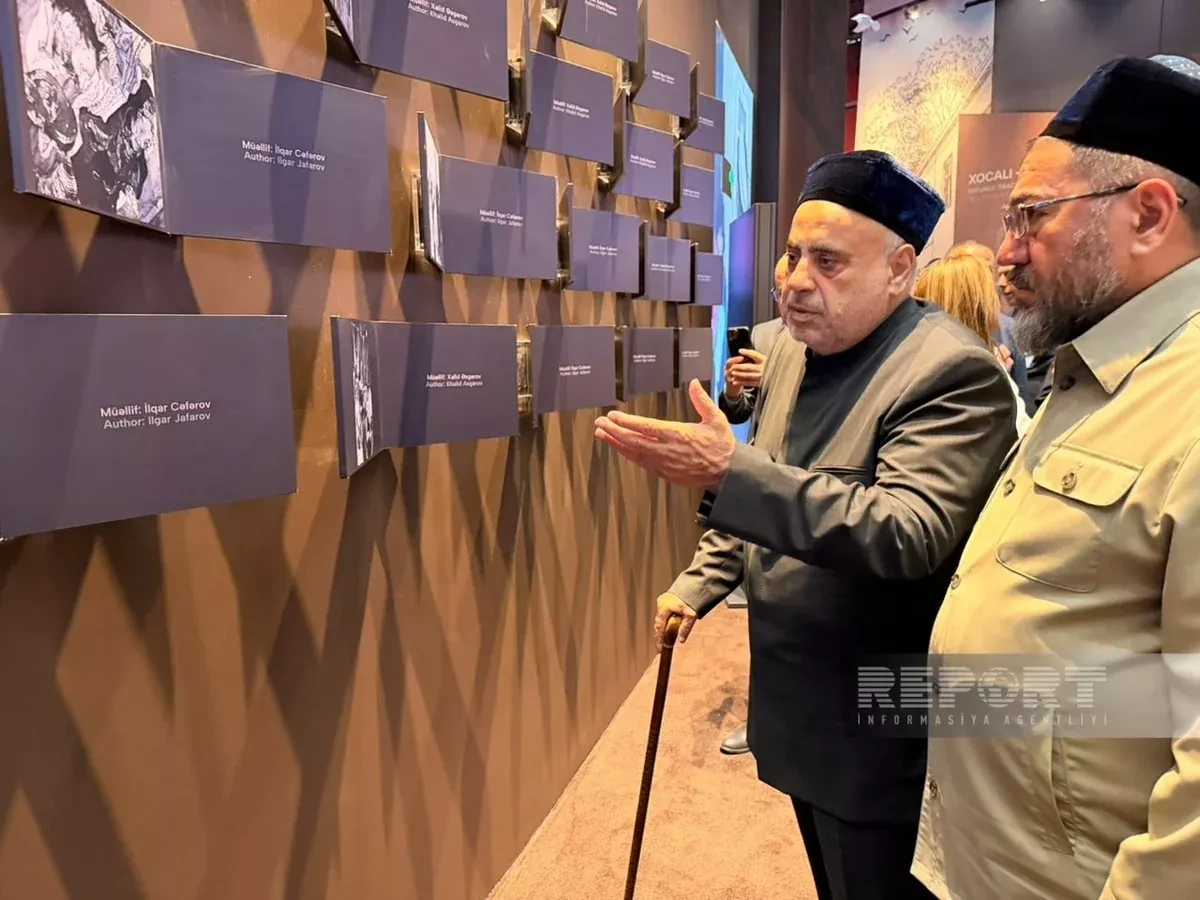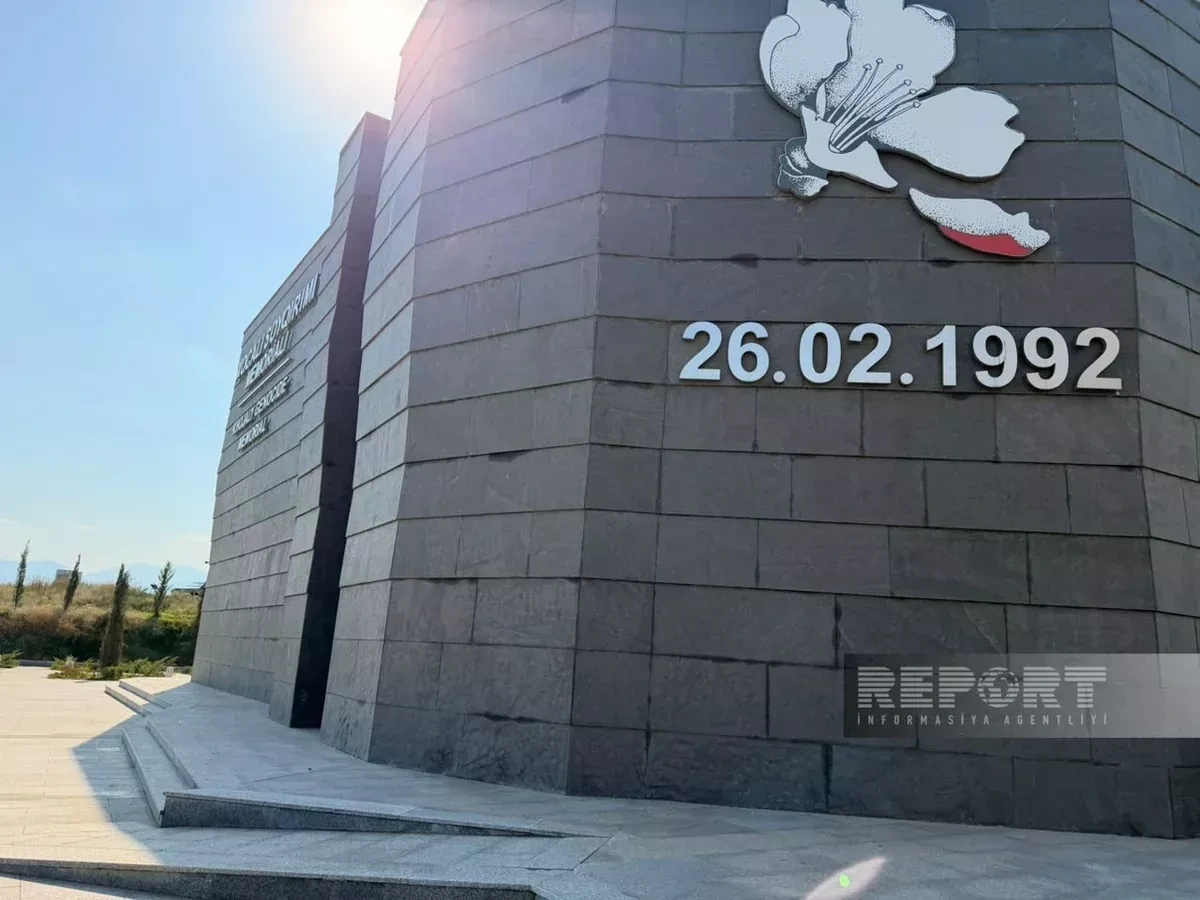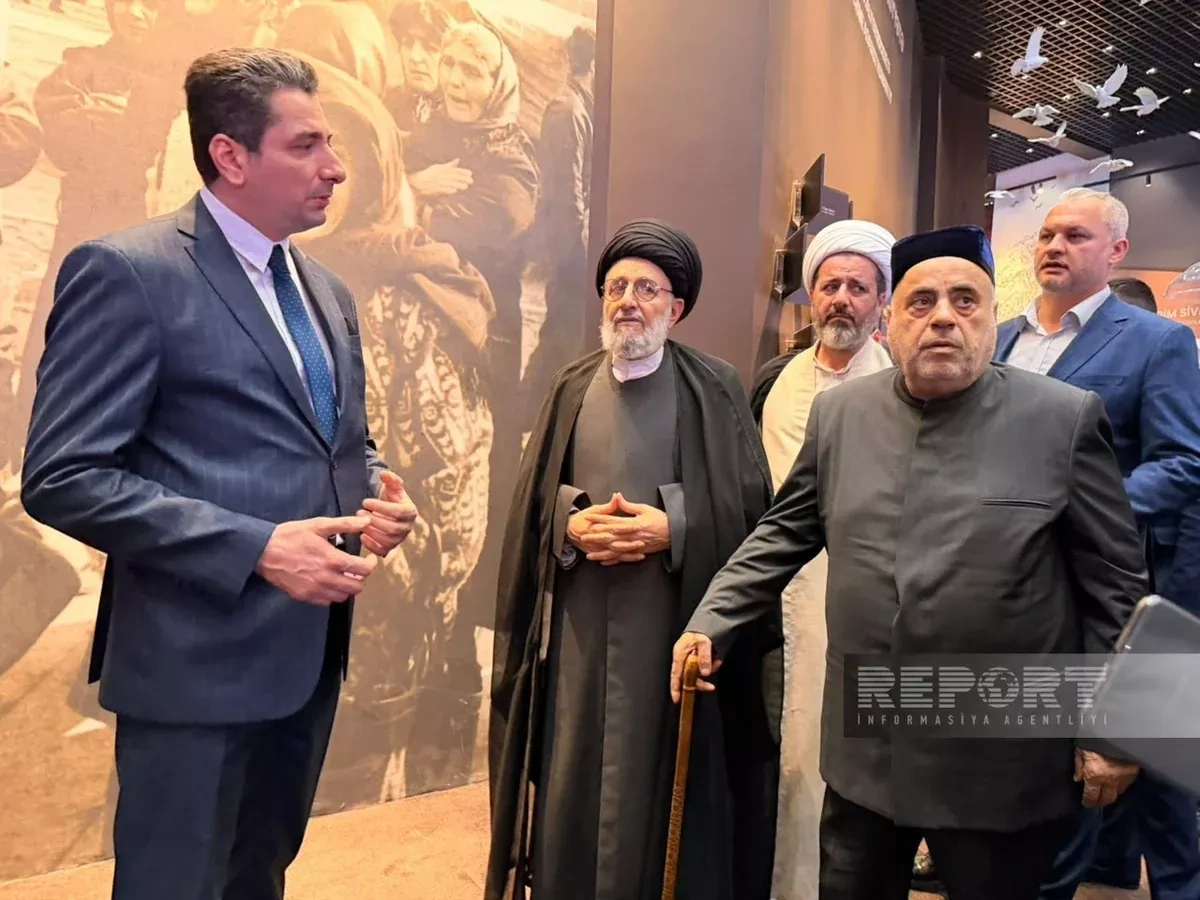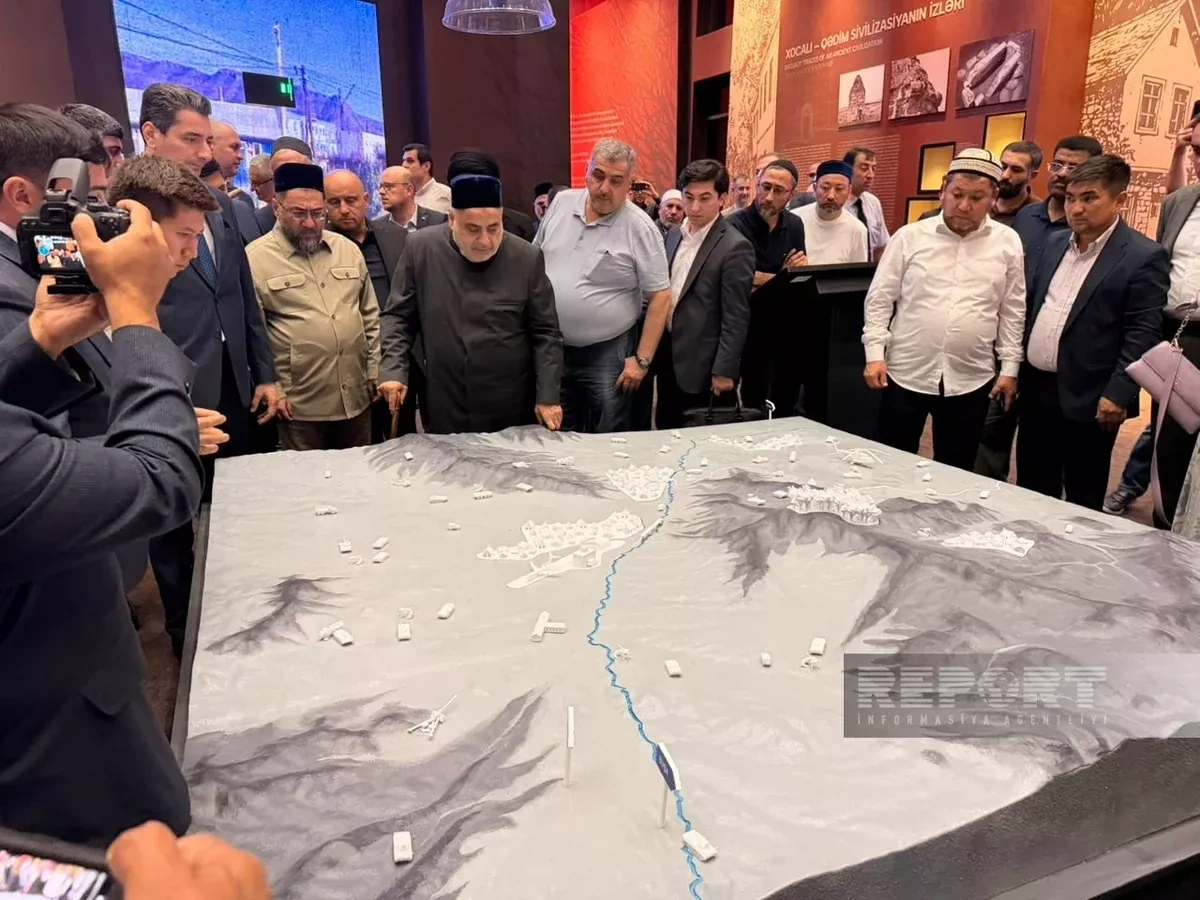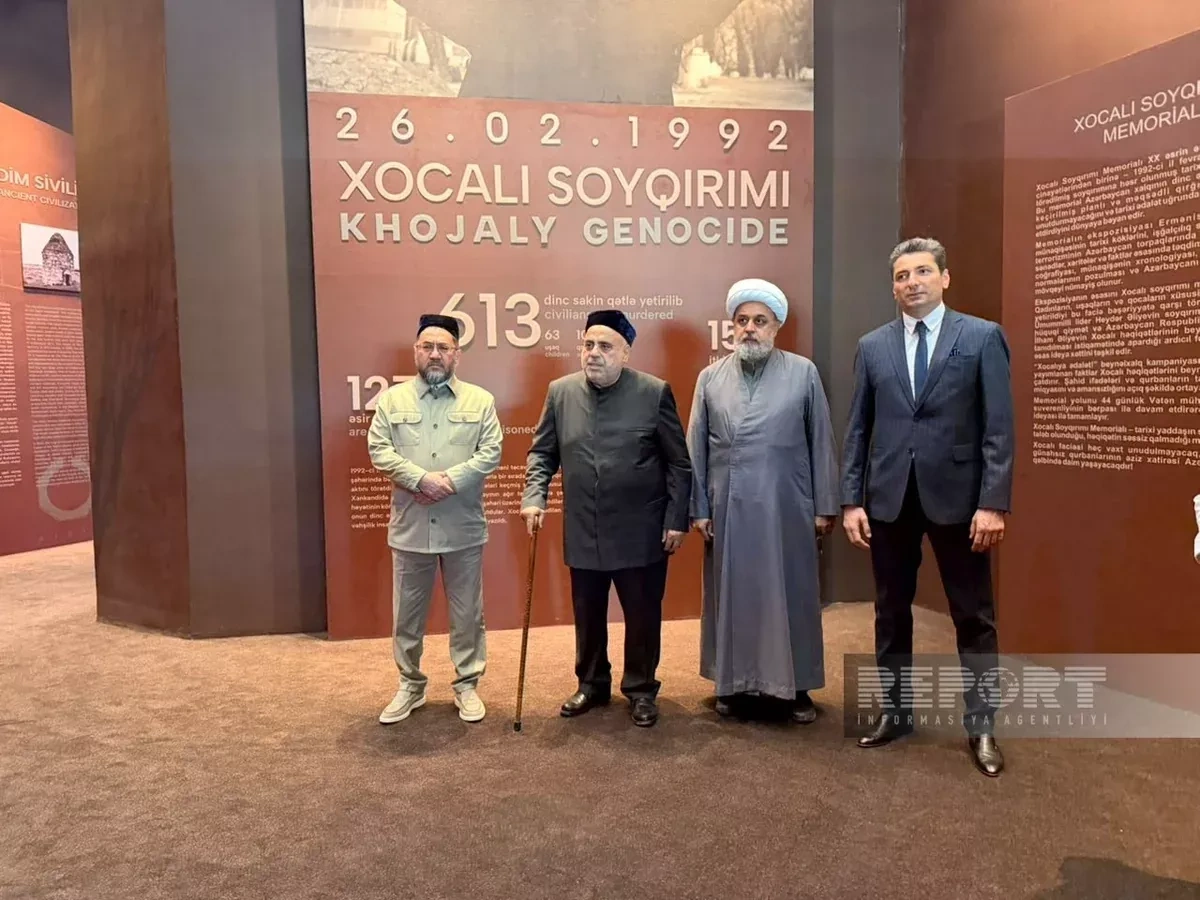
Participants of the international scientific and practical conference dedicated to Seyid Yahya Bakuvi, being held as part of the 7th Meeting of the Council of Heads of Muslim Religious Authorities of the Organisation of Turkic States (OTS), visited the Memorial to the Victims of the Khojaly Genocide in Azerbaijan.
During the visit, Sabuhi Gahramanov, Deputy Special Representative of the President of Azerbaijan in the city of Khankendi and the Khojaly and Aghdara districts, briefed the guests on the memorial complex, Caliber.Az reports, citing local media.
He noted that the Khojaly Memorial Complex was established to commemorate the victims of the tragedy.
“The complex preserves the memory of the people who died in the Khojaly tragedy. The memorial is important in terms of honouring the victims of the tragedy by the Azerbaijani people, informing future generations about the Khojaly events and preserving their memory. Photographs and models depicting the attack carried out by the Armenian armed forces on the night of 25–26 February 1992, as well as footage of the tragedy, are displayed here,” Gahramanov said.
The Khojaly genocide, commemorated annually on February 26, represents one of the darkest chapters of the Karabakh conflict. On the night of February 25–26, 1992, Armenia’s armed forces attacked the town of Khojaly, which had been under siege since October 1991, with its road and energy connections cut off. The assault, carried out with the assistance of the former USSR’s 366th Motorised Rifle Regiment, resulted in mass atrocities against Azerbaijani civilians.
During the attack, 613 people were killed, including 63 children, 106 women, and 70 elderly individuals. Hundreds were severely injured, 1,275 were taken hostage and tortured, eight families were entirely wiped out, 130 children lost one parent, and 25 children lost both parents. The fate of many hostages remains unknown.
By Bakhtiyar Abbasov