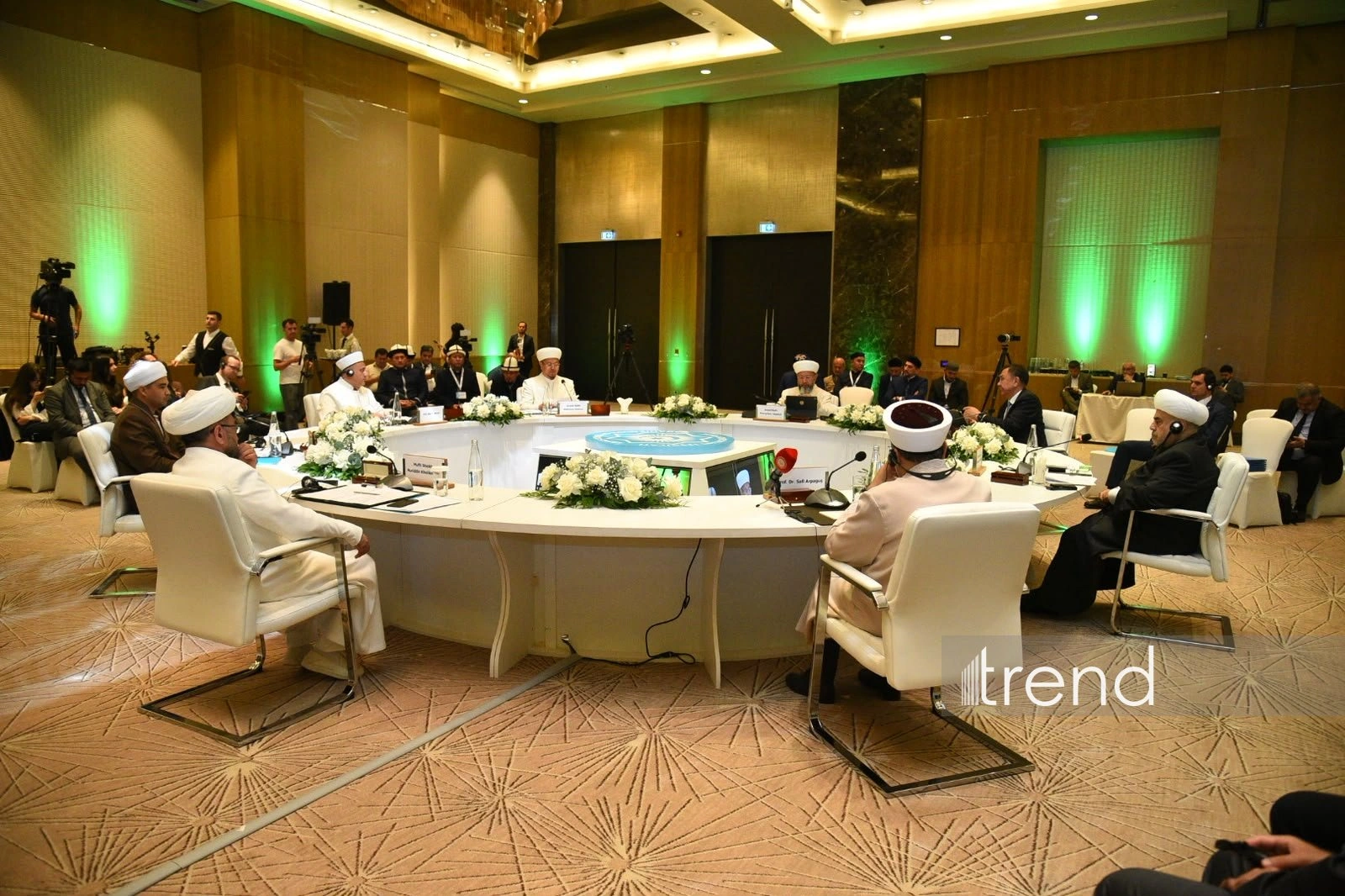
BAKU, Azerbaijan, September 14. The Baku
Declaration was adopted on September 14 as part of the seventh
meeting of the Council of Heads of Muslim Religious Authorities of
the Organization of Turkic States (OTS), Trend’s correspondent reports from the
event.
The declaration includes a number of important provisions on
strengthening solidarity among Turkic states and peoples, promoting
Turkic-Islamic spiritual and cultural values, developing religious
education and scientific cooperation, and educating young
people.
The document states that joint efforts to combat terrorism,
extremism, separatism, Islamophobia, Turkophobia, sectarian
discrimination and calls for hatred will continue. The protection
of women’s and children’s rights, translation of religious
literature, preparation of joint fatwas and promotion of the
historical heritage of the Turkic world were also identified as
priority areas.
The declaration was guided by the goals and principles of the
Agreement on the Establishment of the Cooperation Council of
Turkic-Speaking States, signed in Nakhchivan on October 3, 2009, as
well as declarations adopted at OTS summits and other relevant
documents.
The religious leaders expressed their gratitude to President of
the Republic of Azerbaijan Ilham Aliyev for his high-level
attention to the organization and holding of the seventh meeting.
They welcomed the unwavering commitment demonstrated at summits of
the heads of OTS member states to deepening and enriching
cooperation across the Turkic world and strengthening solidarity
among Turkic states within the OTS framework.
The declaration expressed deep concern over the devastating
developments resulting from wars and conflicts in various regions
of the world. It also voiced deep concern over global climate
change, biodiversity loss, desertification, land degradation,
forest fires, environmental pollution, food security and water
shortages.
It was noted that the Council is directing its activities toward
developing relevant joint projects to advance, enrich and enhance
the effectiveness of Turkic-Islamic culture. It is also continuing
efforts to jointly determine the dates of national and religious
holidays, particularly Ramadan and Eid al-Adha, taking specific
circumstances into account, and, most importantly, to develop
common fatwas based on the principles of moderate Islam and
inter-sectarian understanding.
In accordance with the Universal Declaration of Human Rights and
the United Nations Convention on the Rights of the Child, the
Council also cooperates in promoting and protecting human rights,
including the rights of women and children. It seeks to organize
religious and educational activities for women, young people and
children in line with Turkic-Islamic spiritual and moral values,
facilitate exchanges in this area, and create conditions for
raising awareness among women and younger generations about
religious matters in accordance with the requirements of the
times.
The declaration said joint efforts would continue to prevent
foreign interference in the religious and spiritual environment of
Turkic states, harmful propaganda, sectarianism and any ideological
provocations.
It was emphasized that the Council promotes cooperation in
studying the history of the Turkic world and passing it on to
younger generations. It also seeks to organize joint visits and
tours to religious and historical sites in OTS member states and
promote these sites internationally.
The valuable contribution of OTS Secretary-General Ambassador
Kubanychbek Omuraliev to the activities of the Council of Heads of
Muslim Religious Authorities of the Organization of Turkic States
was highly appreciated. In view of the completion of his term of
office, he was wished success in his future activities.
The seventh meeting of the heads of Muslim religious authorities
of OTS member states is being held in Baku.
The meeting is attended by the heads of religious institutions
from Azerbaijan, Türkiye, Kazakhstan, Kyrgyzstan, Uzbekistan,
Turkmenistan and the Turkish Republic of Northern Cyprus.
Overall, the event has brought together government, academic and
religious figures representing 40 countries and 15 international
organizations.