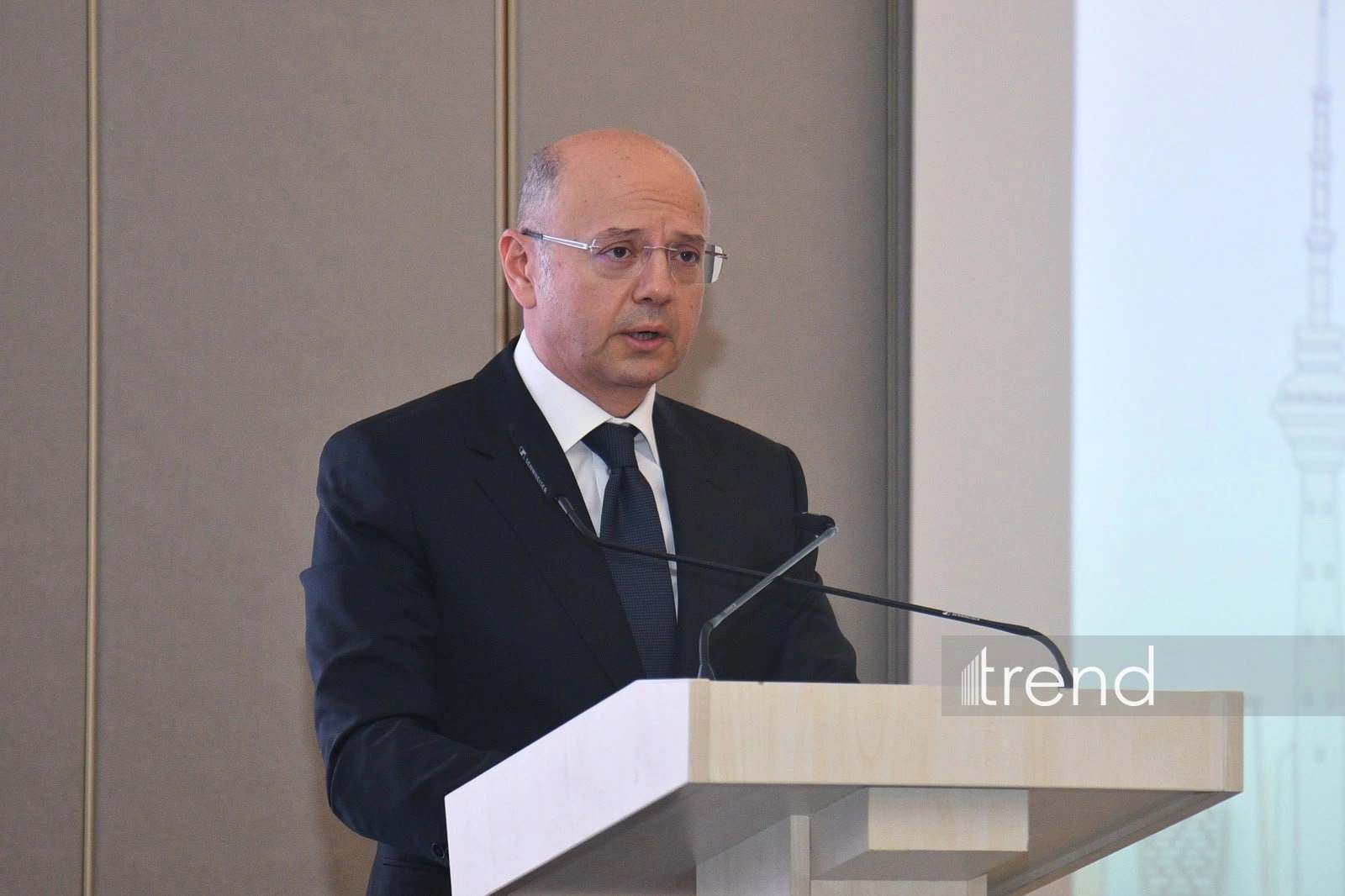
BAKU, Azerbaijan, September 7. Azerbaijan will
begin operating two green energy corridors from 2032, Azerbaijani
Energy Minister Parviz Shahbazov said, Trend’s correspondent reports from the
event.
Shahbazov made the remarks during the opening ceremony of Baku
Climate Week 2026.
The minister said that another strategic priority is to deliver
green energy to international markets through regional and
interregional connectivity. Shahbazov noted that the feasibility
study for the Caspian-Black Sea-Europe Green Energy Corridor, with
a total capacity of 3,900 MW, has already brought the projects
closer to implementation. “Starting from 2032, the first phase of
this corridor, as well as the Central Asia-Azerbaijan Green Energy
Corridor, are expected to become operational.
At the same time, concrete measures are being taken to develop
new green energy corridors toward Türkiye and Europe through
Georgia, the Zangezur Corridor, and Azerbaijan’s Nakhchivan region.
Through the diversified energy links being developed, we will
contribute to strengthening interregional energy security and
reducing emissions beyond Azerbaijan’s borders — across a wider
geography,” he said.
Addressing the participants, the energy minister also touched
upon COP31, which will be hosted by Türkiye, noting that the clean
energy transition and electrification will remain among its key
priorities. “Building on the strong legacy of COP29, Azerbaijan
will continue supporting the transformation of the energy
transition agenda into concrete projects, regional connectivity,
and tangible emissions reductions. We believe that the energy
system of the future should be not only greener, but also more
secure, flexible, and sustainable,” Shahbazov said.
The fourth Climate Week (CW4) of the UN Framework Convention on
Climate Change is being held in Baku through September 11, hosted
by the Republic of Azerbaijan and organized by the Azerbaijani
Ministry of Foreign Affairs.
Baku, which has become an important international platform for
the climate agenda, is hosting discussions on the practical
implementation of climate decisions, the expansion of international
cooperation, and further strengthening global climate action ahead
of COP31. Representatives of governments and international
organizations, experts, financial institutions, the private sector,
and civil society from various countries are expected to attend the
events.
Baku Climate Week is designed as an international platform for
discussions on combating climate change, the energy transition,
renewable energy, sustainable development, and accelerating climate
action. The events will further strengthen Baku’s active role in
the global climate agenda and make an important contribution to
strengthening international climate cooperation ahead of COP31.