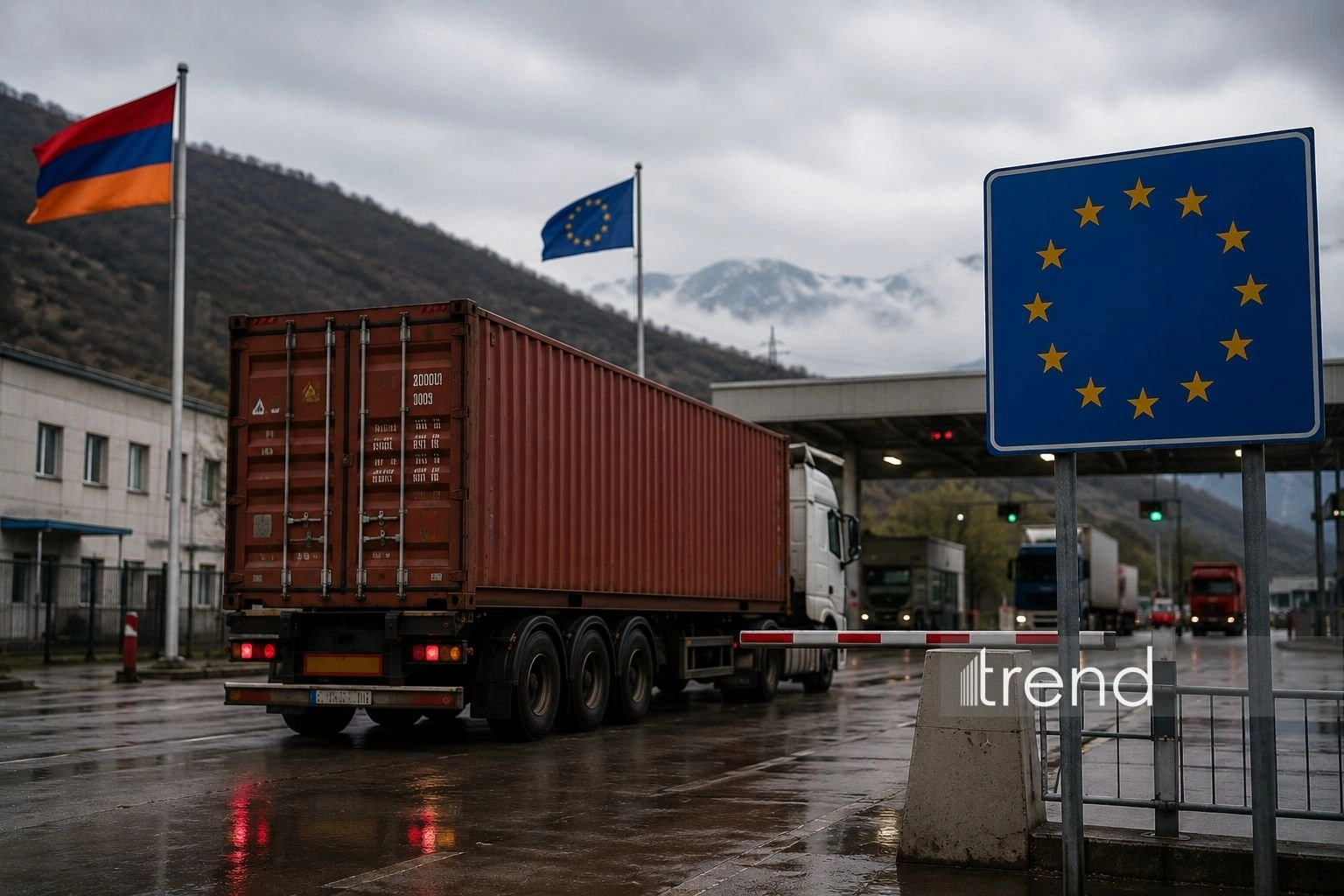
BAKU, Azerbaijan, September 4. The temporary
lifting of 80% of import duties on goods from Armenia by the
European Union (EU) is being presented in Brussels as an "economic
support measure." At first glance, this may seem like an ordinary
trade decision that would facilitate access to the European market
for Armenian producers, but when looking at the context of the
decision, the situation is completely different. It's not just
about customs duties.
The timing, duration of the decision, and the general direction
of the EU's South Caucasus policy indicate that the political side
of this step is also quite serious.
Talking about "transparent competition," "level playing field,"
and "single trade rules" on World Trade Organization platforms for
years, the EU is now offering a large-scale concession to a certain
country. This raises a question. If the main criterion for market
access is economic efficiency and competitiveness, by what
principle are such concessions determined?
The European market has been distinguished for many years by its
strict criteria regarding product quality, safety indicators,
technical compliance, environmental and phytosanitary requirements.
These requirements create quite serious obstacles for countries
wishing to trade with the EU, but when it comes to a country that
serves the political interests of Brussels, "those strict and
uncompromising standards" are forgotten overnight.
Azerbaijan has been building extensive cooperation with Europe
in the fields of energy, transport, logistics, and investment for
many years. Baku plays an important role in Europe's energy
security, and provides significant resources for the development of
East-West transport links. Nevertheless, the question of what
criteria Brussels bases its economic partnership on in the region
is increasingly coming to the fore because trade policy is not just
about numbers. The concessions given also carry a political
message. If one country is offered special conditions that expand
market access opportunities, it's difficult to imagine other
countries in the region being left out.
Another important issue is the real impact of these concessions
on the Armenian economy. Reducing tariffs can increase the
competitiveness of certain products in the European market, but
this doesn't mean that Armenia's agriculture or economy as a whole
will automatically rise to European standards.
Moreover, the EU is giving this "gift" for only 2 years because
Brussels' intention is not to establish a long-term partnership,
but to make the other party dependent on it. If one doesn't act on
what Brussels says, the concession will be immediately revoked.
That's why it would not be right to present the decision as
"saving the Armenian economy". Temporary preferential access to the
European market doesn't solve the country's structural problems.
For the sustainable development of the economy, the most important
issue is the formation of production that can compete in that
market.
As a result, the EU not only provides Armenia with economic
opportunities, but also activates one of the mechanisms of
political influence in the region. The point is that when economic
concessions become a reward for political proximity, the "level
playing field" that Europe has been defending for years comes into
question.
At a time when new economic and political realities are taking
shape in the South Caucasus, this step taken by Brussels is also
part of that process. It has already become clear that in modern
geopolitics, customs duties aren't just customs duties. Sometimes,
behind economic concessions, there is a larger political
calculation.