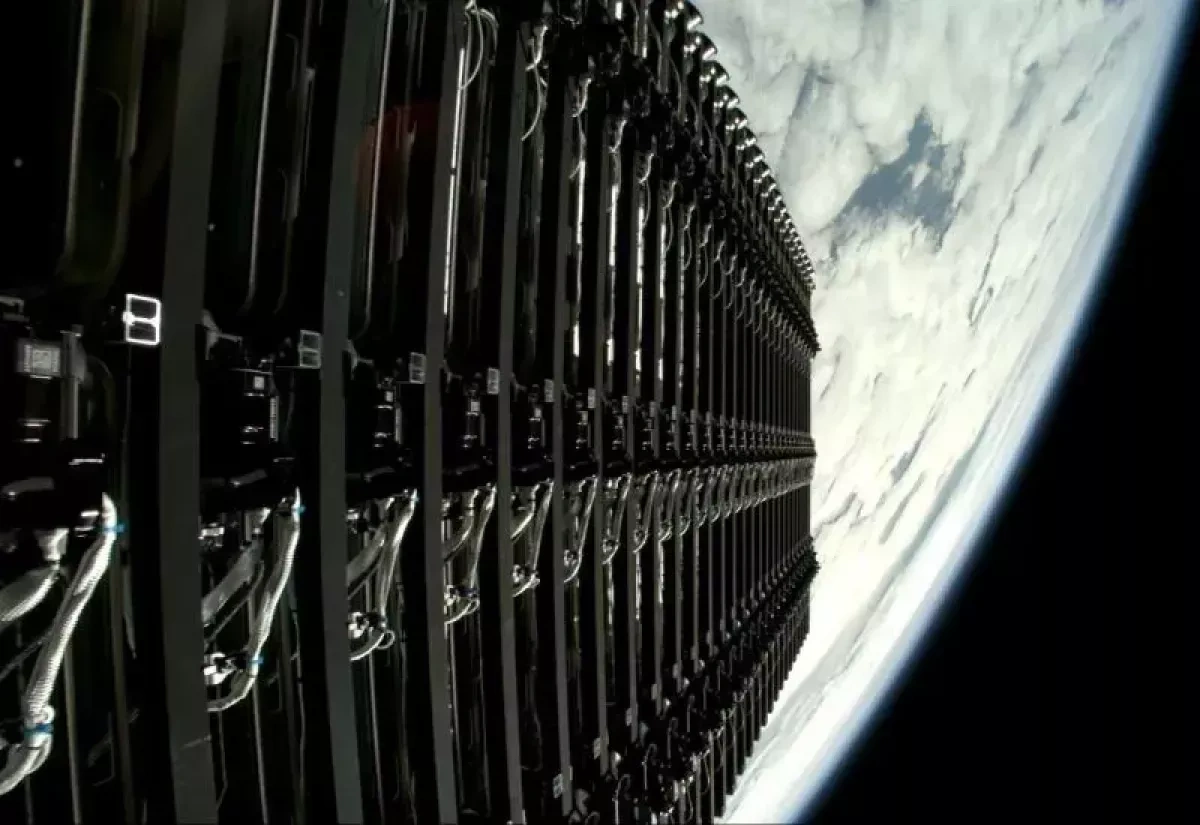
Starlink added 1.7 million paid subscribers in the second quarter of 2026, bringing its global customer base to 12 million, while SpaceX confirmed it plans to deploy its next-generation V3 satellites into operational orbit during the upcoming Starship test flight.
SpaceX's Q2 earnings indicated that Starlink's subscriber base has doubled compared with a year earlier, despite recent price increases and the end of several promotional offers for residential plans, Caliber.Az reports, citing PC Mag.
The company said connectivity revenue rose 32% quarter-on-quarter and 66% year-on-year to $4.3 billion, driven by continued subscriber growth. Average revenue per user remained unchanged at $66 per month, which SpaceX attributed to the global expansion of the service and pricing tailored to local markets.
During the earnings call, CEO Elon Musk announced that Starlink's gigabit-capable V3 satellites will be launched into operational orbit aboard Starship Flight 14. A previous Starship test flight deployed V3 satellites as part of a short-duration demonstration before they re-entered the atmosphere. SpaceX said engineers successfully communicated with all satellites via radio-frequency and laser links and retrieved key telemetry data.
Musk made it clear that the company would need a "critical mass" of roughly 1,000 V3 satellites before it could begin offering higher internet speeds, a milestone he expects to reach around the second quarter of next year.
Starlink's enterprise and government business also expanded rapidly, with revenue in the segment increasing 63% quarter-on-quarter and 108% year-on-year to $1.8 billion.
"I would expect enterprise revenue to substantially exceed consumer revenue," Musk said, citing strong business demand.
Overall, SpaceX reported $7.8 billion in revenue for the second quarter, up 92% from a year earlier, though it posted a net loss of $541 million. The company added that it ended the quarter with $100 billion in cash, cash equivalents and marketable securities, along with a $47.5 billion backlog.
By Bakhtiyar Abbasov